Experimental production of stone tools

Tag: Handaxe (Page 1 of 3)

What’s going on? Part two…

I have had some time to sleep on it (not literally), and some more ideas emerged.

I think actually two competing and contradictory ideas are being played out here. As concluded in the last post: perhaps this is a piece of art; inspired by Palaeolithic crafts people; and using the making process to highlight a different attitude and set of values to modern ‘waste’ materials. Perhaps that is what I am doing, and that is what this handaxe is doing.

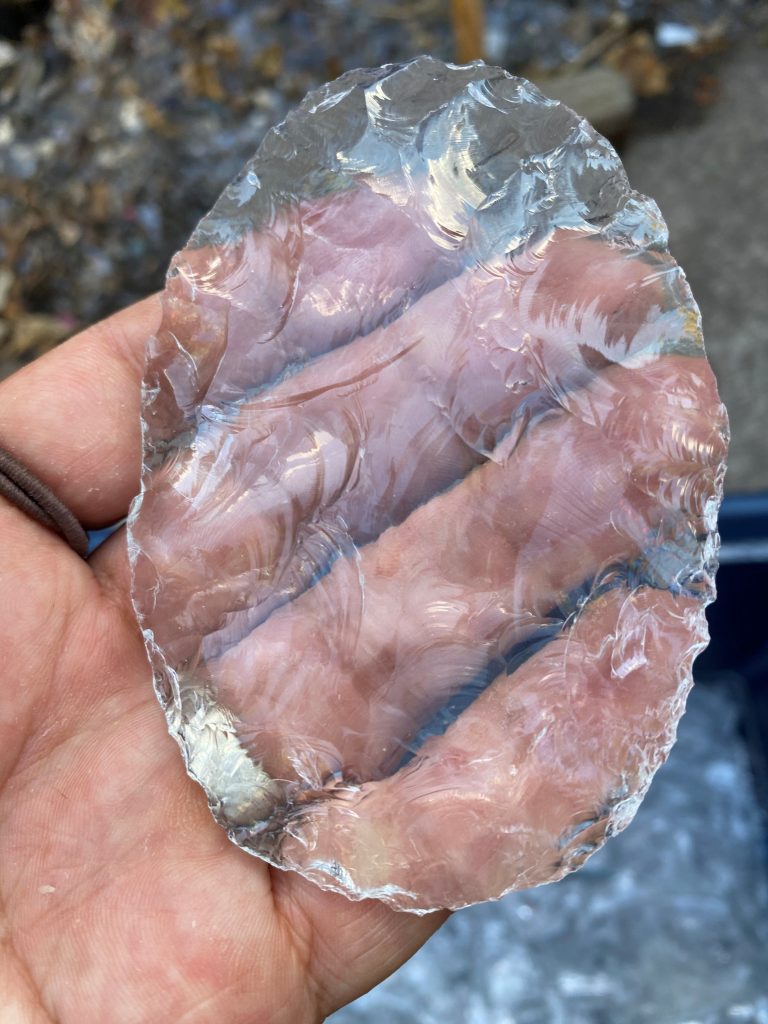
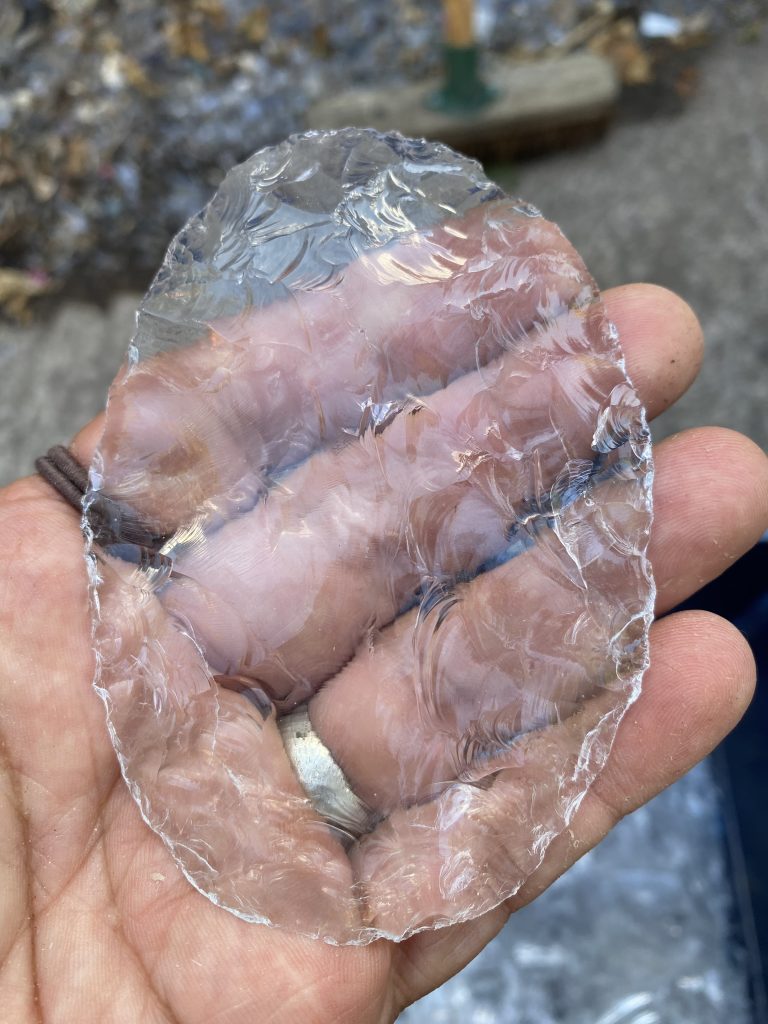
Idea number one: since the last post I have spoken to two of my friends who work with ceramics, Nacho Jimenez and Lee Page Hanson, and both have agreed to help me by producing some slightly narrower, slightly taller ceramic moulds. As discussed here, Holly has ideas about how the next furnace firing should unfold. There is also the invisible contribution of the people who originally made the blue glass, and then those who abandoned them in the1930s to 1950s for them to end up as a waste material, and then again in the recent past, the bottle diggers who have left the fragmented glass bottles on the surface for me to collect. Then there is my contribution to the narrative as a flint knapper. So, as an object this blue handaxe embodies a number of narratives as well as a number of skilled practices. Perhaps that is part of why I love it?

Idea number two: however, as previously discussed, I also love the recycling of the glass that goes into this, to highlight a different approach to valuing materials. It has occurred to me that this ‘eco narrative’ actually embodies a series of energy intensive processes, such as the the kiln use for the production of the moulds, and then the furnace use to melt the glass to form the block. In that respect this handaxe also has an industrial narrative, using probably non-renewable resources in order to make a statement about the value of recycling materials. In that respect this blue handaxe embodies an inherent contradiction, something I am not so enamoured by.

That’s where I am up to, and today is a day off!
What’s going on?

What is going on? I am an archaeologist, so why am I getting super excited about creating Palaeolithic tools from materials unavailable to people in the Palaeolithic past? Furthermore, this seems more to be an exploration of my own particular aesthetics, albeit with a link to crafts people in the Palaeolithic past. Perhaps they are my inspiration here? Essentially, this process is telling us nothing about Palaeolithic people, so is it a vanity project?

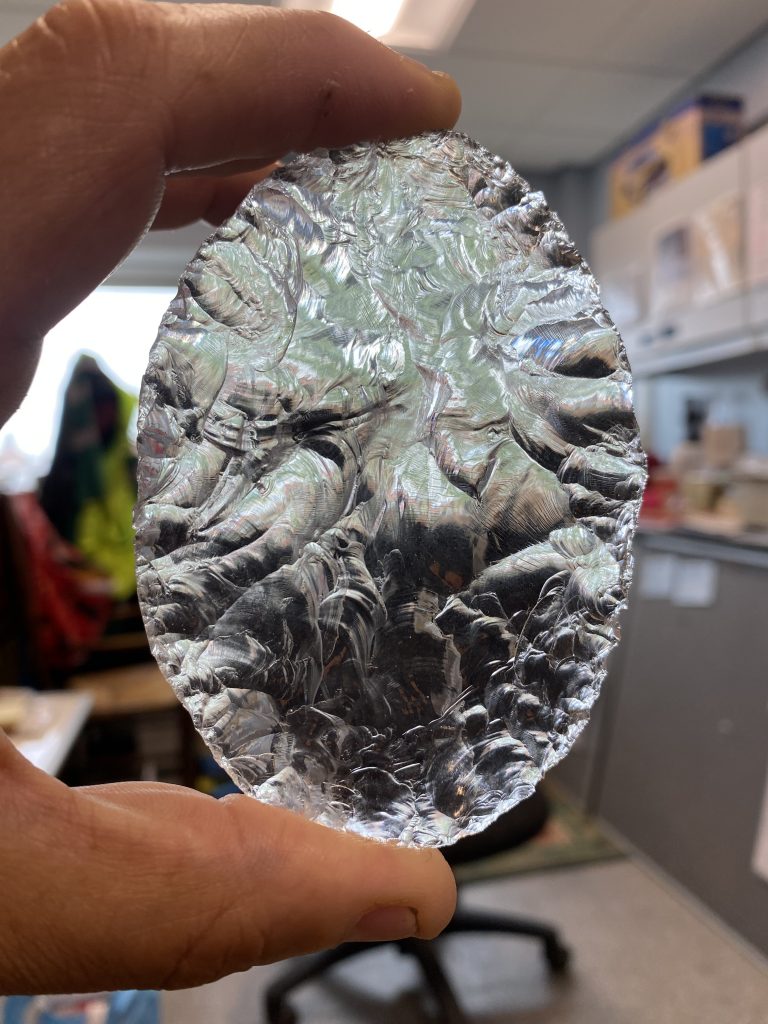
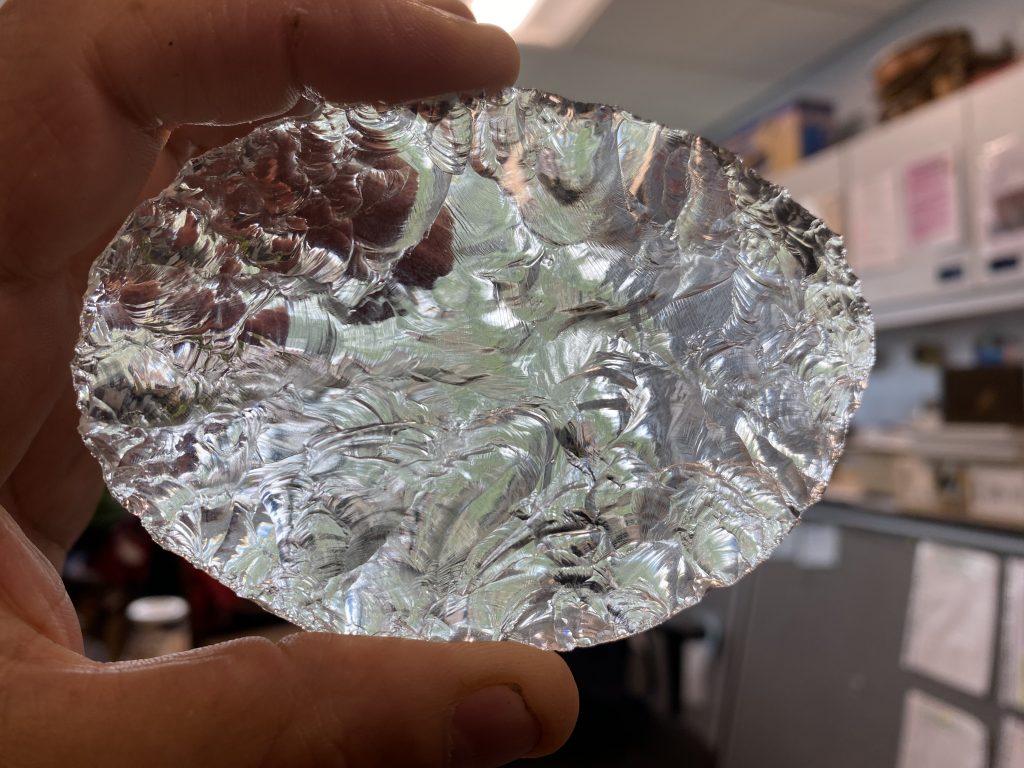
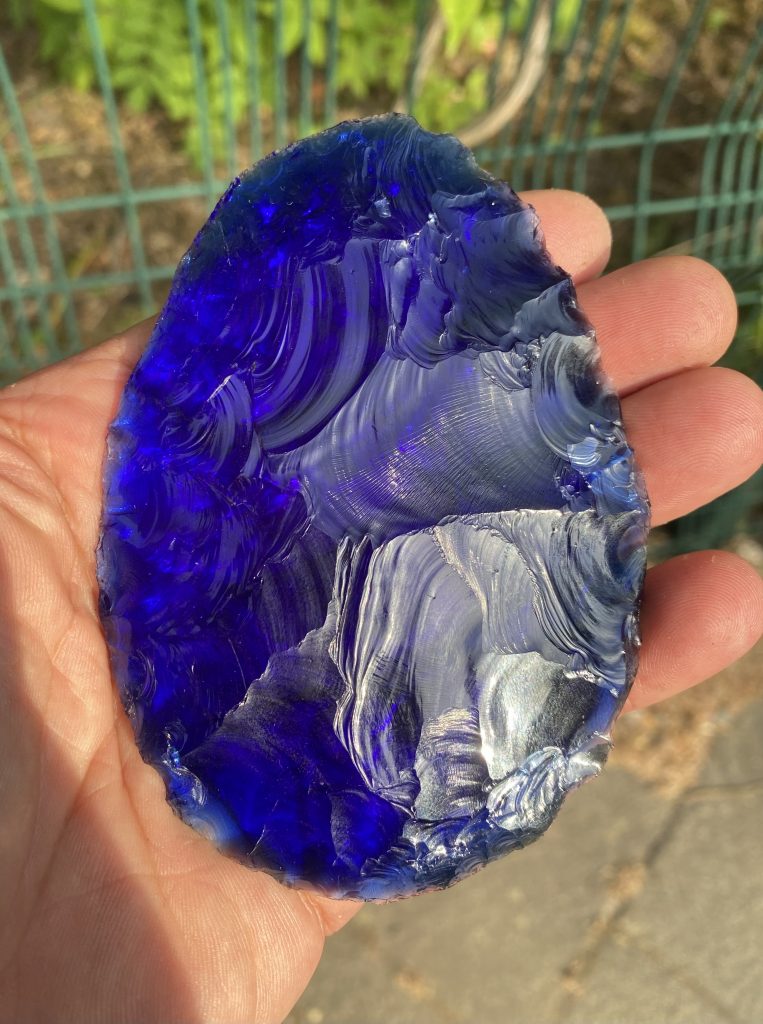
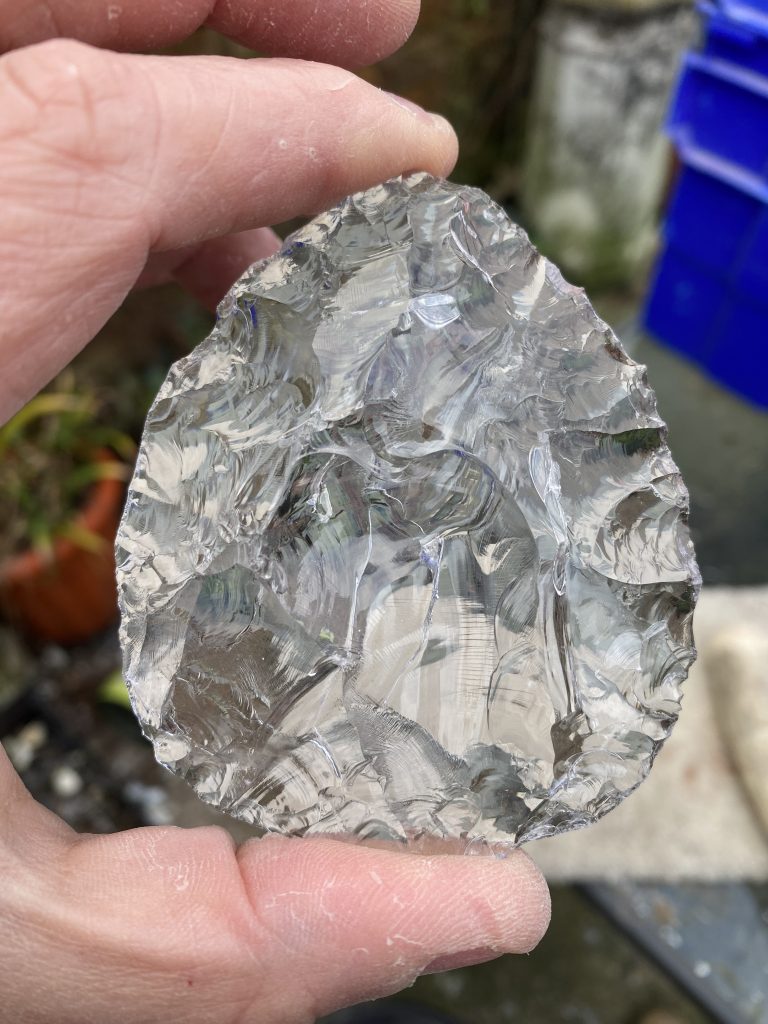
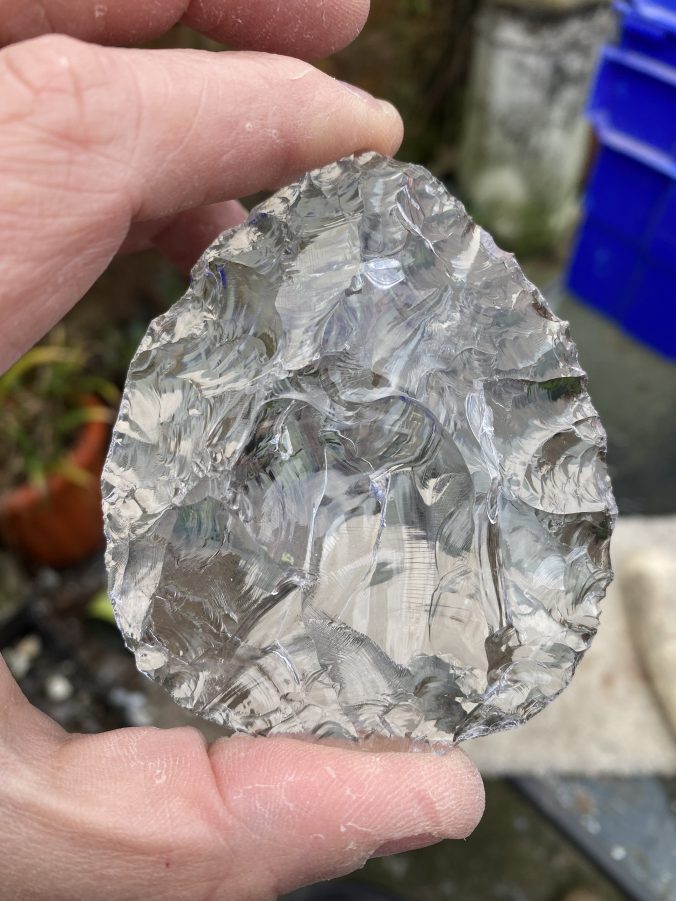
This particular handaxe is not perfect, but I love it. I actually love its idiosyncrasies’, the lumpy central line I couldn’t remove. It fits together perfectly for what it is, in spite of not being something else? By something else I am thinking of my last blue handaxe, classically aesthetic, with smooth, long and clean removals.

I immediately thought, well I collected the glass for this most recent handaxe, and so that must be it. However, I bought the glass disc for the earlier handaxe, from a flea market so although not the same, I was still responsible for acquiring the materials. It may be to do with the extended process, involving mould makers and furnace drivers? It may also be that I am using a waste material, originally abandoned in the 1930s to 1950s, and then again in the recent past, by the bottle diggers who have left the fragmented glass bottles on the surface for me to collect.

I don’t know. As an archaeologist I feel this object should be adding some kind of intellectual value to our understanding of the Palaeolithic past, but it doesn’t. So, is it a vanity project? If so then all art could be classed as vanity projects. Perhaps this is a piece of art rather than a piece of archaeology? I also love the recycling of materials that goes into this, to highlight a different approach to valuing materials.

So perhaps what I am saying here is; this is a piece of art; inspired by Palaeolithic crafts people; and using the making process to highlight a different attitude and set of values to modern ‘waste’ materials. Perhaps that is what I am doing, and that is what this handaxe is doing.

Well now!

Well now. Lots of thanks to Holly Flannaghan, my technician comrade in Geography who has access to a furnace, and also does her research!

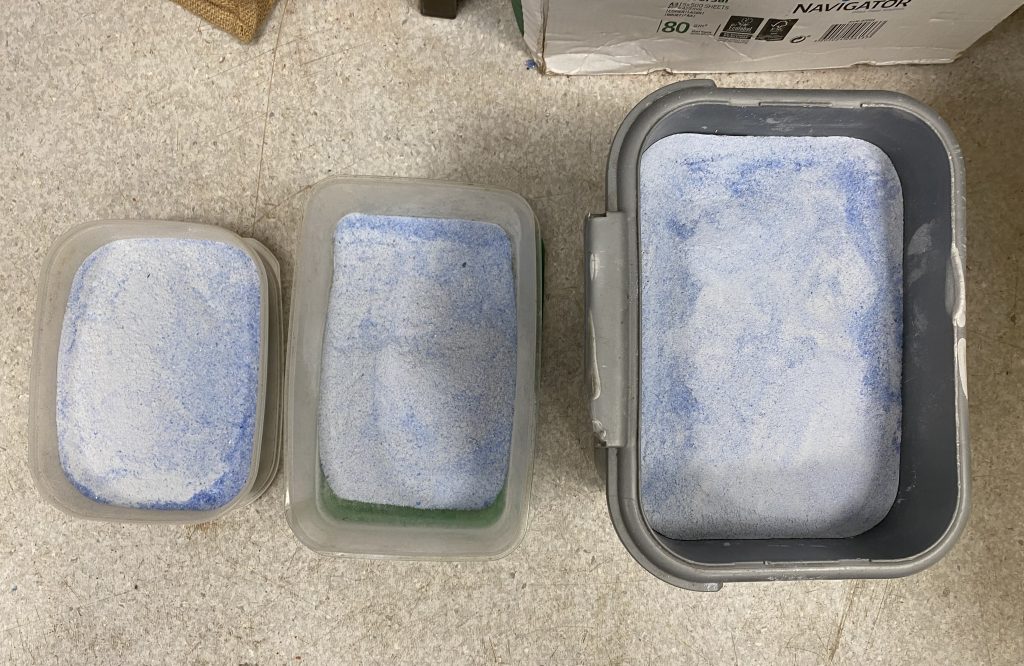
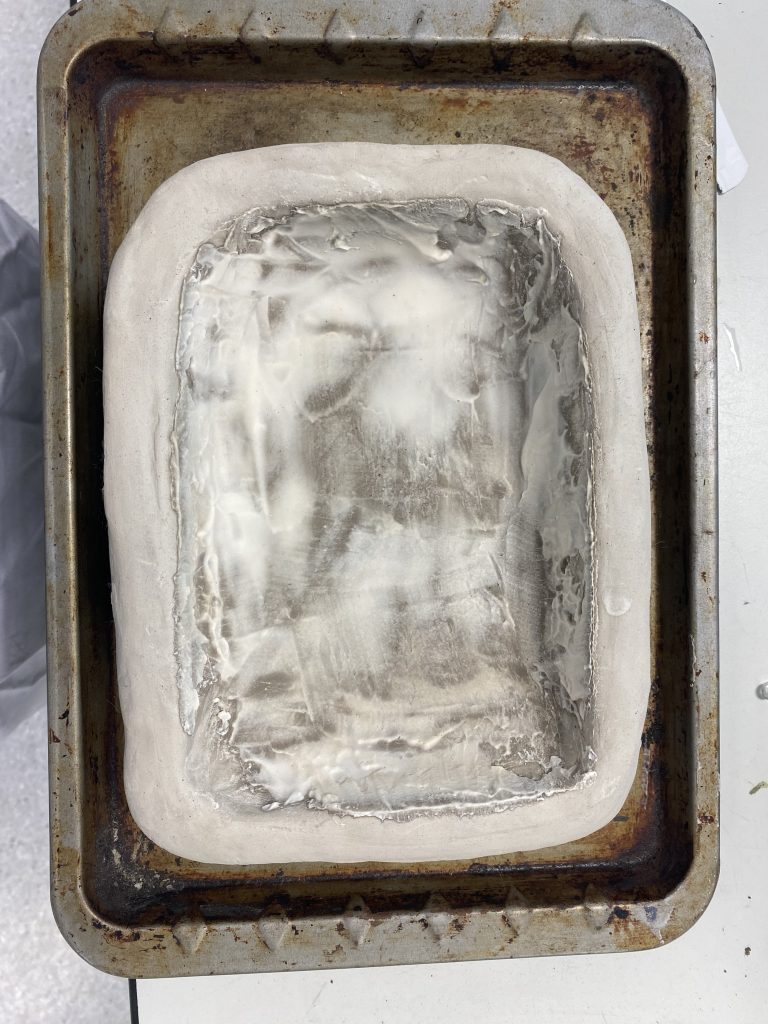
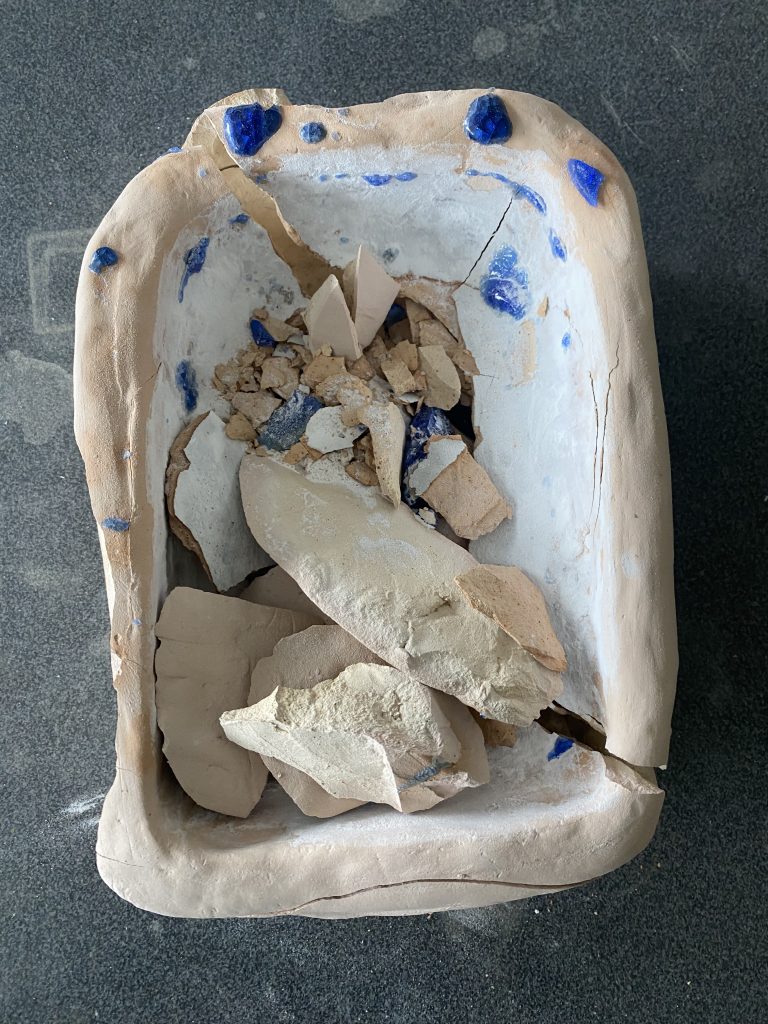
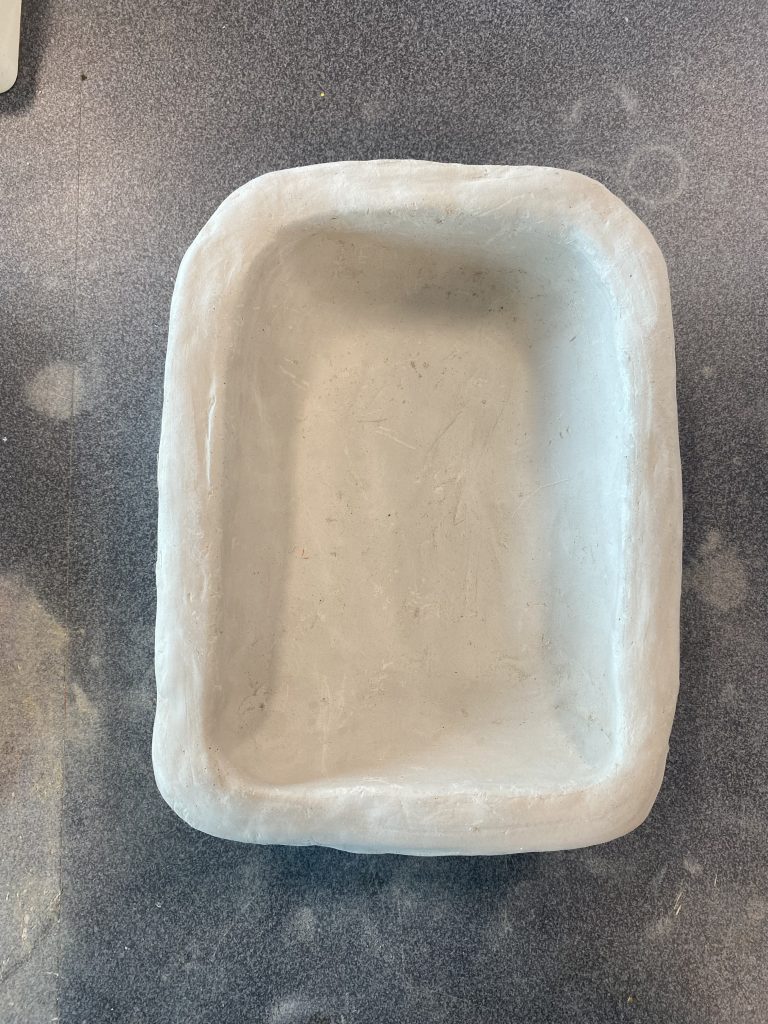
This is Alice la Porta’s mould painted with the Aluminium Kiln Wash to stop the glass adhering to the mould. It did more or less work. The mould was unfired and next time we may use an already fired ceramic mould.

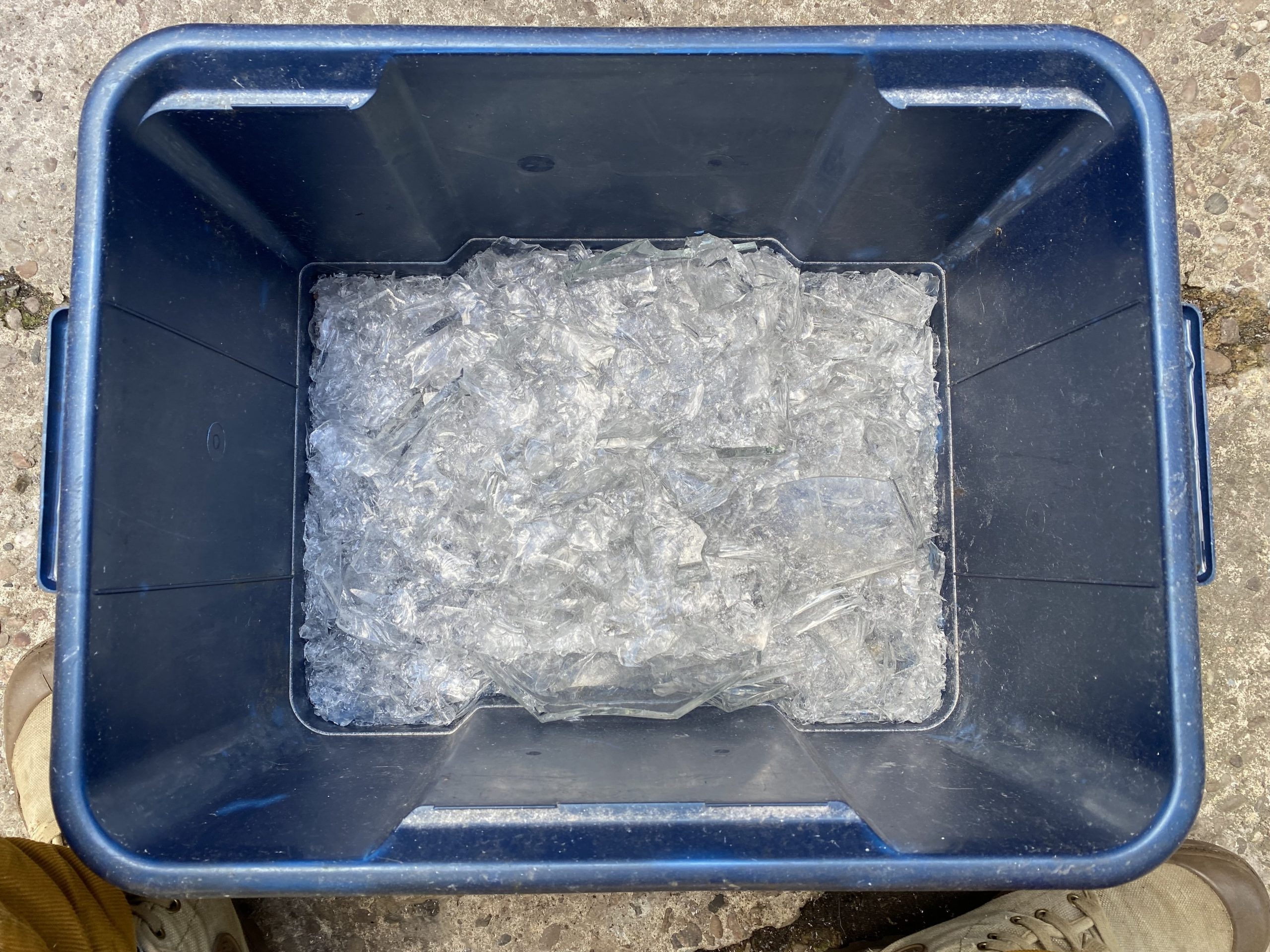
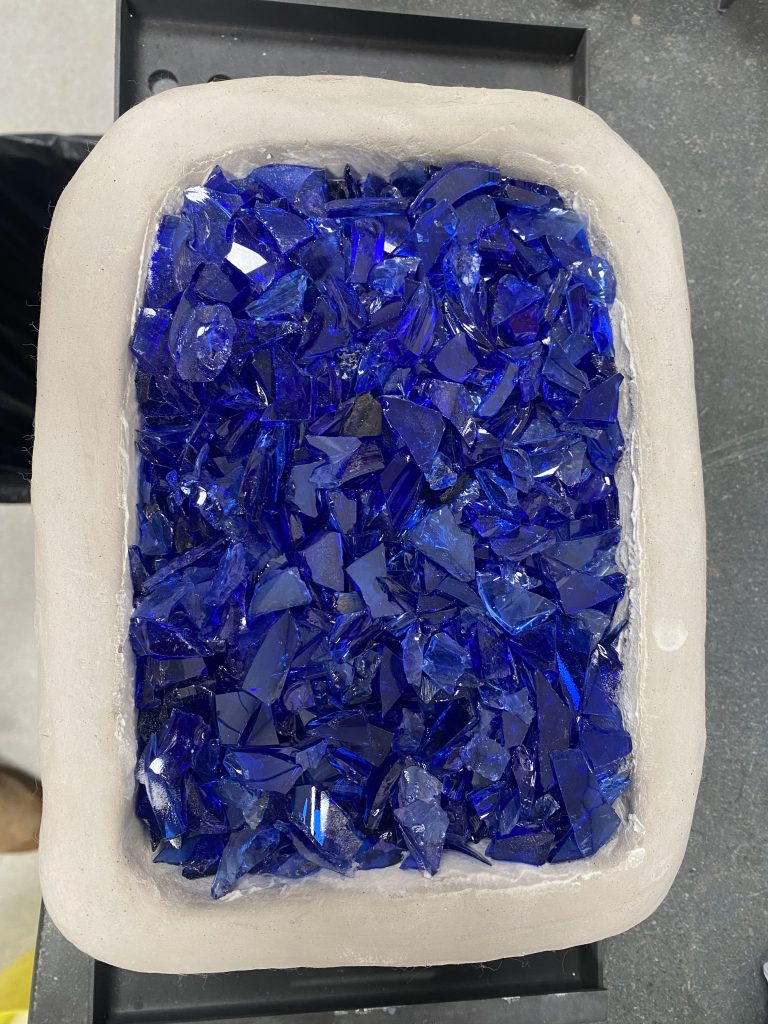
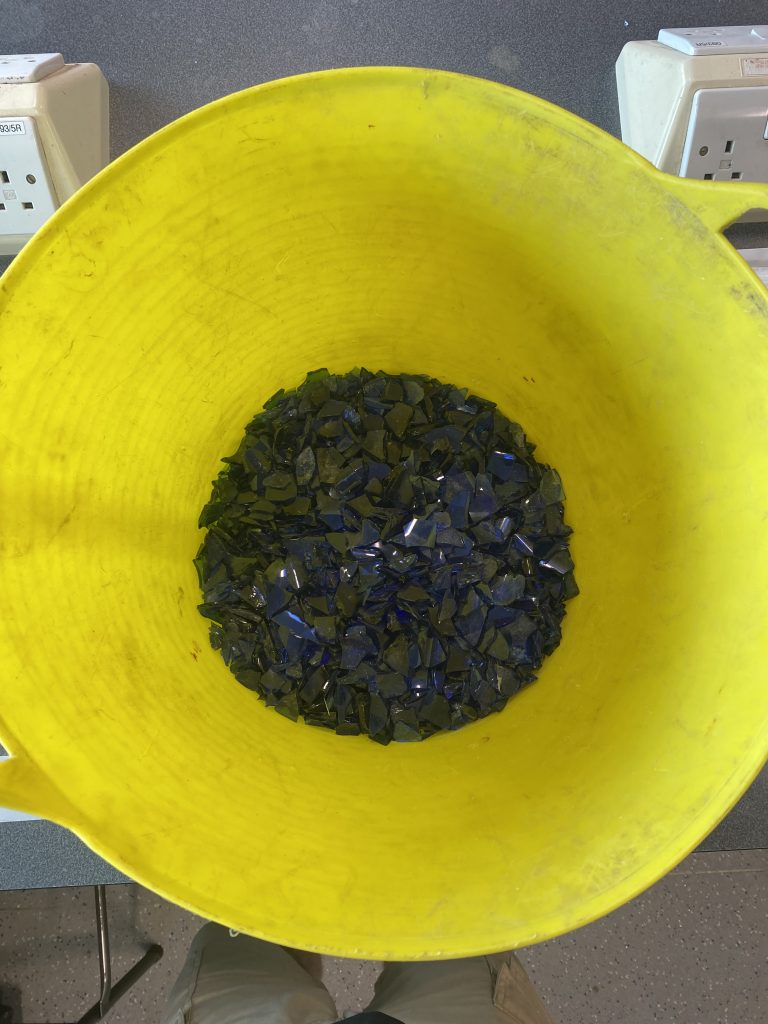
I had three grades of glass cullet. Sand, sub-1cm, and above 1cm. We used the sand and sub-1cm cullet on the top to fill up the mould.

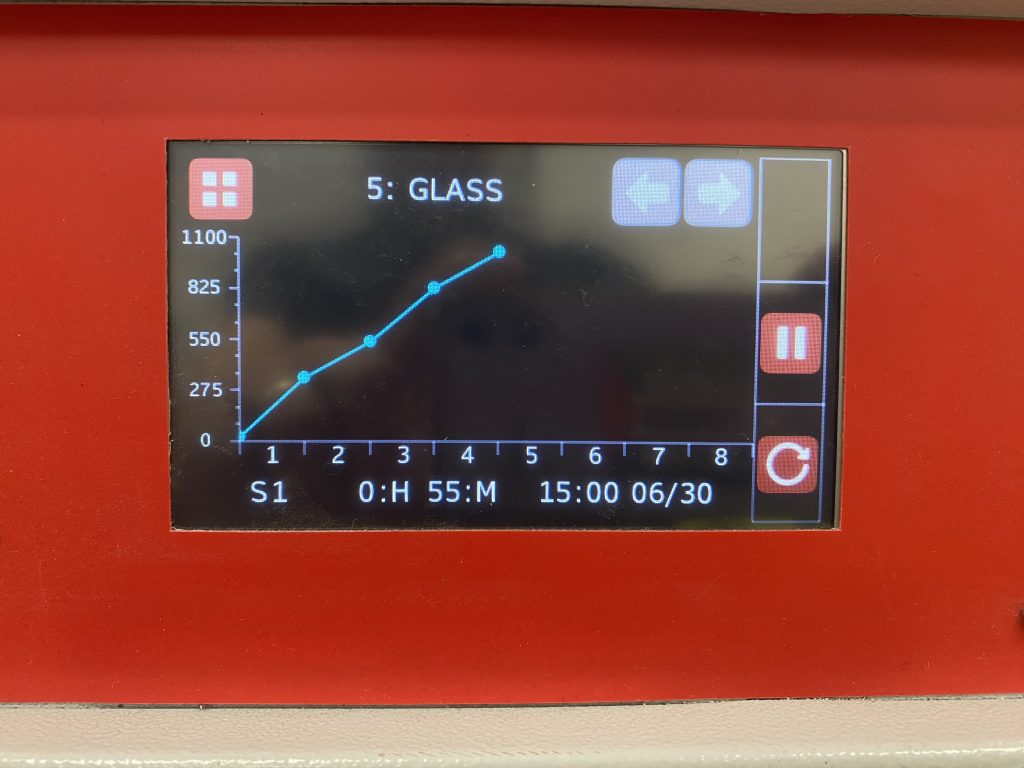
Then Holly performed her magic. Over four hours the temperature was gradually raised to around 1000 degrees Centigrade, and then kept there for two hours or so before starting the slow cooling process.

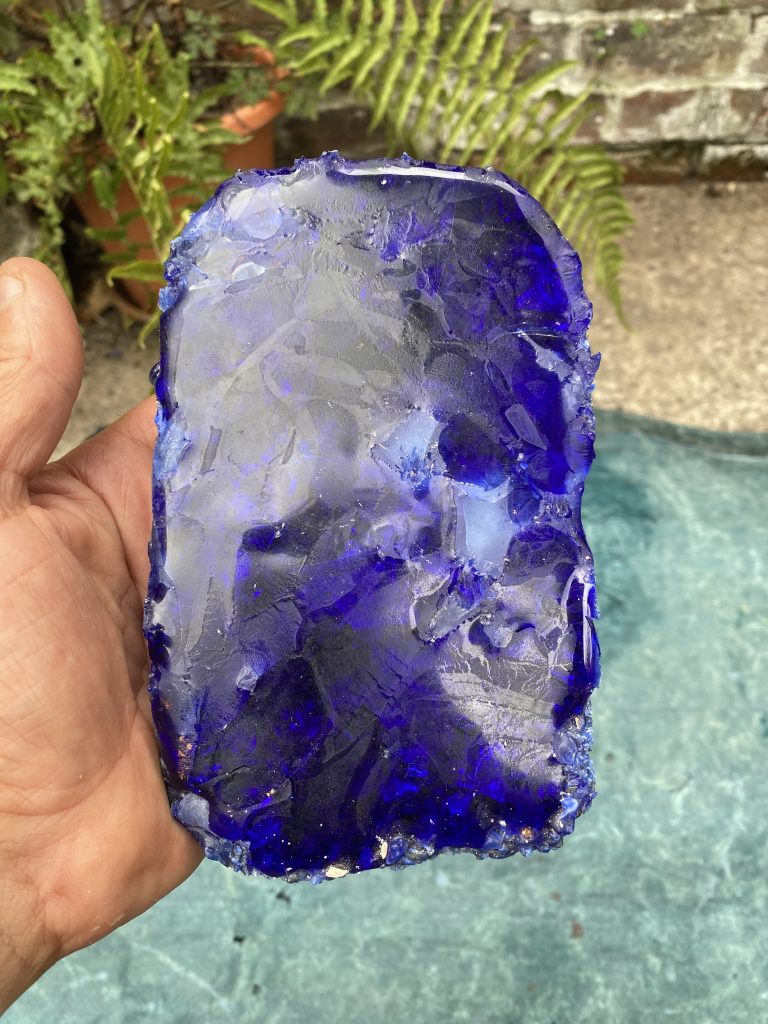
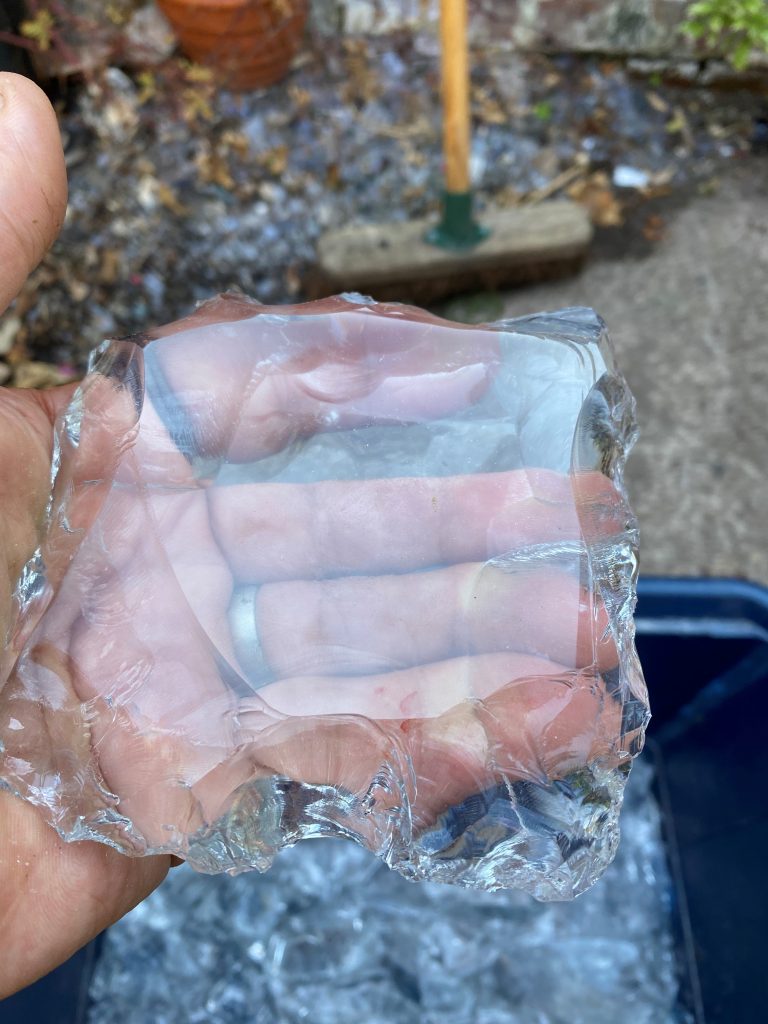
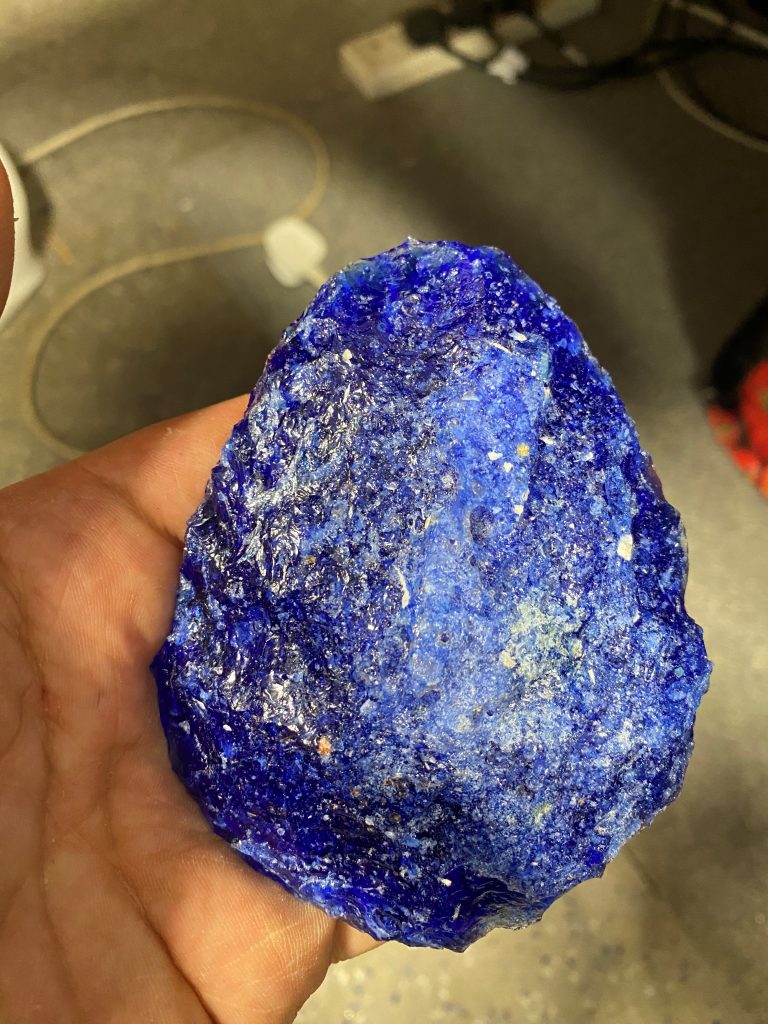
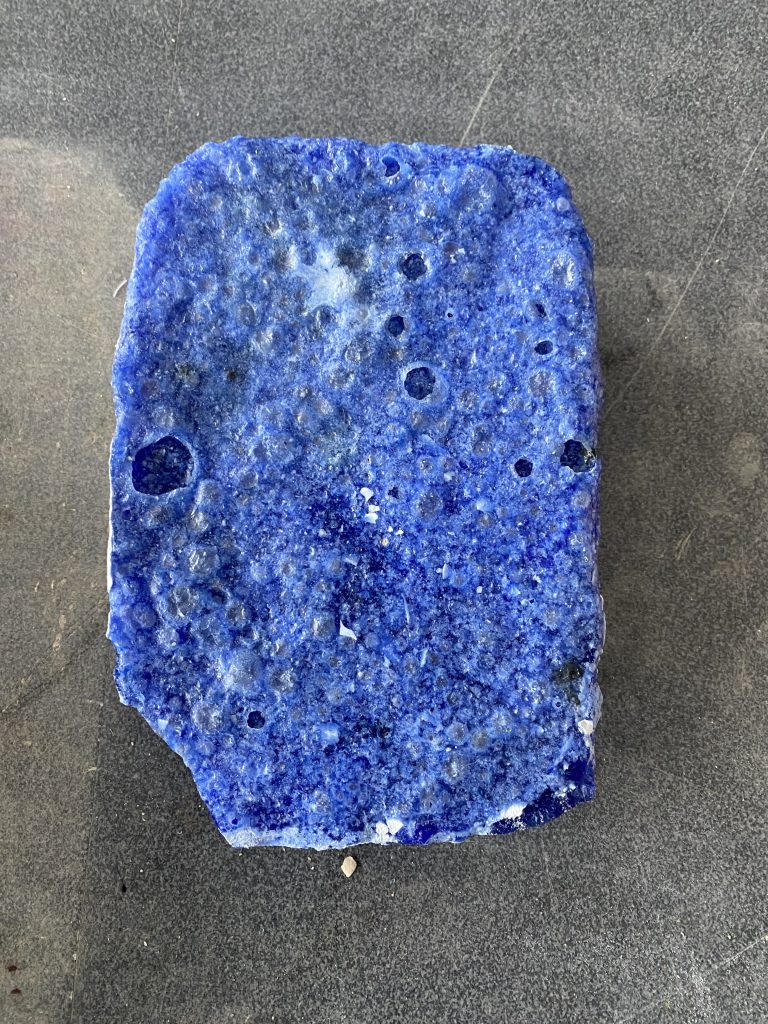
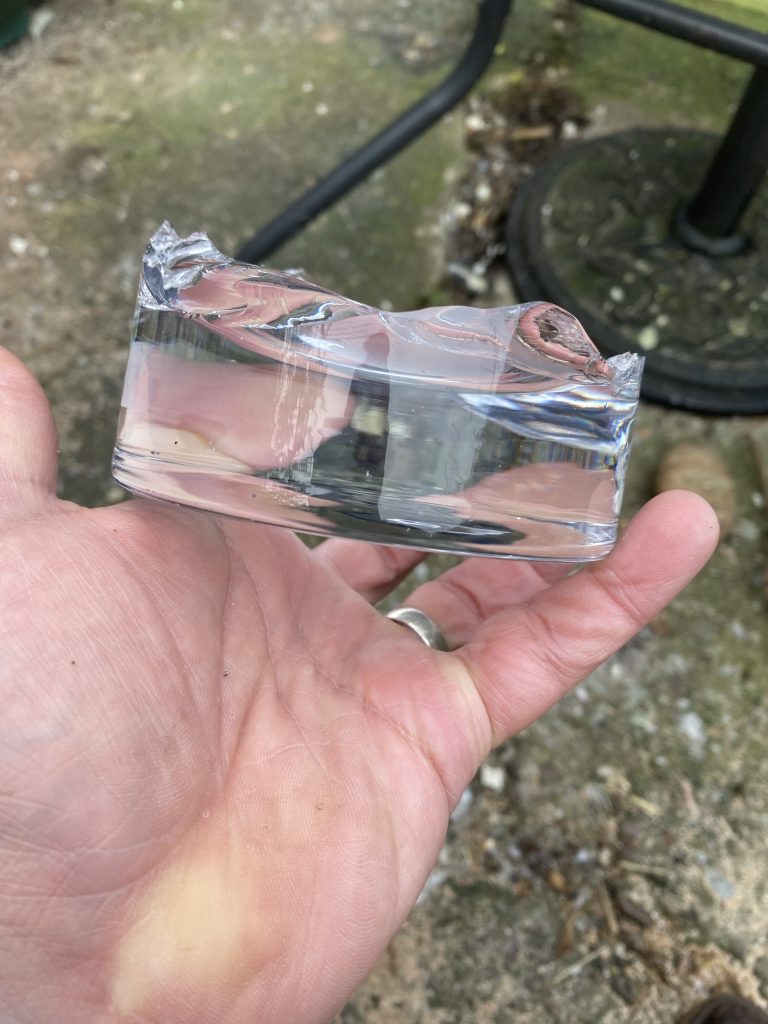
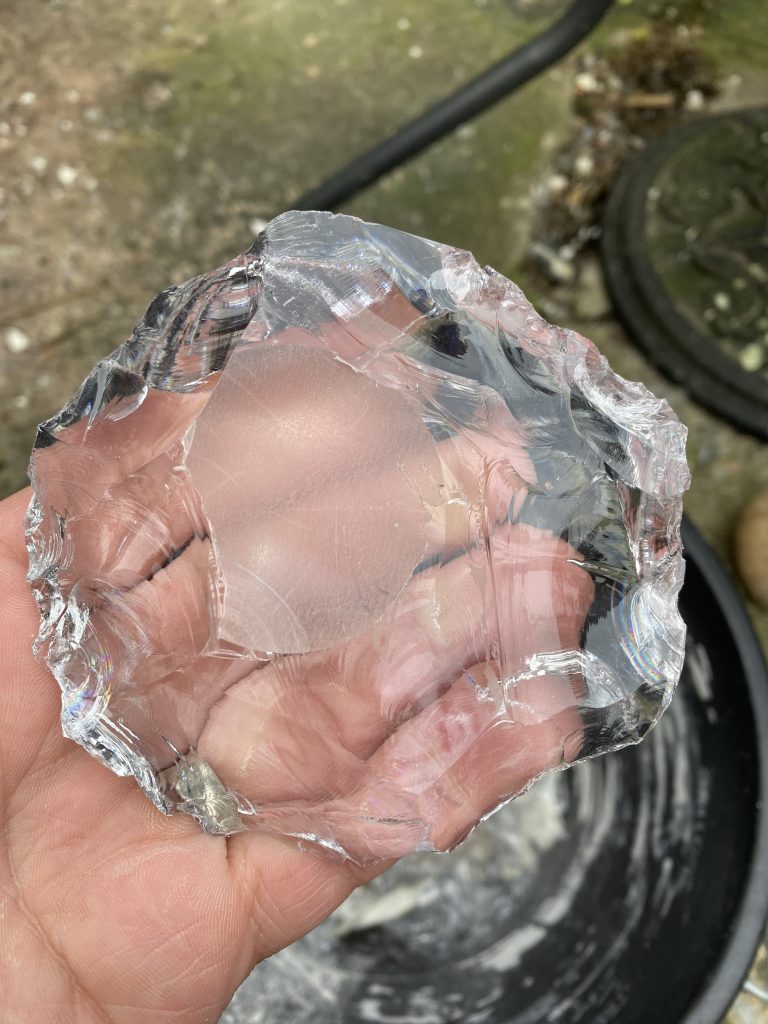
And one day later here we are. The Aluminium Kiln Wash worked but we had to break up the mould to get access to the glass. Once out the glass was actually thinner than I anticipated. The sub-1cm cullet must have had a lot of gaps that it had to fill. Next time we will use the sand only and a slightly higher mould to give the slab more depth.

The glass appeared not ideal. It looked similar to the fused glass blocks produced using Nacho’s kiln. However, once I started to work it I realised that it actually had very good internal cohesion. It flaked well although crumbly.

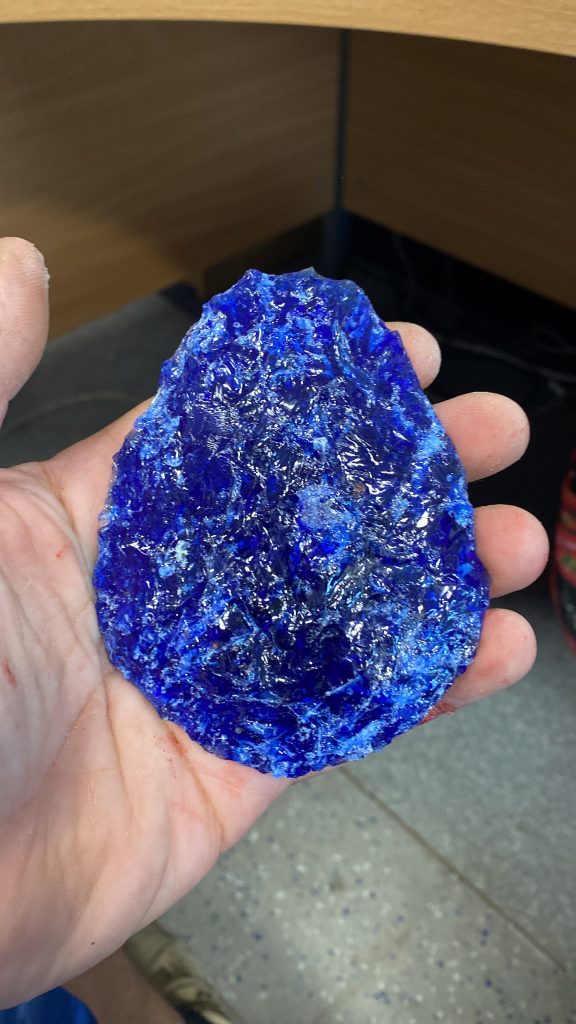
And this is it. The outcome but also a starting point. We need to adjust the mould size and make sure it’s already fired. Use sand rather than sub-1cm cullet and perhaps keep it at 1000 degrees Centigrade for around four hours before allowing a very slow cool off period.

I am actually super happy with this handaxe. Many thanks Holly!

The return of the blue handaxe, possibly

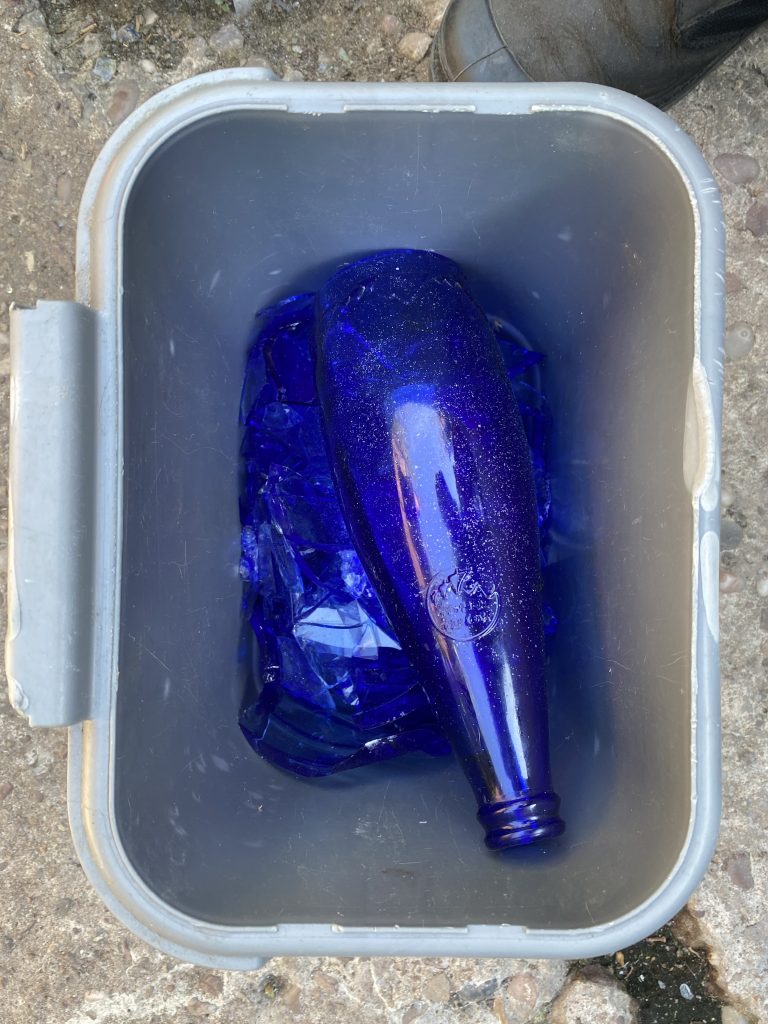
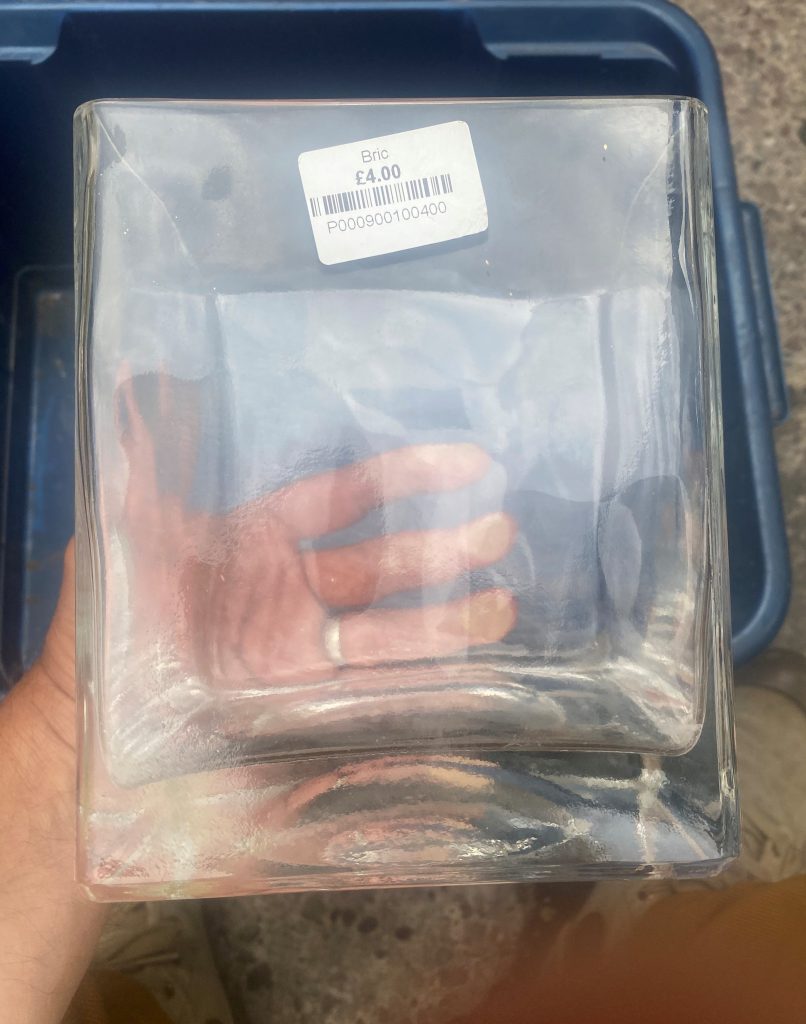
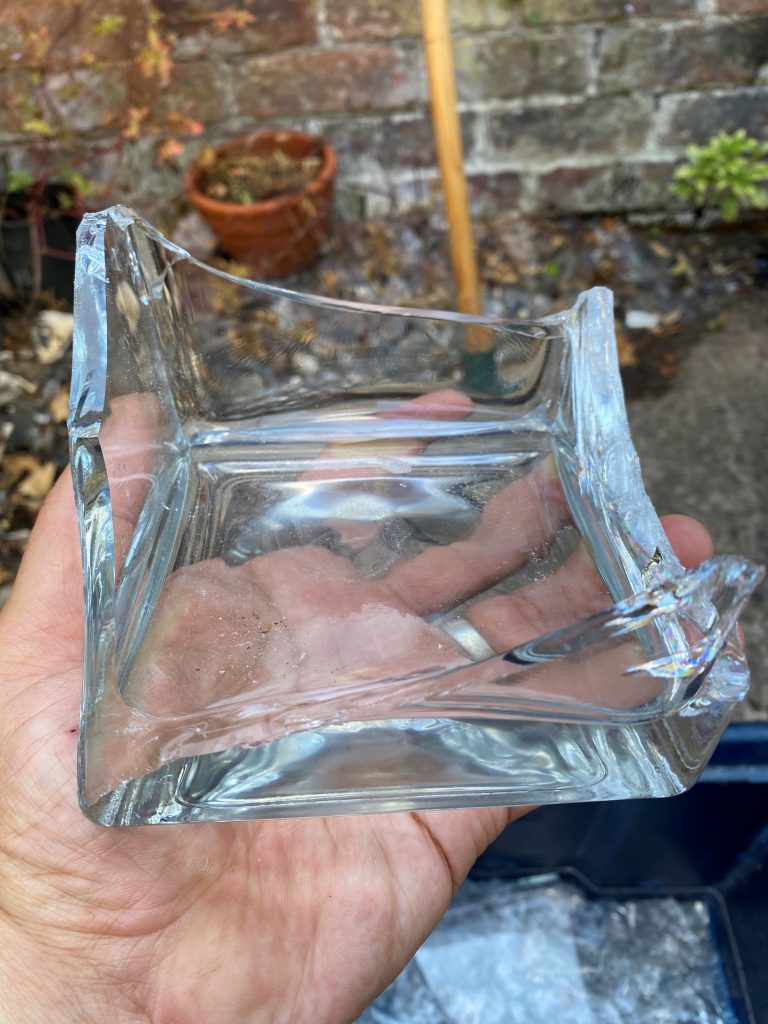
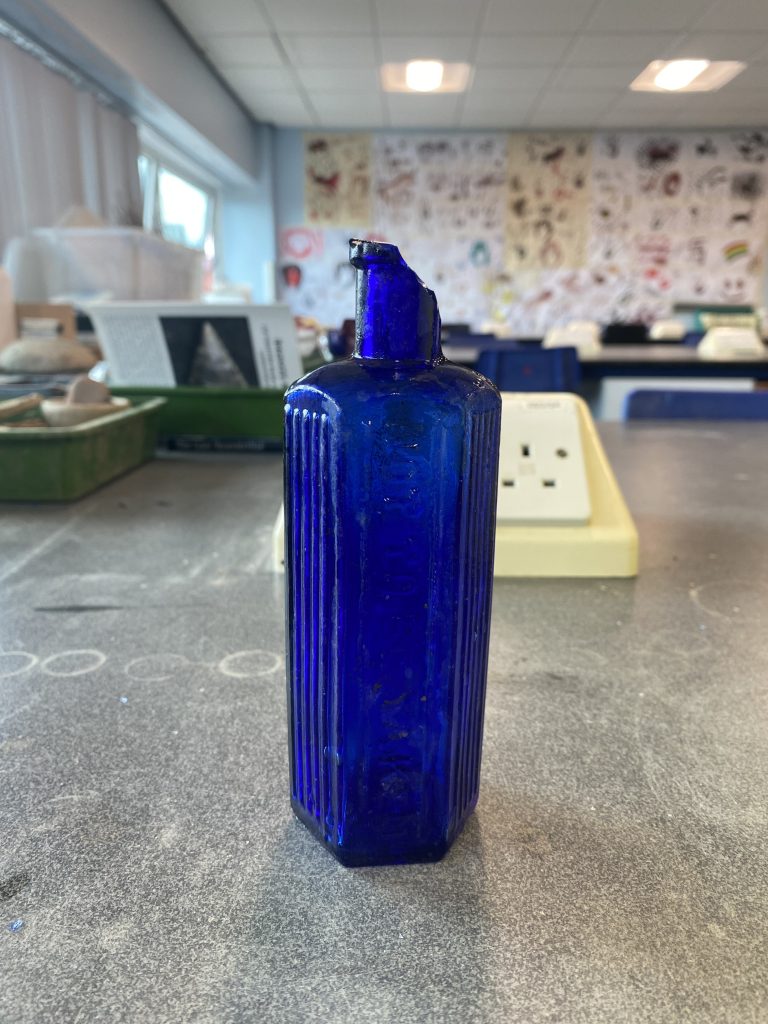
Today we had an Archaeology Open Day which was surprisingly quiet. Consequently I had quite a bit of free time in the lab on my own. I had also had about five blue glass bottles cluttering up my office for what seemed like ages, and so I added two and two together and came up with a trug of blue glass cullet.

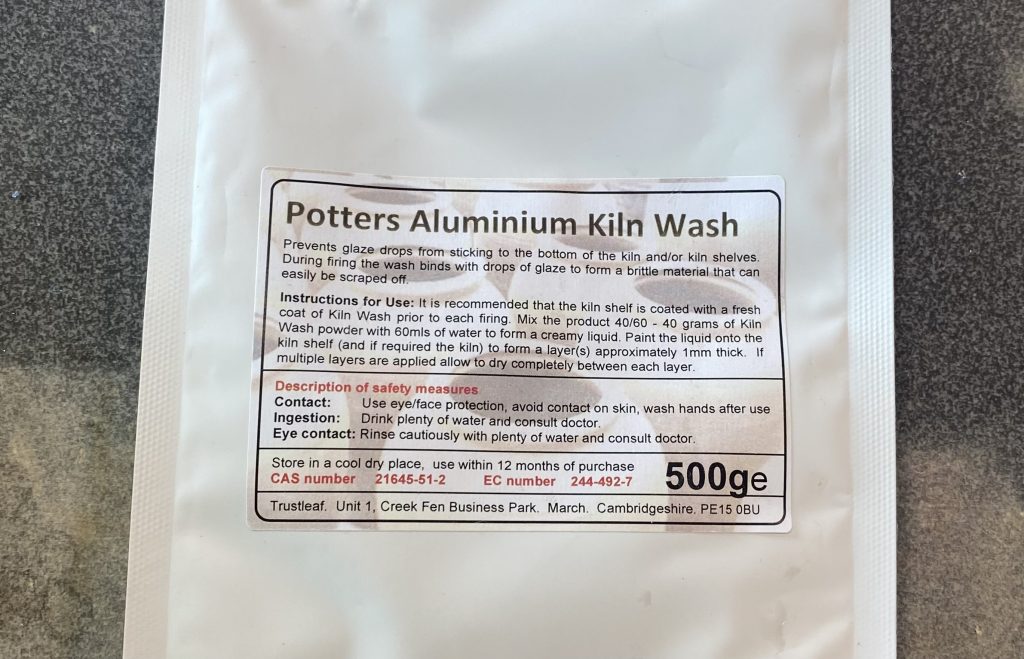
This wasn’t completely out of the blue (pardon the pun). My colleague in Geography, Holly, is in charge of a small furnace and we have discussed the possibility of melting my glass bottles to produce a slab of glass, and Tuesday next week may be the opportunity to do so. However, based upon previous experience I needed a method of stopping the melted glass block adhering to the clay mould. Enter Potters Aluminium Kiln Wash.

The experiment next week is to use the clay mould given to me by Alice la Porta, and use the Potters Aluminium Kiln Wash to form a layer between the mould and the glass cullet to be melted in the furnace. Holly is going to be in charge of times and temperatures, I will be in charge of keeping my fingers crossed.

This is the mould Alice gave me, let’s see how it goes…

Size and Symmetry: I’ve made something I like (again)

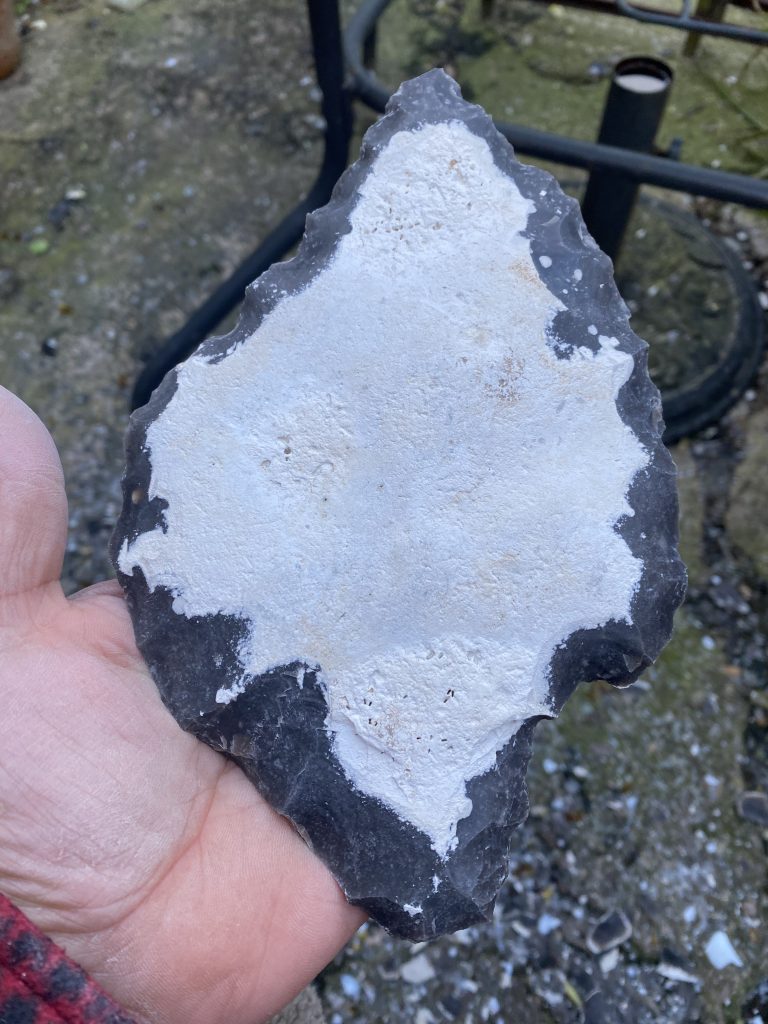
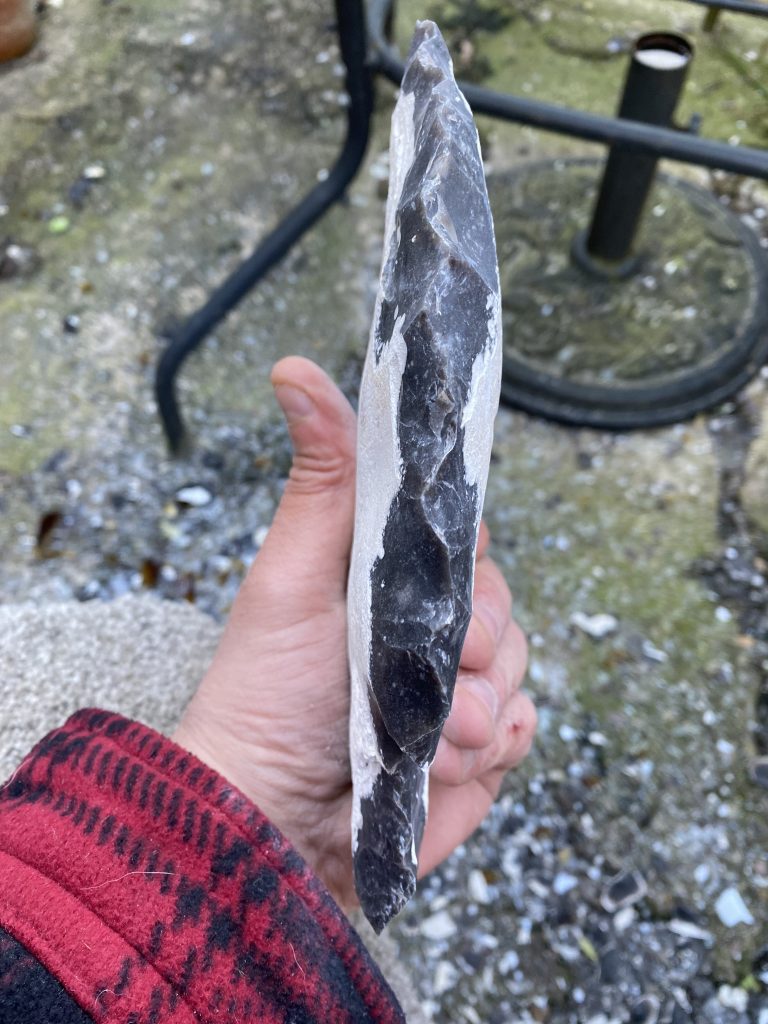
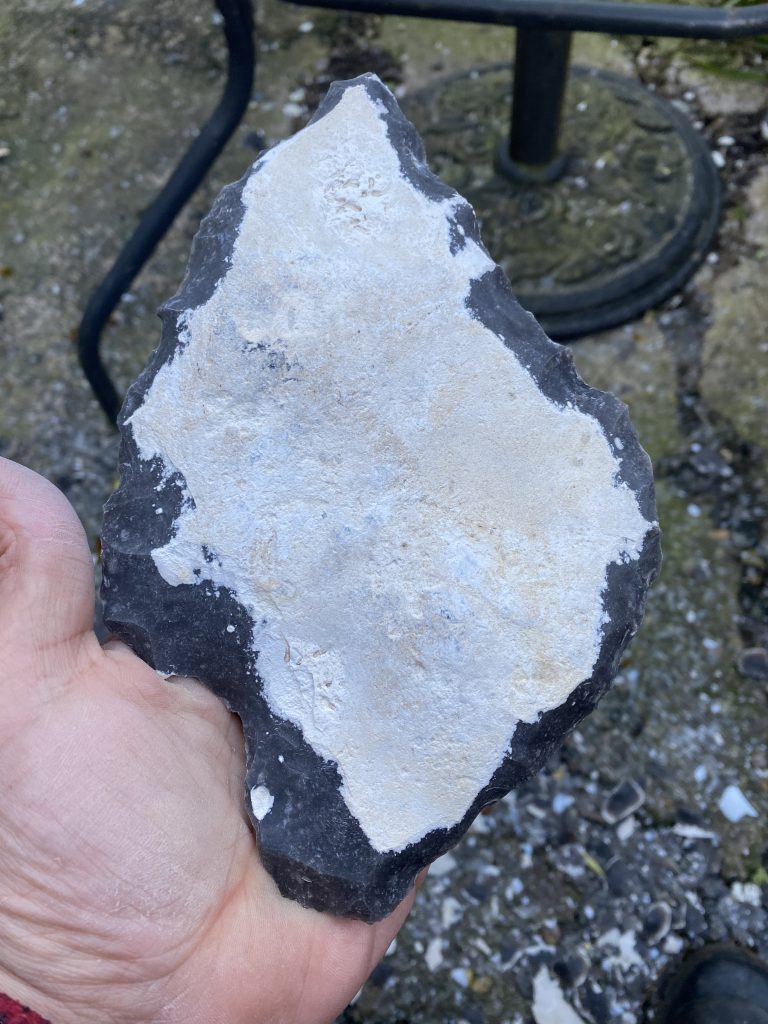
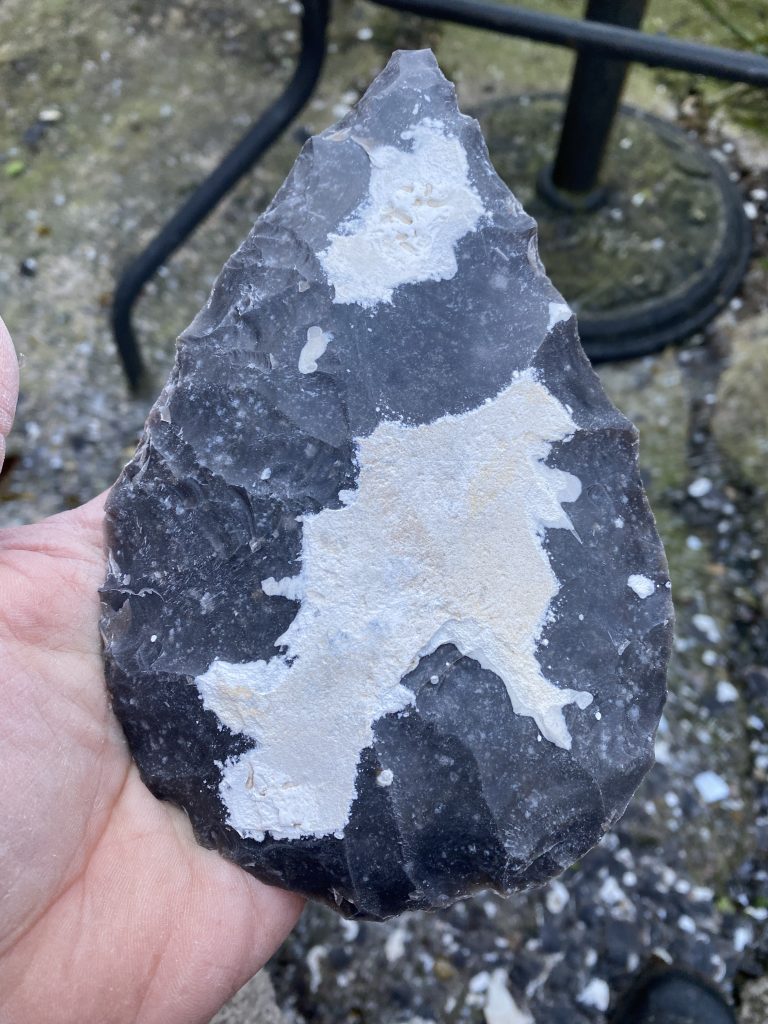
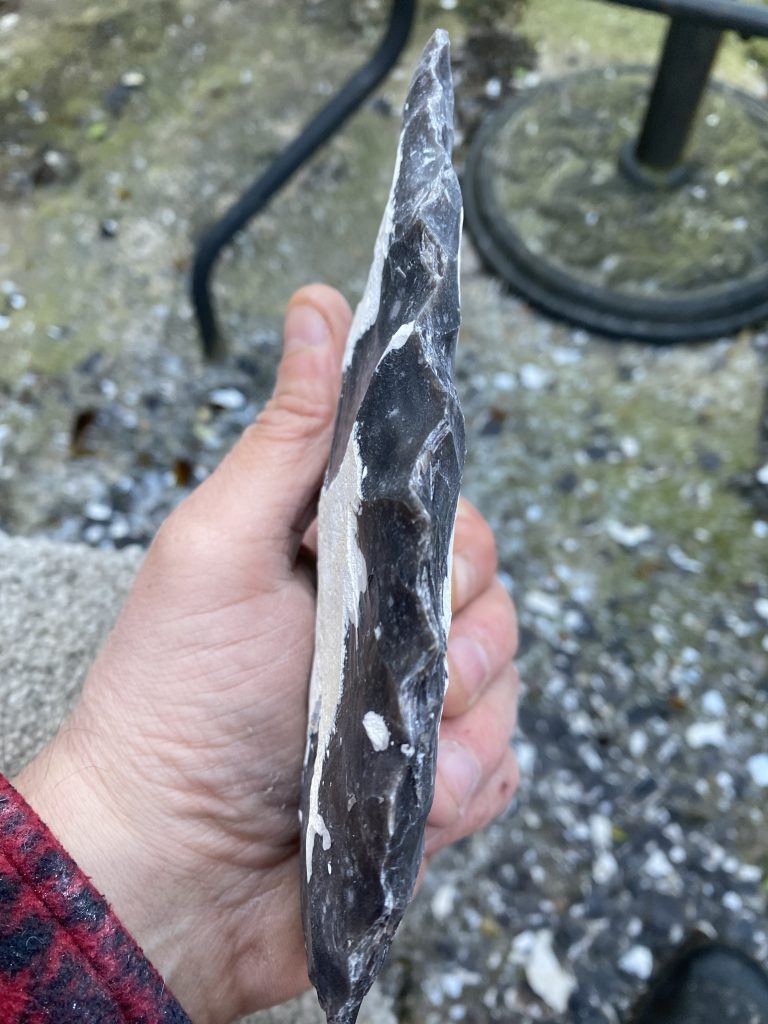
I have been off work for two weeks over Easter, and although I have had some work stuff to do, I also have lots of Barmston Beach flint tablets to play with!

From Barmston there does seem to be two different types of flint collected. One type, like the above thin tablet with chalky outer surface seems to be pretty undamaged and works well. This leads me to think the materials on the beach are from two different glacial events or perhaps accumulated from different geographical locations.

Anyway, this was a particularly thin tablet of flint and as such liable to break. As a strategy to avoid breakage I pressed the flint to my thigh. The idea being that this helps by adding my body mass to that of the flint.

Using this strategy the next step was to use a hard hammerstone to ‘turn’ the edge. This involved taking a flake off one face, then turning the tablet over and using the fresh flake scar as a way in to take a flake off the the opposite face.

The sound is really interesting as you can hear when the tablet is resisting the hard hammer blows. Rather than persist and risk endshock and breakage, I would simply go back a stage and made bigger the platform. This approach allowed me to work my way around the nodule turning the edge without any major issues.

I then shifted over to a heavy antler hammer and used the worked edge as a ‘way in’ to take off longer flakes. Because I was pressing the tablet of flint into my thigh I was effectively hitting my leg with the antler hammer, but on the way catching the edge of the tablet and pulling off a flake.

As you can see from each worked face, the longest flake removals are a pretty descent 5 cms or so, but because the tablet of flint was already relatively flat I was mainly creating a cutting edge.

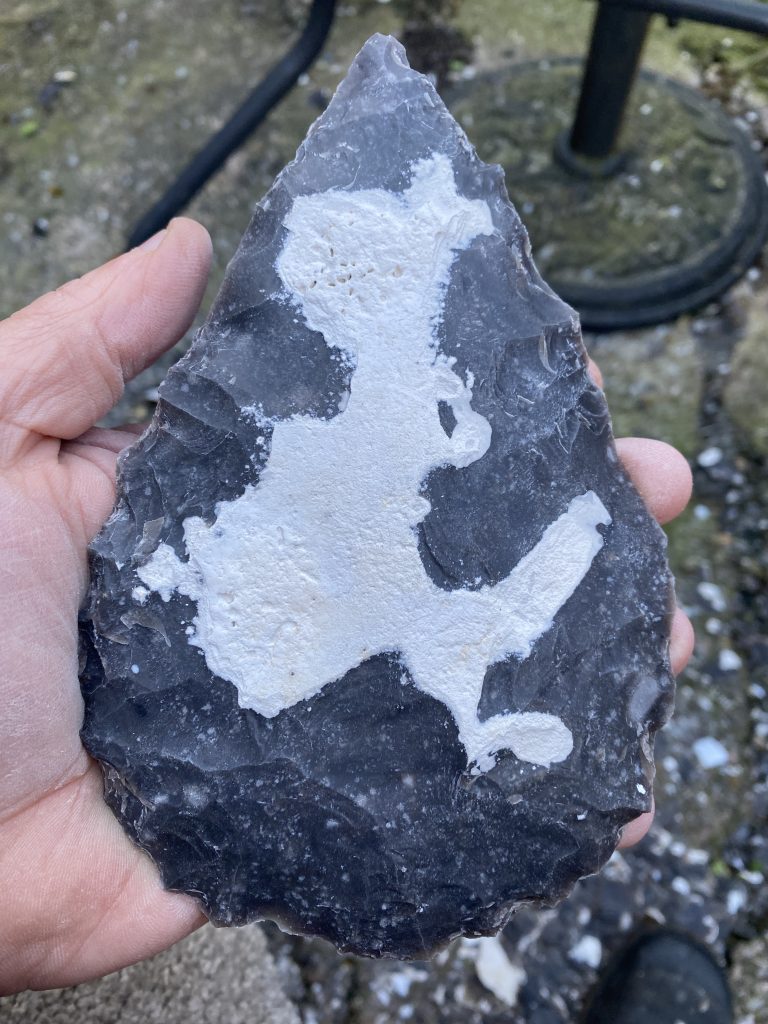
The two aspects I really like about this handaxe is the size (it is pretty big) and the symmetry. As I know how tricky it is to achieve these aspects I believe that this would have also held aesthetic value to a Palaeolithic handaxe maker.

So, the end result is one big, sharp and also aesthetic handaxe. Yesterday I destroyed one flat nodule and made two glass arrowheads as well as making this rascal. In relation to my performance here I think the correct term is that ‘I was cooking on gas!’

Happy days!

My step fracturey Barmson beach handaxe

This afternoon I treated myself to two of the larger slabs brought back from Barmston. The flint isn’t as good as I remembered, or the pieces worked so far aren’t. The first one worked well with the hard hammer, but it had a very hard seam in the centre that disrupted the soft hammer blows. That one ended up in the waste flint pile.

The above two photos are of the second flat tablet, and it worked a lot better than the first. I was able to get a good rough out without any major endshock, all good.

And on this side that has worked. The flint fractured approximately according to plan, the edge is sharp and I am happy with the shape.

Flip it over and that’s when you spot the step fractures. That they are all on one side is, I think, something to do with how I work each surface differently, but I am not sure actually how I work it differently.

I think it may be to do with the initial turning of the edge, and by doing so I get a way in, but inevitably the angle is better on one side than the other.

Consequently I get to do all the nice stuff on the good angle side, and then have lots of step fracture action on the other when trying to bring the second face into line but without the suitable angles. That’s my current theory anyway, and fortunately I have quite a few blocks left to play with, and find out if I am right. Watch this space…

My Barmston Beach wonky handaxe

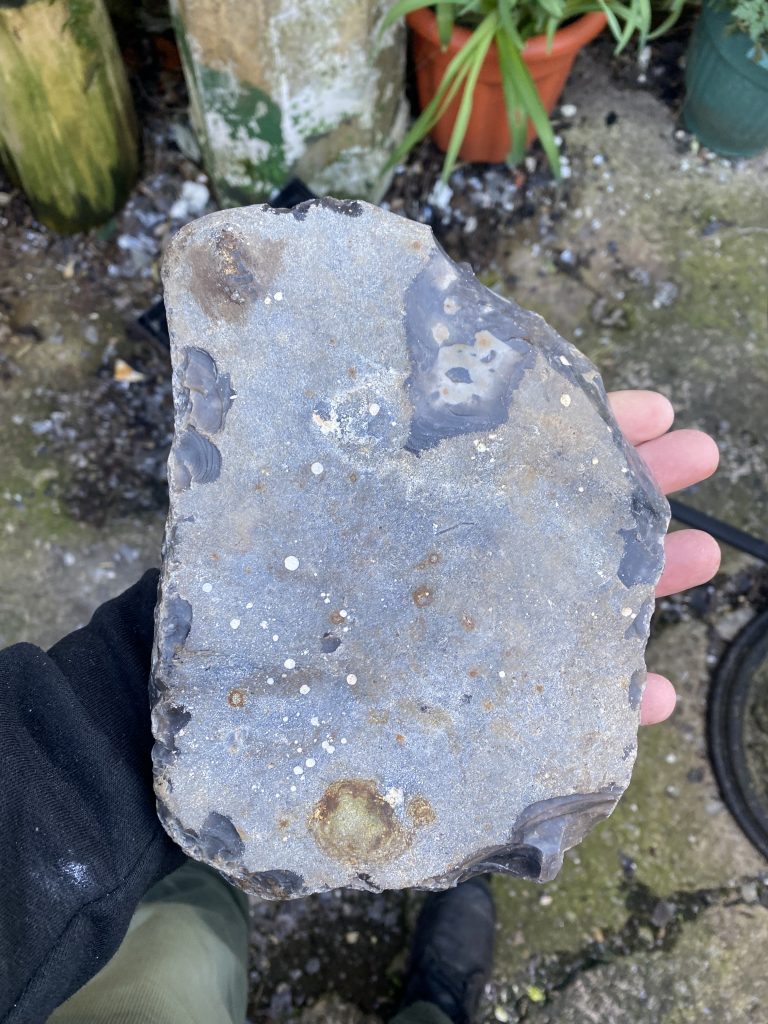
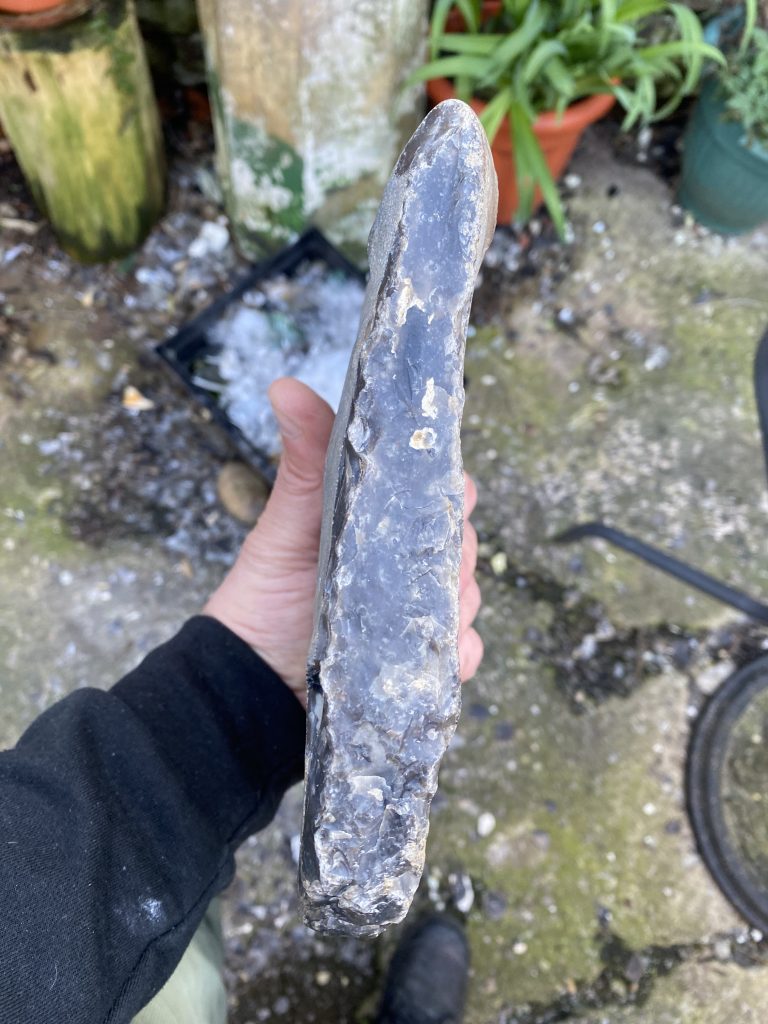
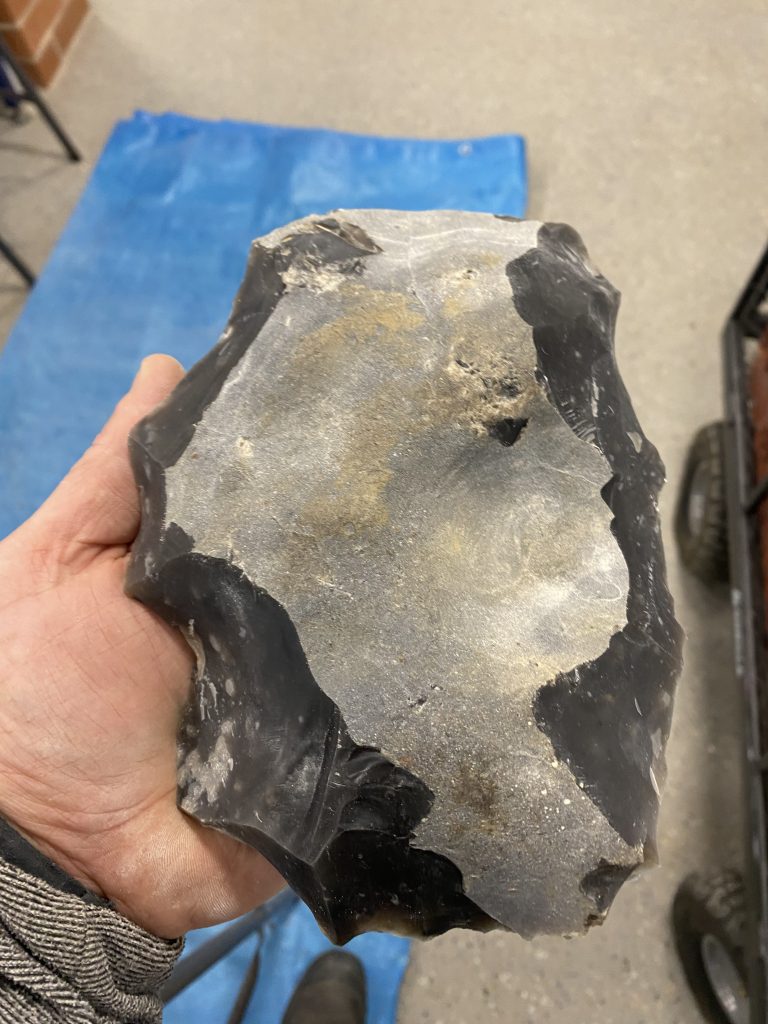
This tabular piece of Scandinavian beach flint must have had a few adventures in its life, as it contained many more internal fractures than I expected.

Consequently, the handaxe is much smaller than I was aiming for at the start, and I realised after taking the photos that it is also wonky.

However, it does have something about it, in that it is sharp and hand size, and a product of persistence on my part. So happy days!

New Years Eve in the backyard…

From charity shop to copper pressure flaker in around thirty minutes.

I used a hard hammer to get rid of the walls and isolate the thick base.

Then used the same hard hammer to ‘turn the edges’ of the thick base and create a ‘way in’ for thinning and shaping with the soft antler hammer.

Thinned and shaped with the soft antler hammer then finished with a copper pressure flaker. Here’s to a peaceful 2026 folks X

My latest dual heritage handaxe

I realised a good while ago that I am interested in categories and boundaries. This is because of my own experience, being ‘half-caste’ in the 60s, 70s and 80s, ‘mixed race’ in the 90s and by the early 2000s I had become ‘dual heritage’. These are all what are termed ‘etic’ or outside categories, how society has characterised me. An ’emic” or internal category would be how I characterise myself, and that would be as ‘Mancunian’. More than just abstract concepts, these labels have implications for the differing ways I have understood myself and been treated in the real world, hence my interest.

Onto handaxes. I am really liking this most recent offering. It is made from the largest piece of slag glass kindly provided by the folks at Salford Archaeology. I have left the base as is, referencing where it has come from, and in relation to the worked section, I like the thinned serrated edge on both sides. It would make a great cutting tool, and I am super pleased with this one.

So form and potential function if you like, mirror a Palaeolithic handaxe. However, the material it is made from, a slag glass block excavated from a factory in Manchester, anchors it very much in the modern industrial period. It has two, temporally contradictory etic heritages, or narratives captured within one beautiful object.

So what about its emic identity? I don’t think the handaxe itself can tell us, but through my visual and haptic engagement with it I would say it is pretty special. It works for me on every level, and it feels like I have expressed something of myself within the production of this object. It was satisfying to make and I am happy that I have this ability to create things of beauty such as this. And I think that its dual heritage adds to its aesthetic and doubles its narrative value. Happy days!

I have found a new favourite handaxe

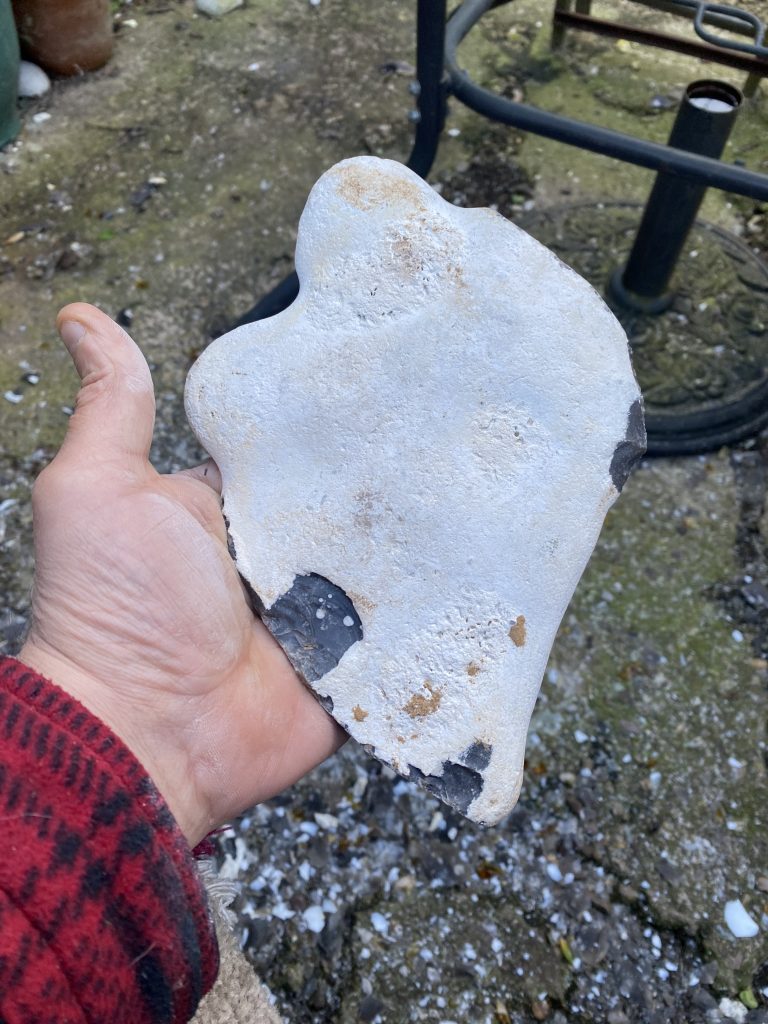
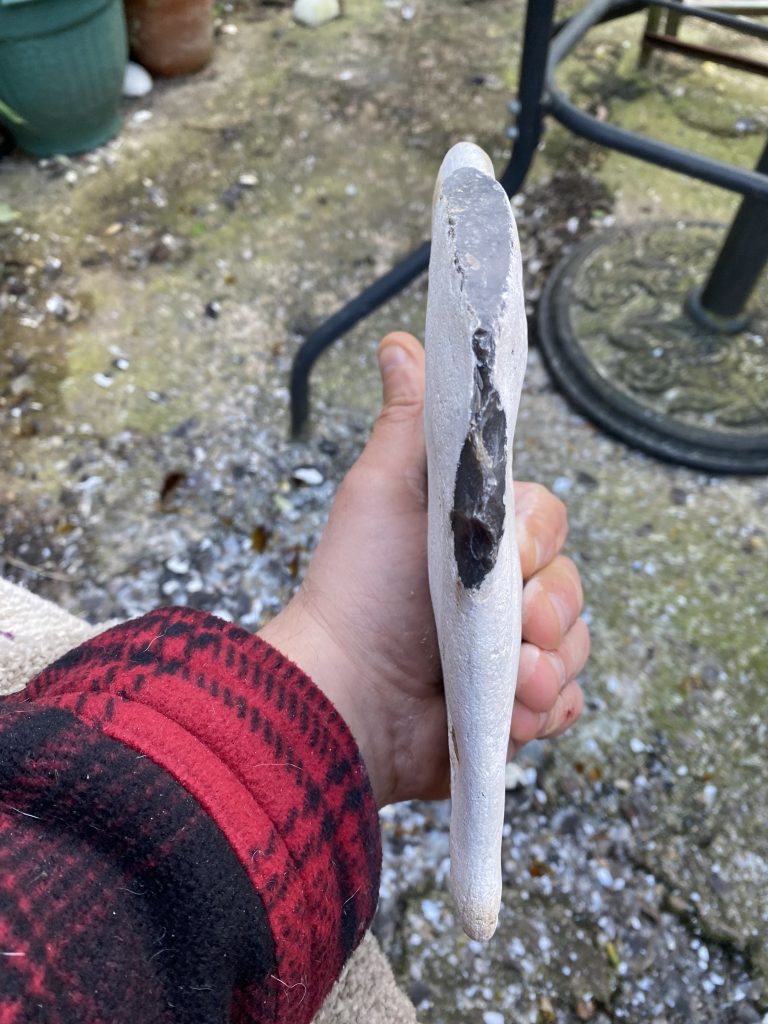
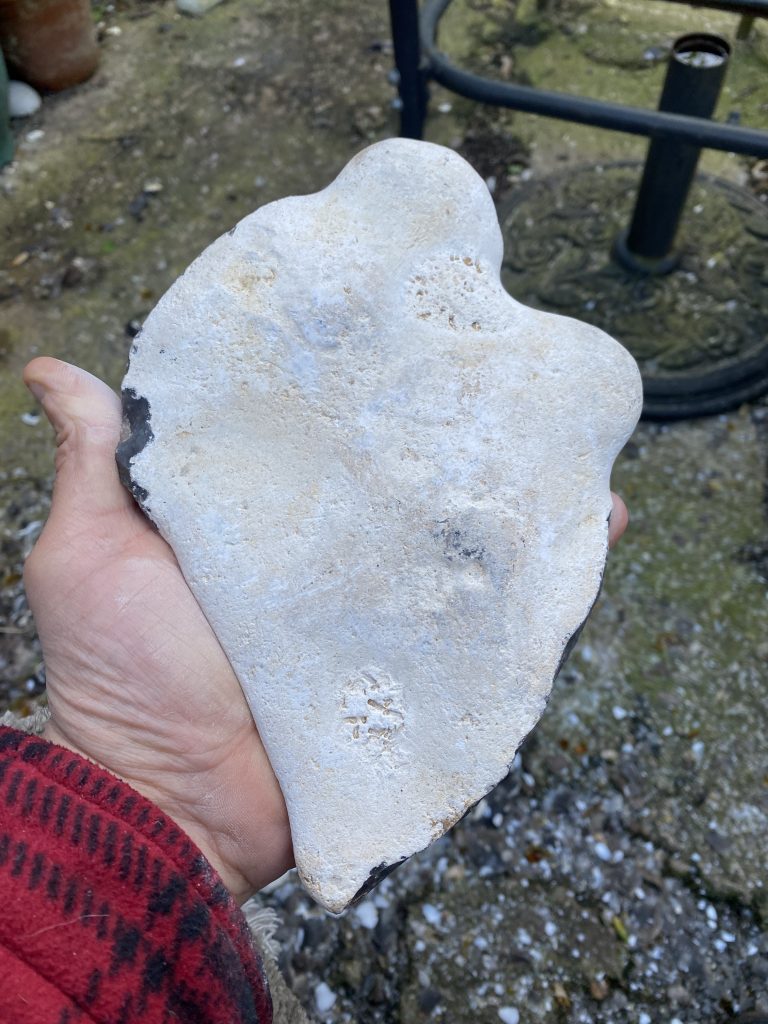
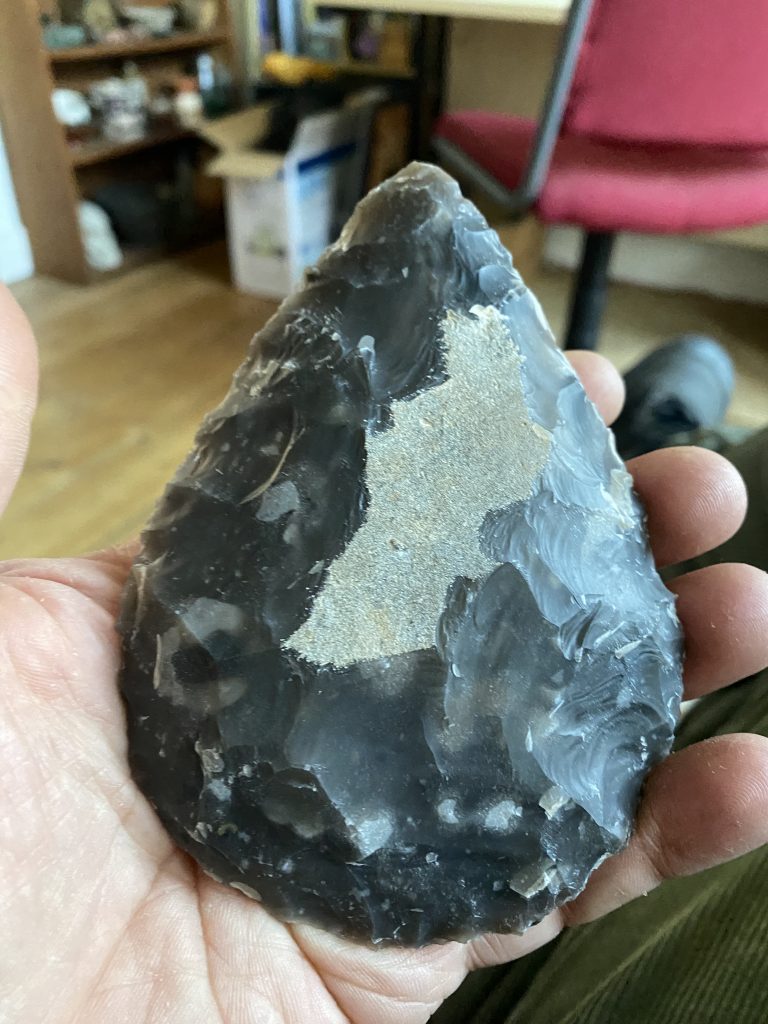
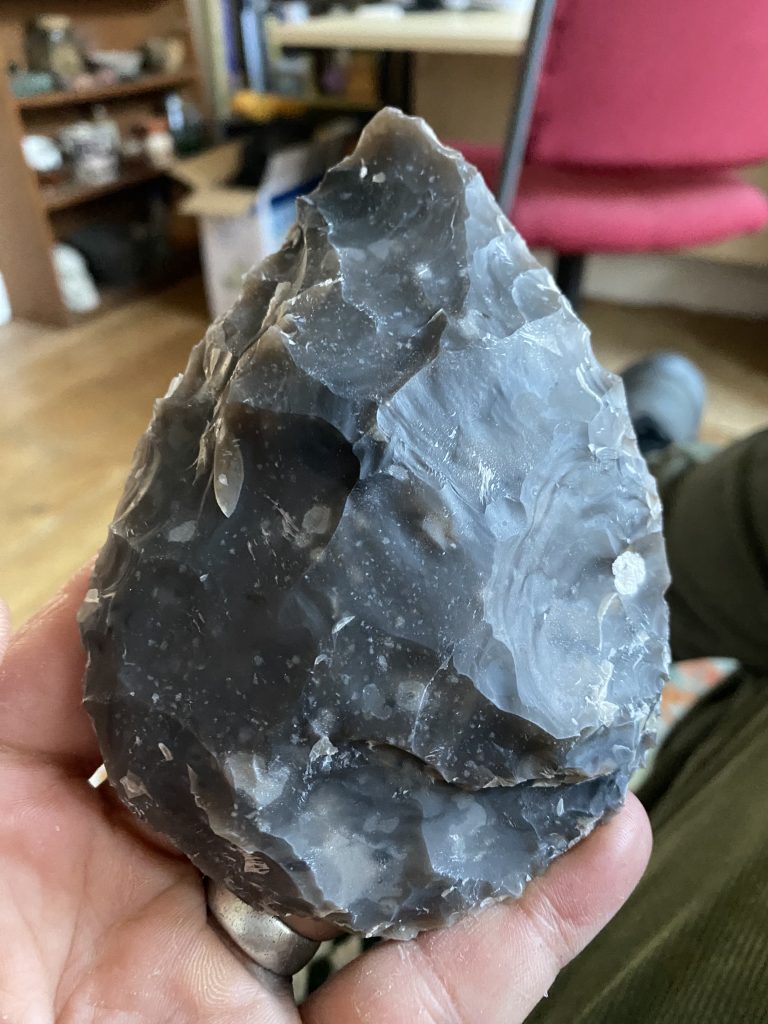
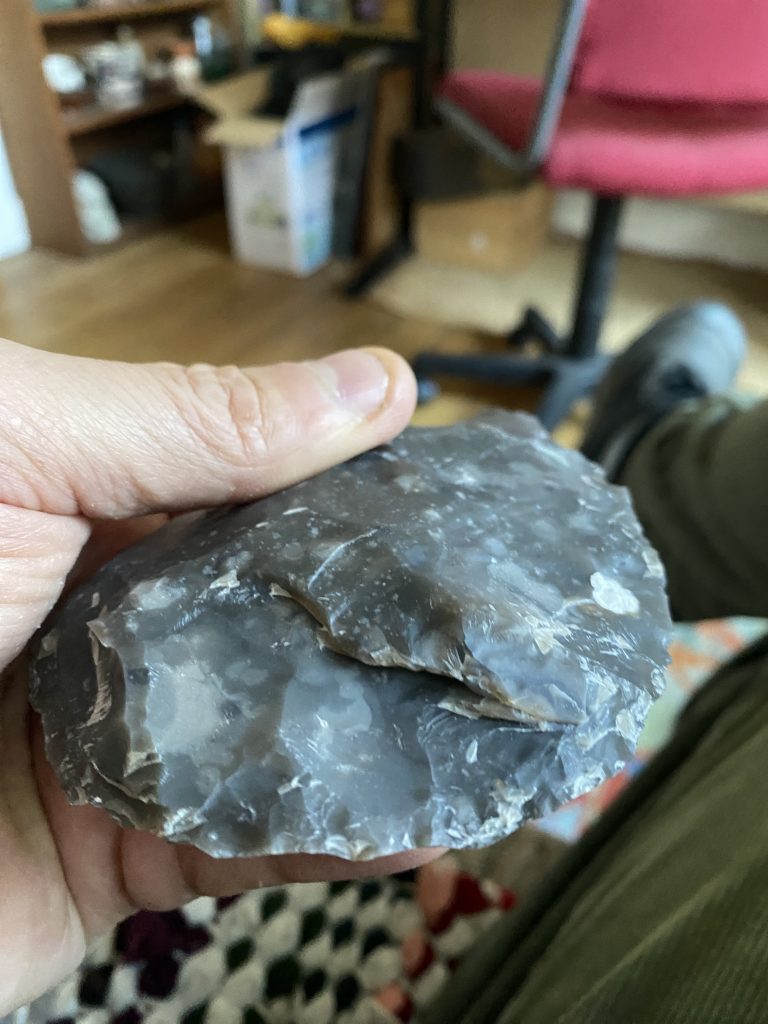
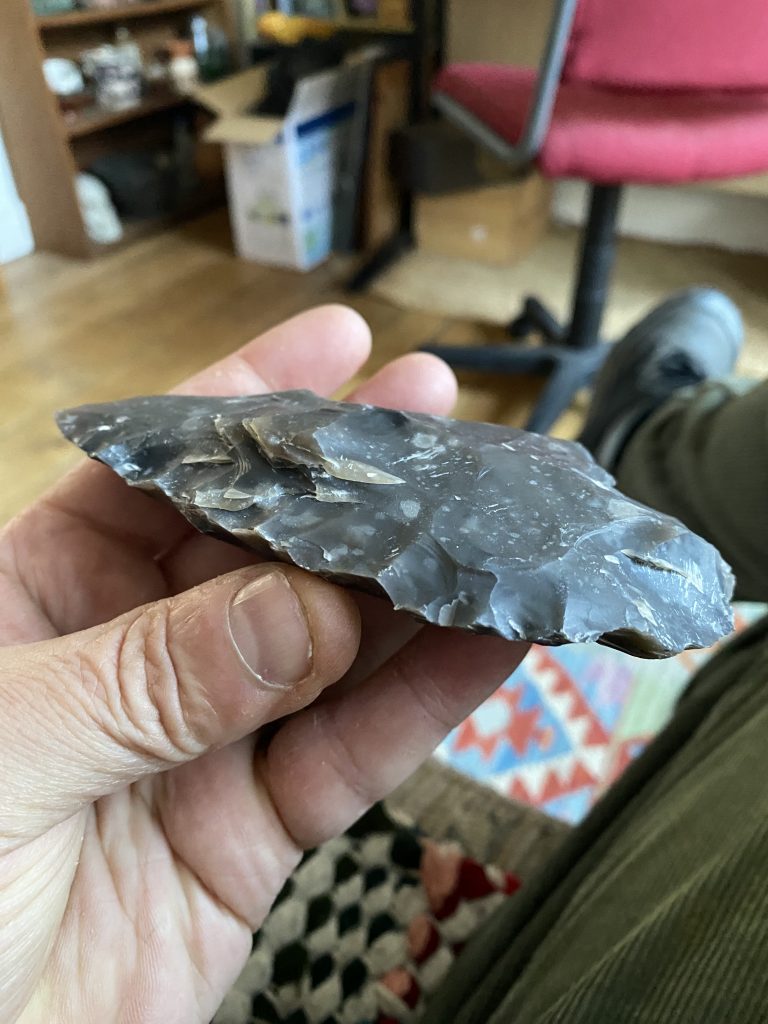
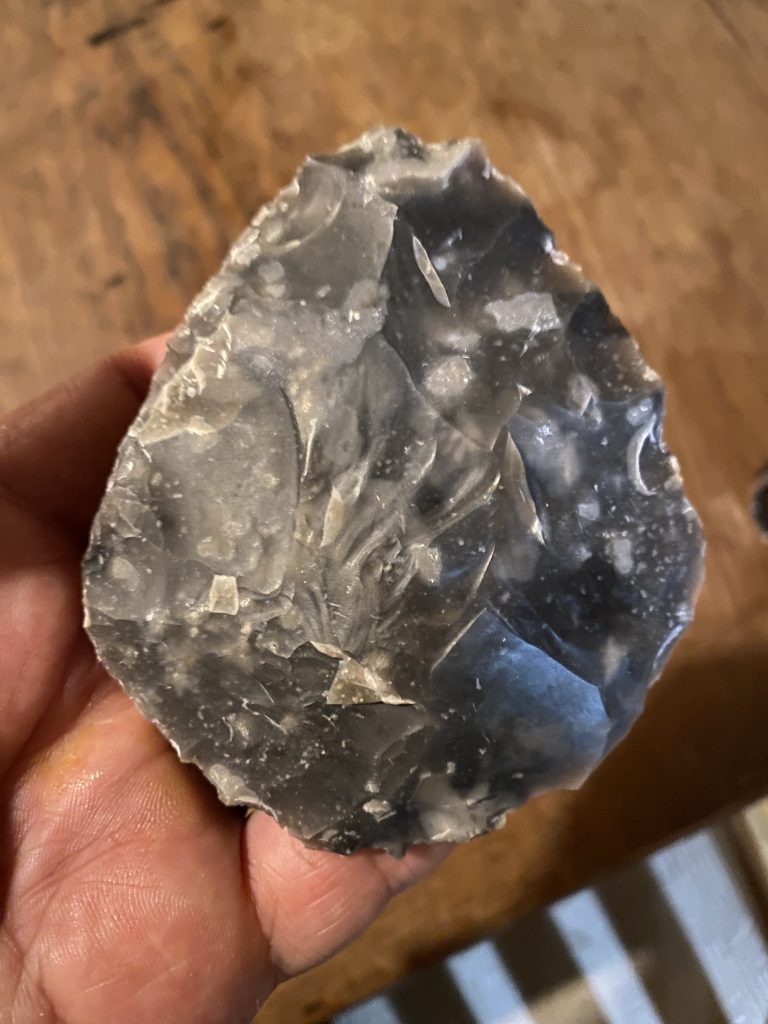
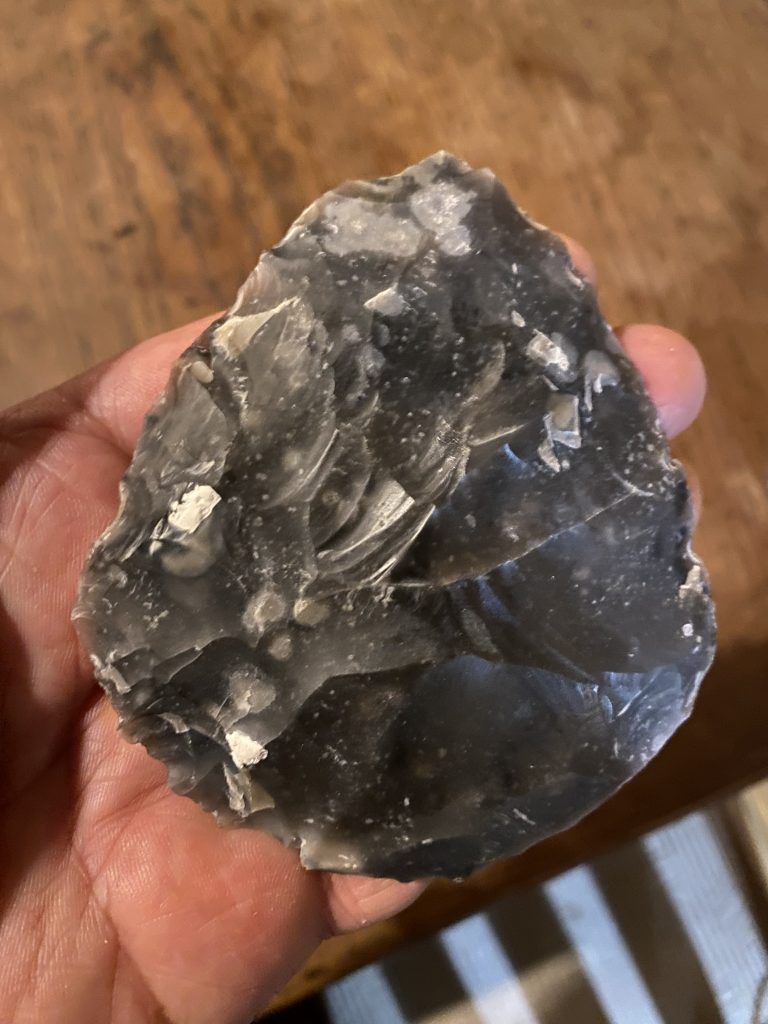
The above handaxe was found by one of my colleagues in our teaching collection, mislabelled as a ‘Neolithic flint handaxe’. It appears to have been produced on a beach cobble and I really like the contrast between the large flake scars on the proximal end, and the much finer scars at the distal. This suggests to me a resharpening process. I also like the shape.

The other face is equally interesting, and I can see this shape and type is what I am going to be playing with over the next few making sessions.

< Older posts

© 2026 Learning Through Making. All Rights Reserved.

Up ▴