Following guidance from my friend Laura Thompson I bought a Dremel hand held drill with a diamond bit for drilling glass.
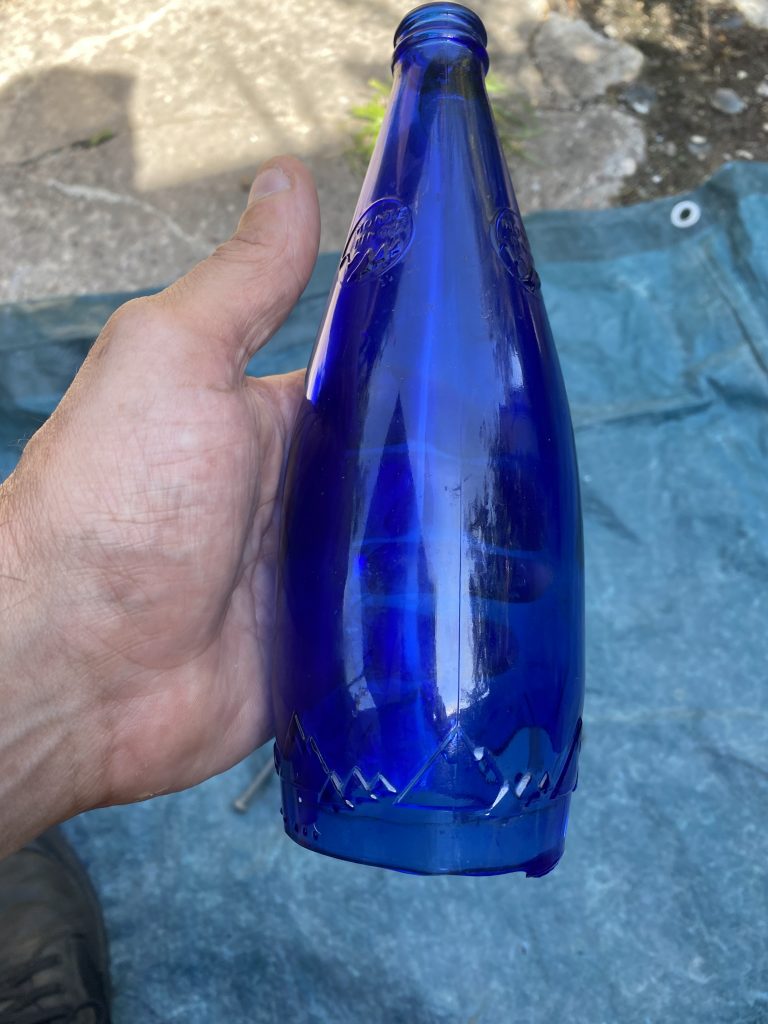
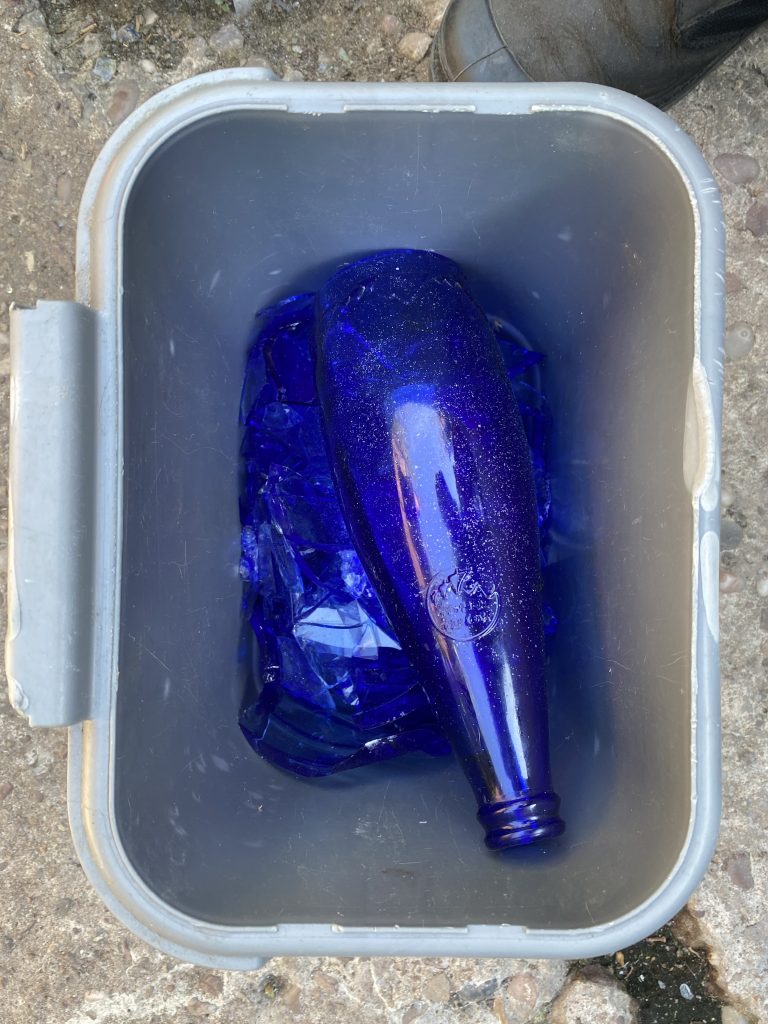
And this blue bottle has been sat in my wood store / shed for a good few months. It is also my friend Teresa’s birthday coming up. A series of happy coincidences.
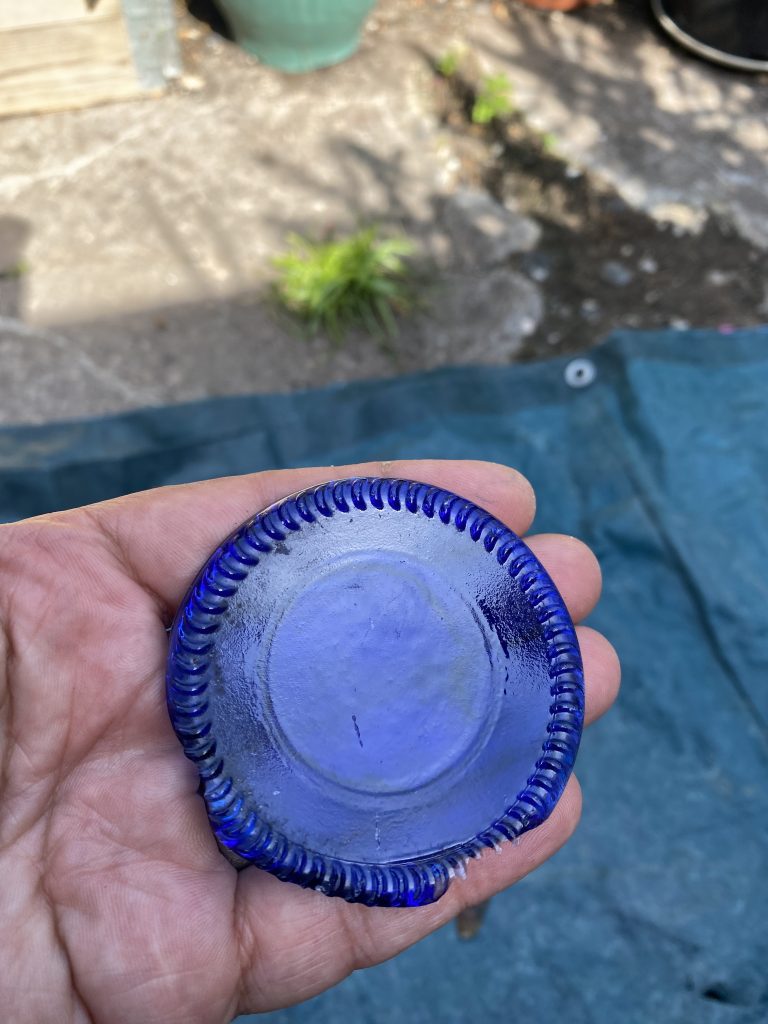
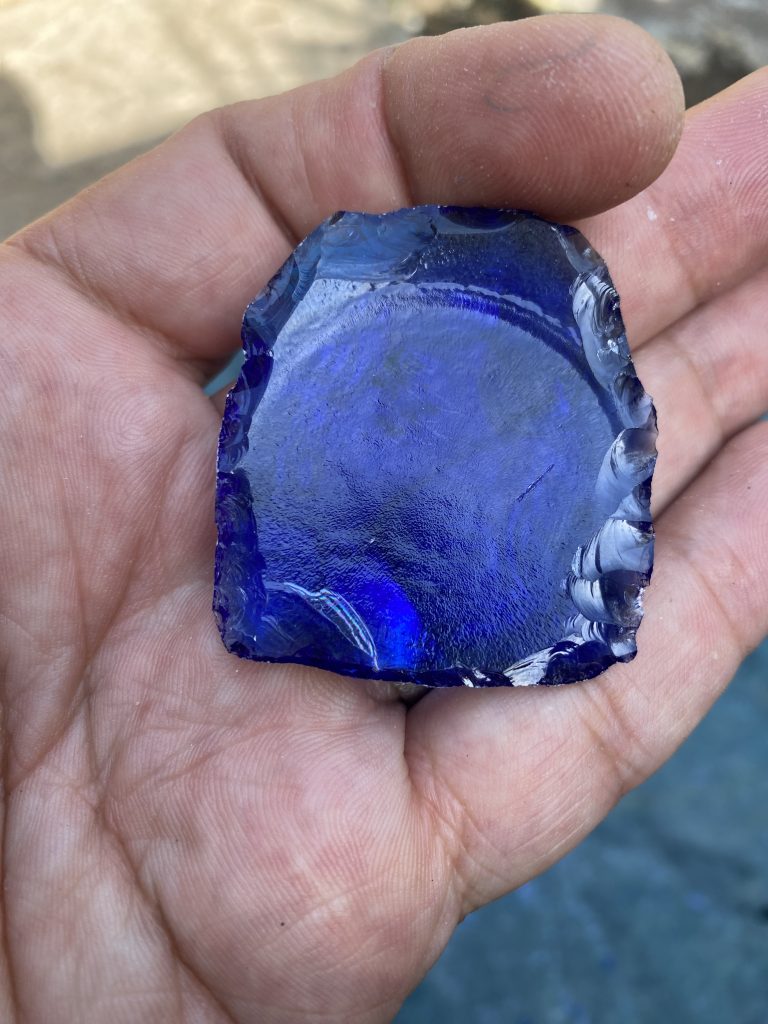
The base came out using a nail and was very convex and concave. Following on from my previous post, I focussed upon the more difficult concave surface.
there was still a little original surface left at the end but I am happy enough with the results below.
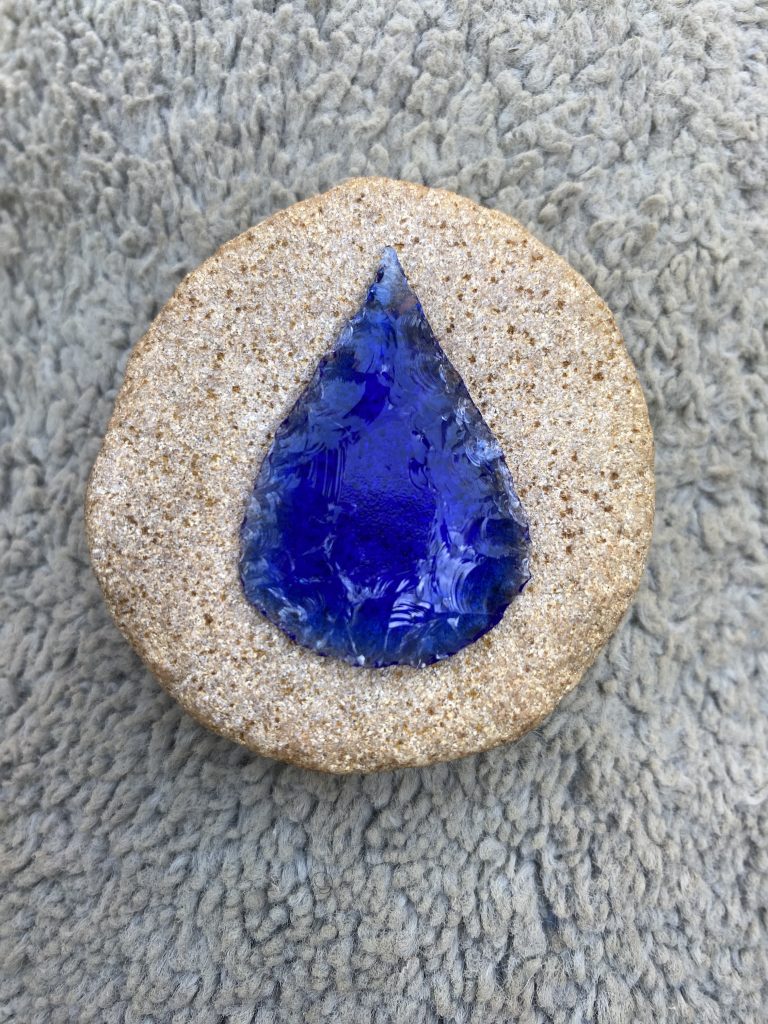
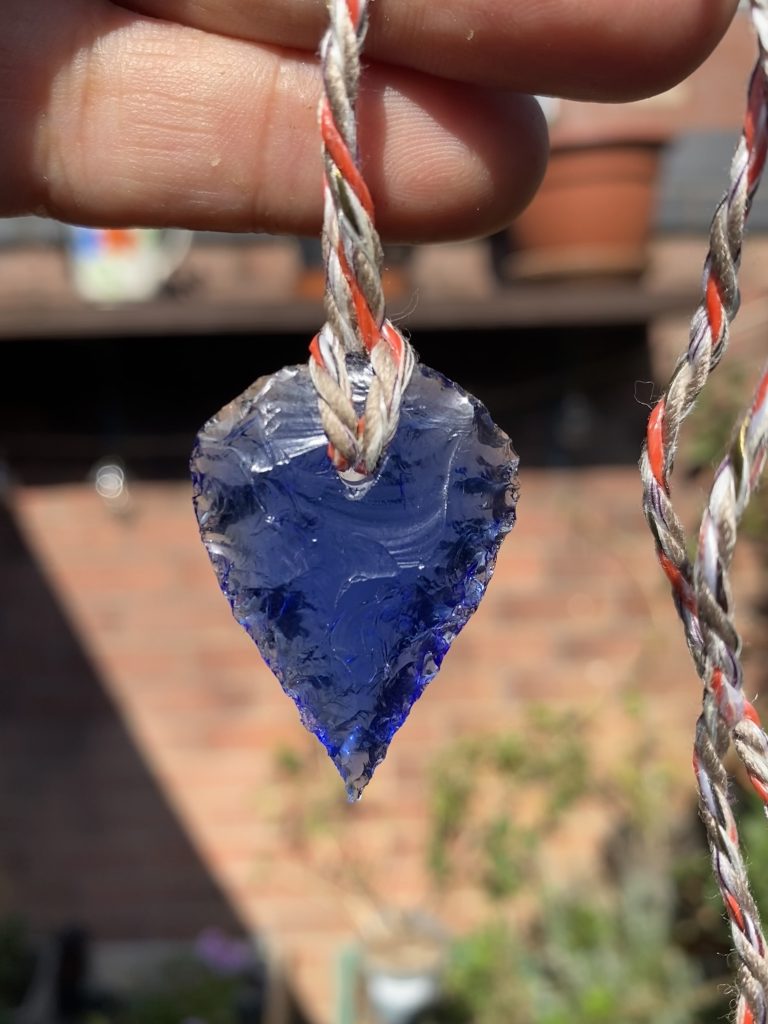
However, this story doesn’t end there. I submerged the arrowhead in a shallow tray of water, drilled the hole.
I then suspended the arrow head using some recycled cordage I found somewhere at some point.
And the blue glass debris has gone into the blue glass handaxe cullet collection container. Waste not want not!
As you can see, I have been doing a fair bit of glass knapping this week.
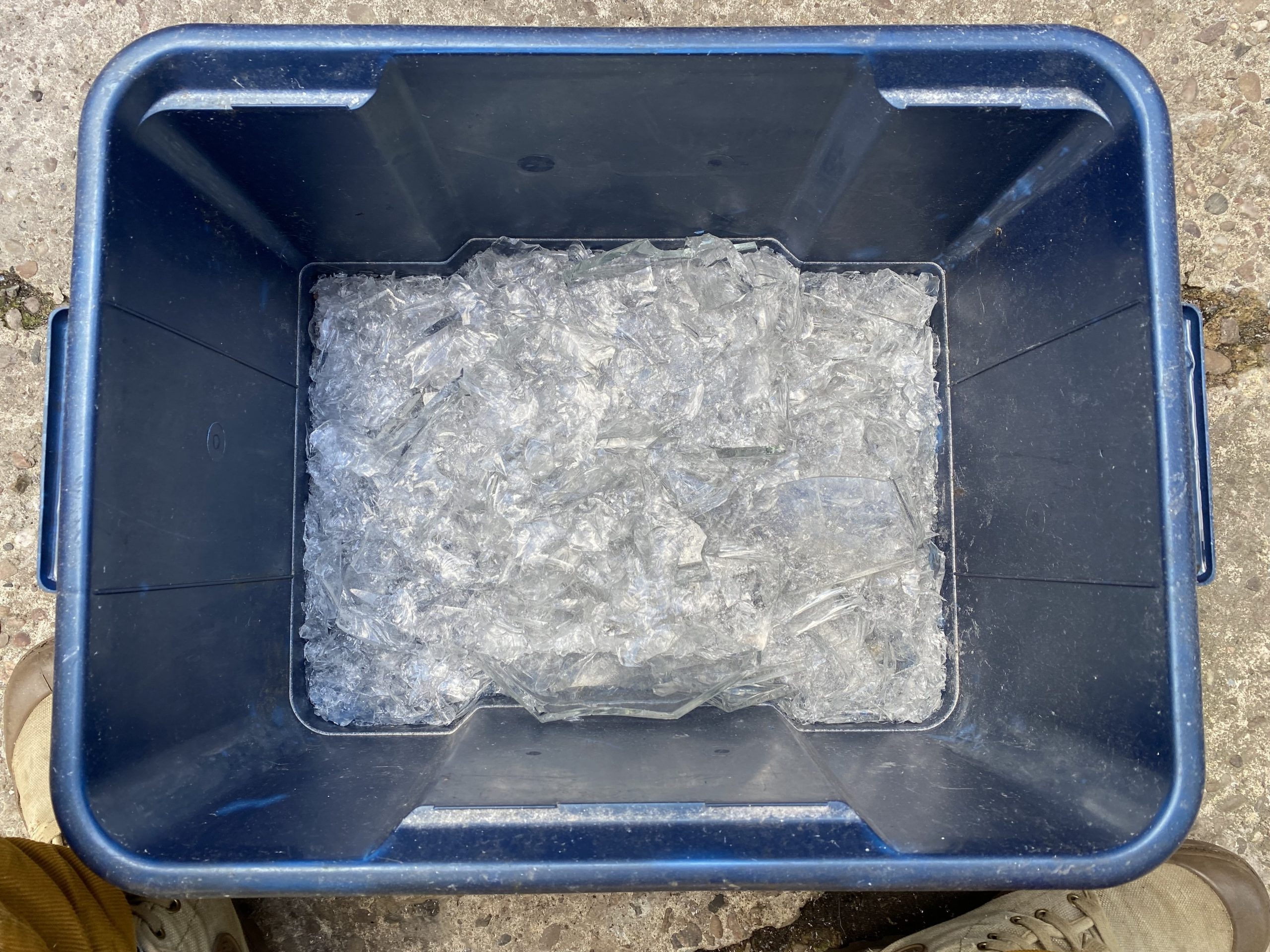
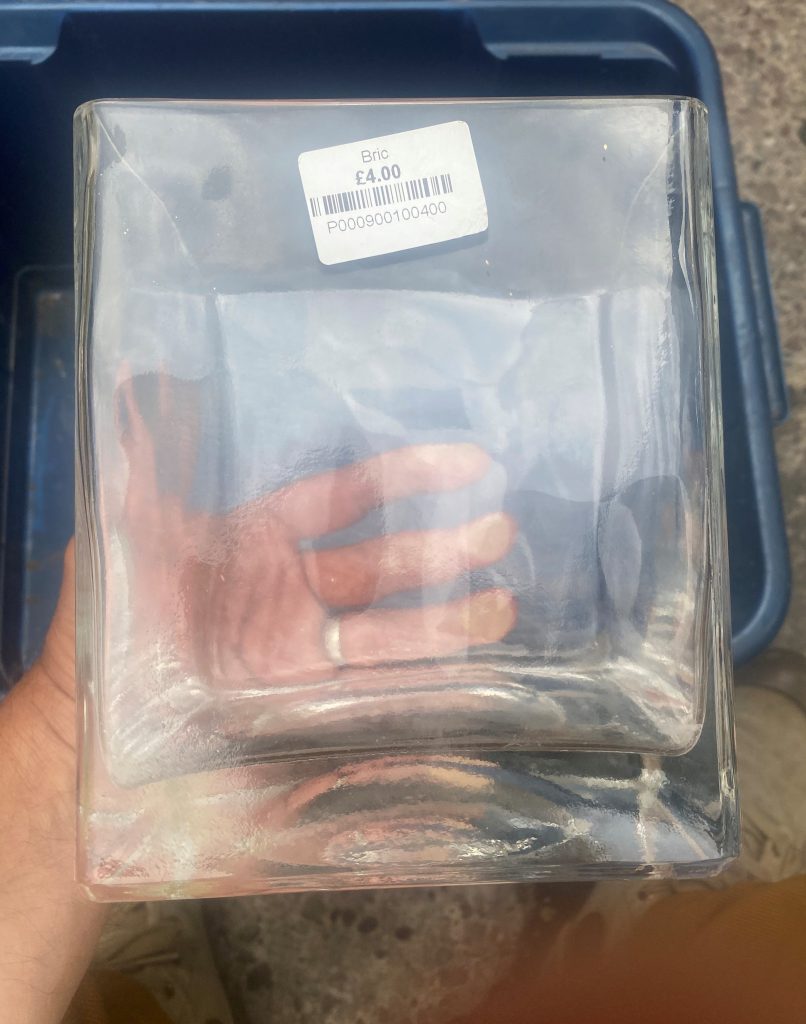
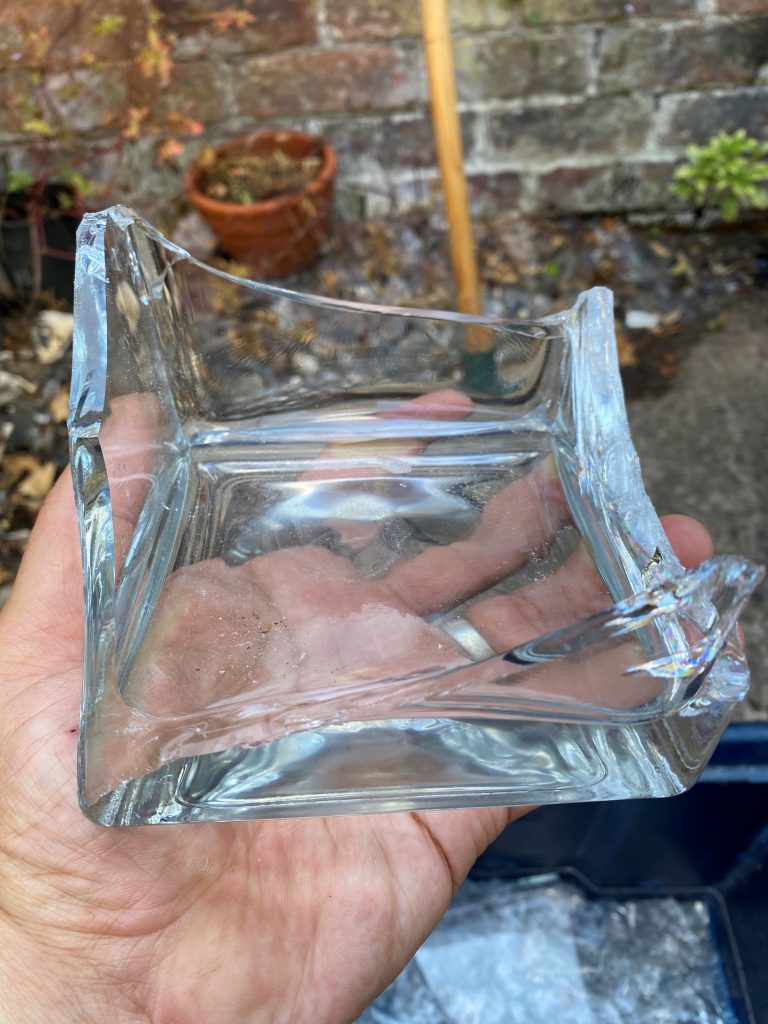
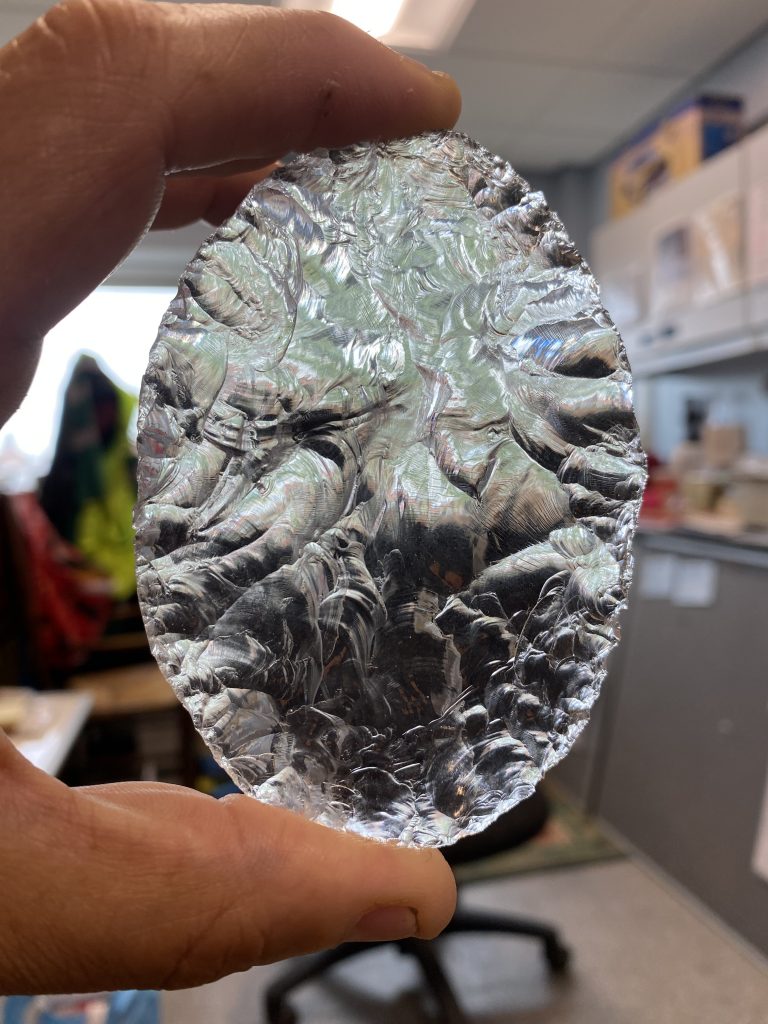
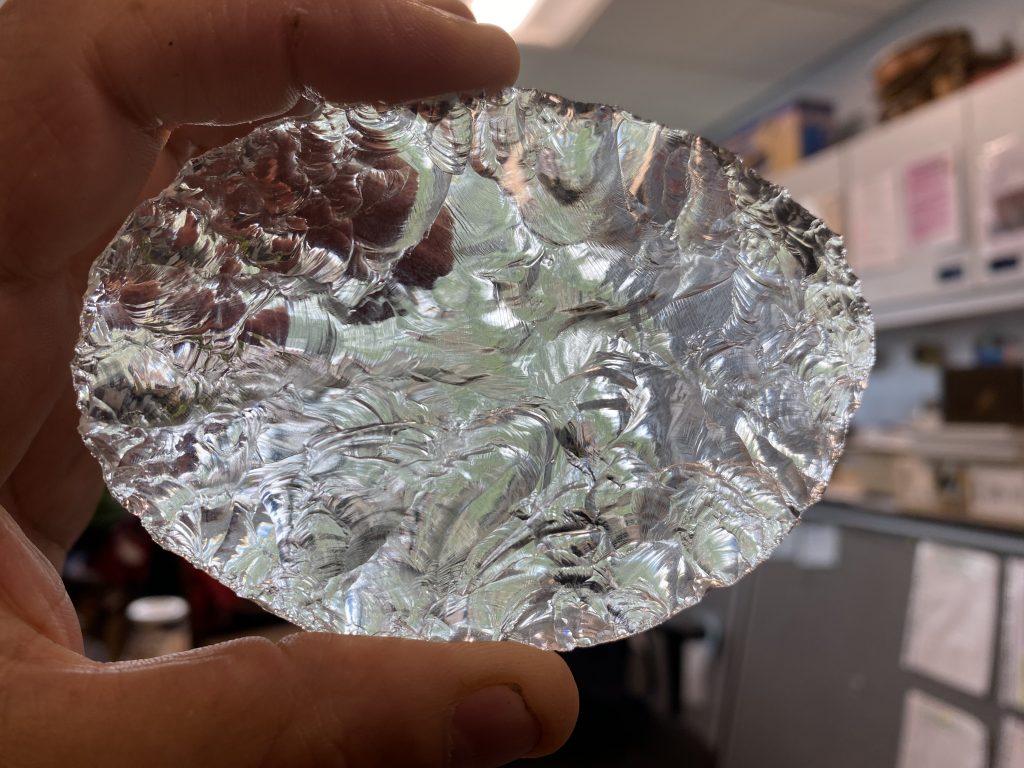
We were away in Lincolnshire and after a number of charity shop and car boot visits I came away with four of these large based vases. It was very interesting having four goes all with the same starting point. All attempts were successful, handaxe wise, but I also learnt something useful.
The first stage is removing the walls of the vase. As you can see above, the bottom left corner fortuitously provided a way in. I have talked elsewhere about ‘step fracture islands’, when one face works well, and the other doesn’t. I have realised this is something to do with where and how I get a way in. With thick pieces of glass such as this the way in makes one side easier to work than the other. I have observed this but never addressed it.
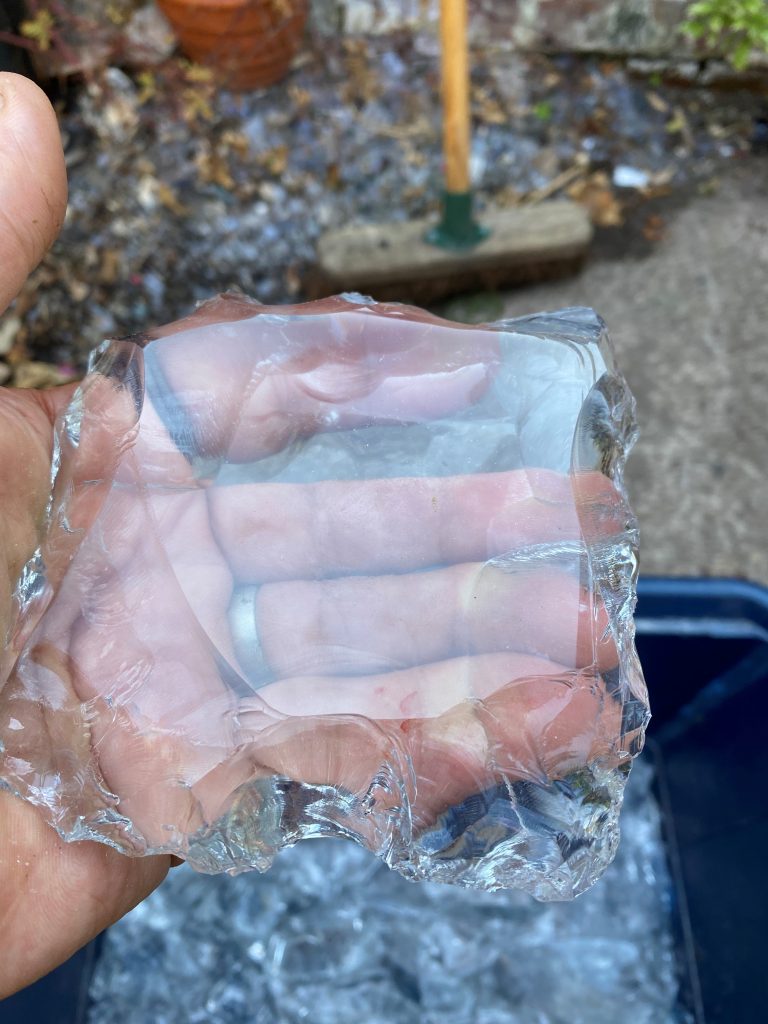
What you can see in the above image is all the edges ‘turned’ but a large concave section on the upper surface, and a convex section on the lower surface. The turned edge allows a way in but the concave section is much harder to reduce or to remove long flakes from. I had this same problem with each of the first three vases I worked. On this fourth one I tried a different method.
Kim Akerman discussed here how Australian Aboriginals managed this same issue with the concave and convex surfaces of bottle glass. They essentially work the most difficult concave face first until the surface is flattened. Only then do they move onto the easier convex surface.
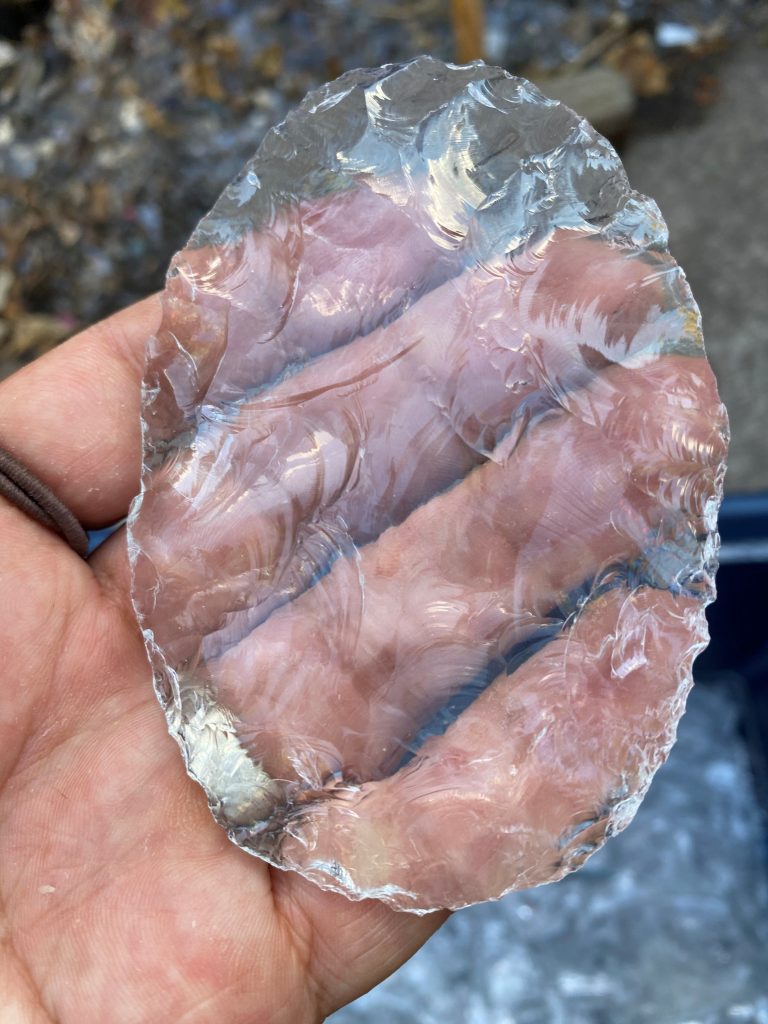
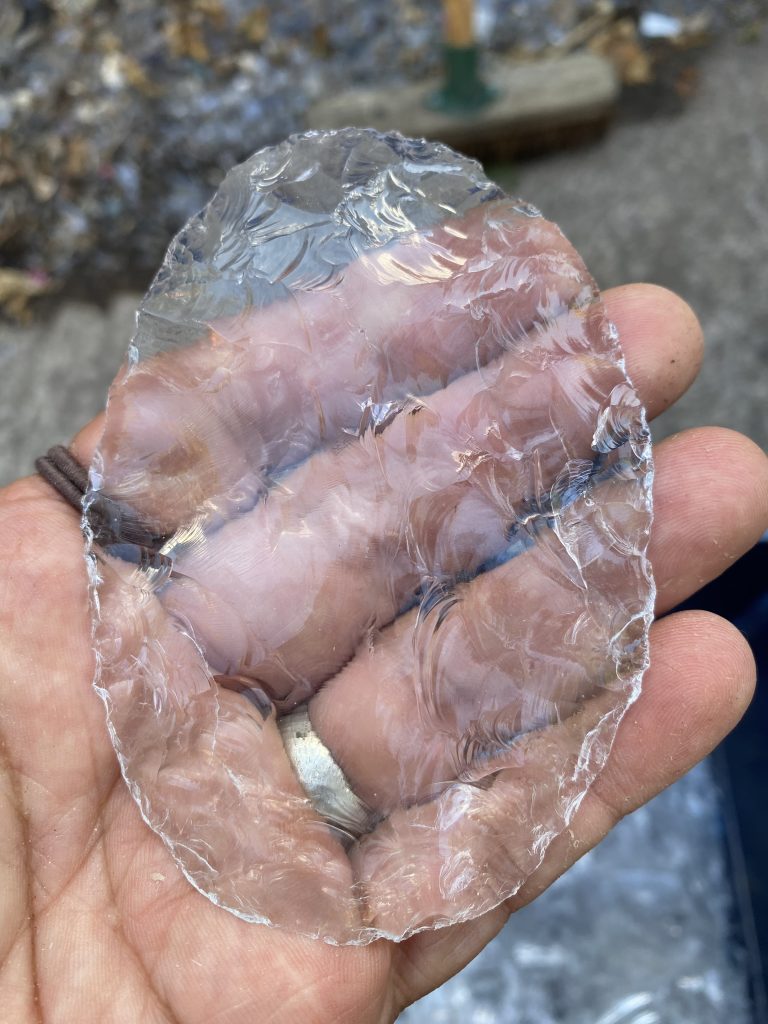
That’s exactly the approach I adopted here, and it worked really well. I normally chase the opportunities the turned edge presents, but as discussed above, I end up with one ‘step fracture island’ face. The step fracture island phenomena is related to the fact that one side is more difficult to work than the other. By prioritising the more difficult side I eliminated that problem.
Symmetry wise I’ve ended up with a wonky ovate handaxe in plan, but what is less visible from the image is the how both faces have been worked similarly and there is no ‘better’ or ‘worse’ face. I may have to get rid of the wonkiness because of my preoccupation with symmetry, but this handaxe represents for me a valuable development in my methodological approach.
This development occurred because I had four similar vases and worked on them over four consecutive days. Approaching the same problem repeatedly allowed this learning experience to emerge, unplanned. I really like this kind of repetitive practice and unplanned emergent learning experience, which seems alien to the more normative idea of having a goal and working systematically towards it. Food for thought!
This afternoon I treated myself to two of the larger slabs brought back from Barmston. The flint isn’t as good as I remembered, or the pieces worked so far aren’t. The first one worked well with the hard hammer, but it had a very hard seam in the centre that disrupted the soft hammer blows. That one ended up in the waste flint pile.
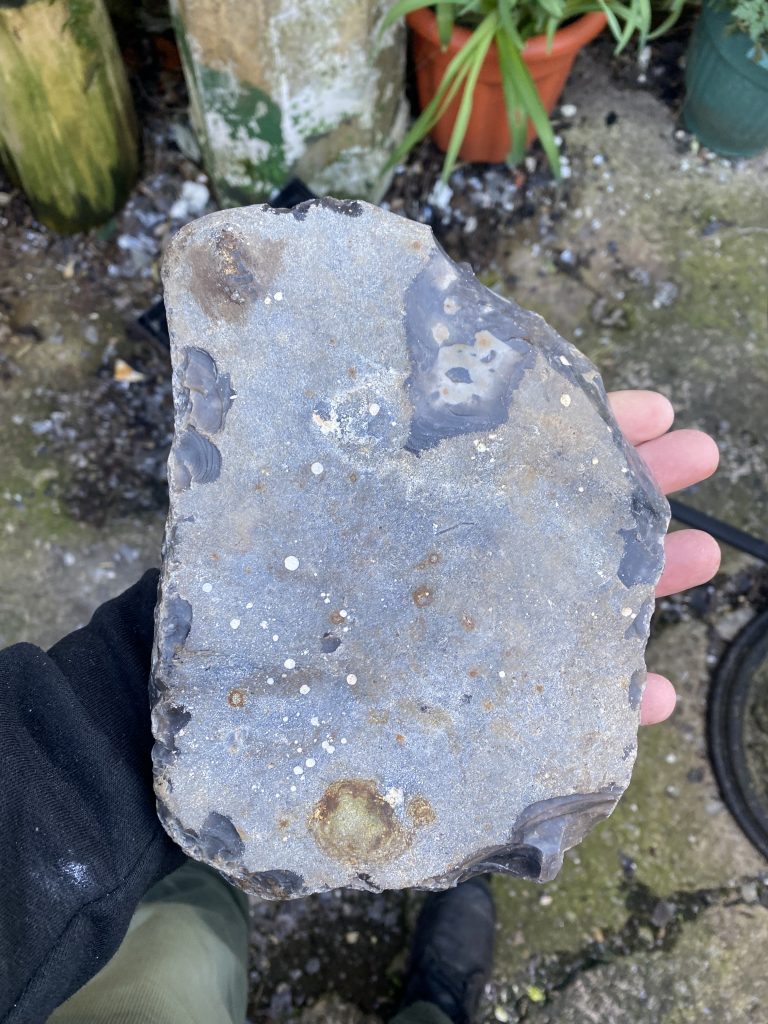
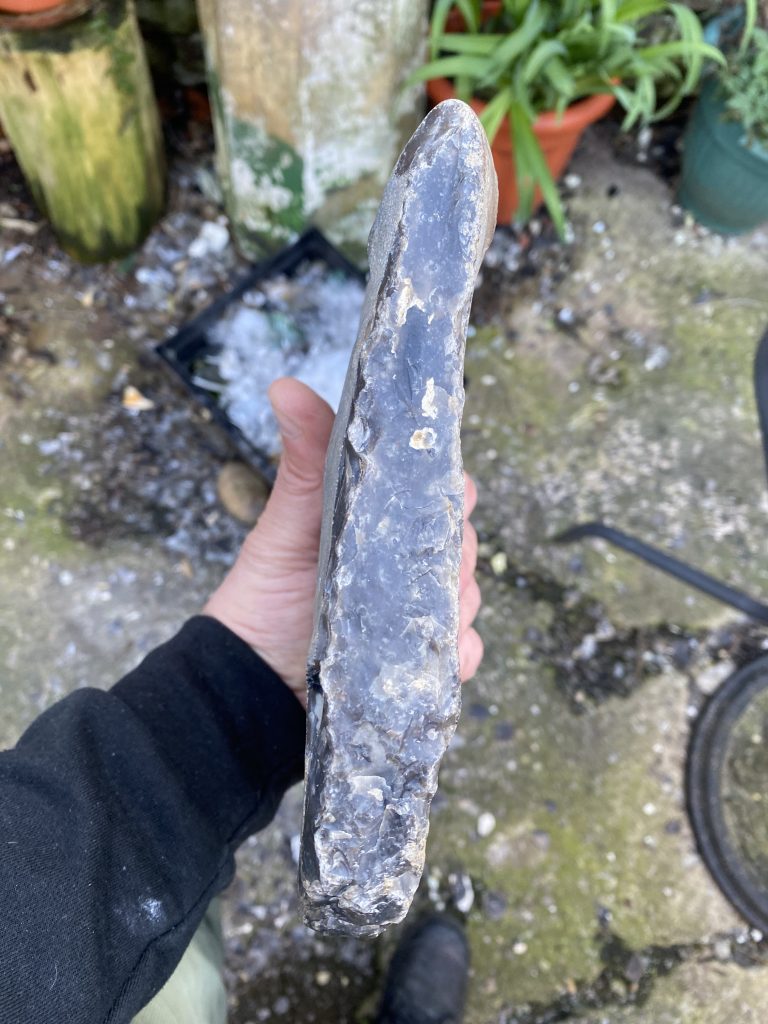
The above two photos are of the second flat tablet, and it worked a lot better than the first. I was able to get a good rough out without any major endshock, all good.
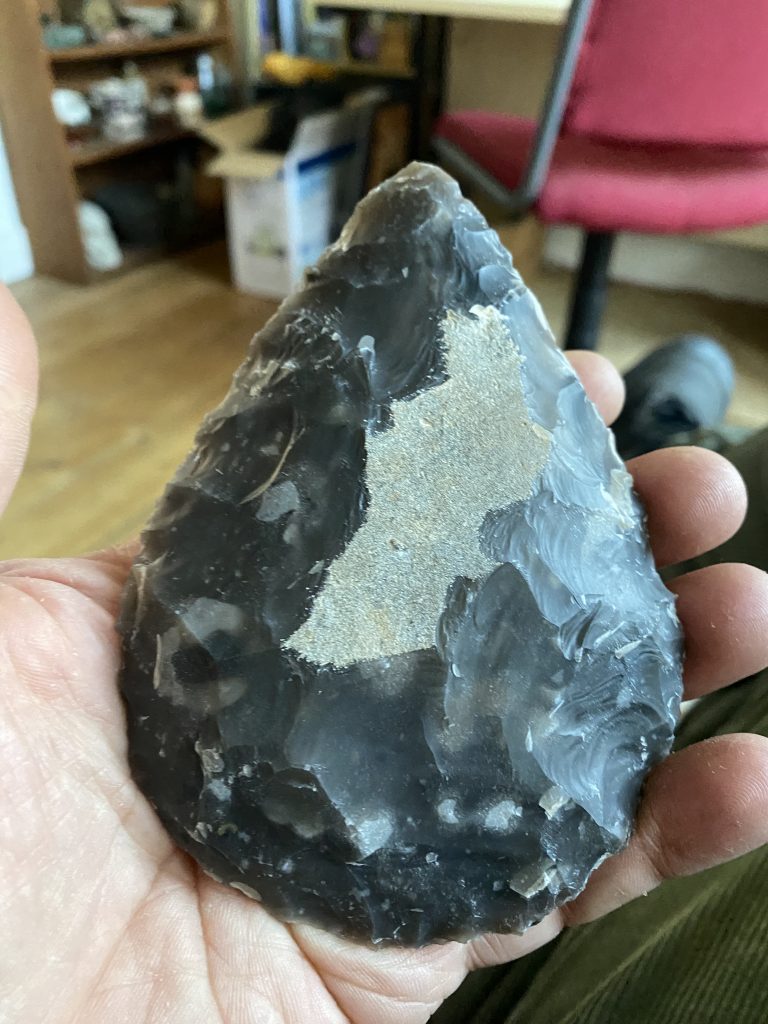
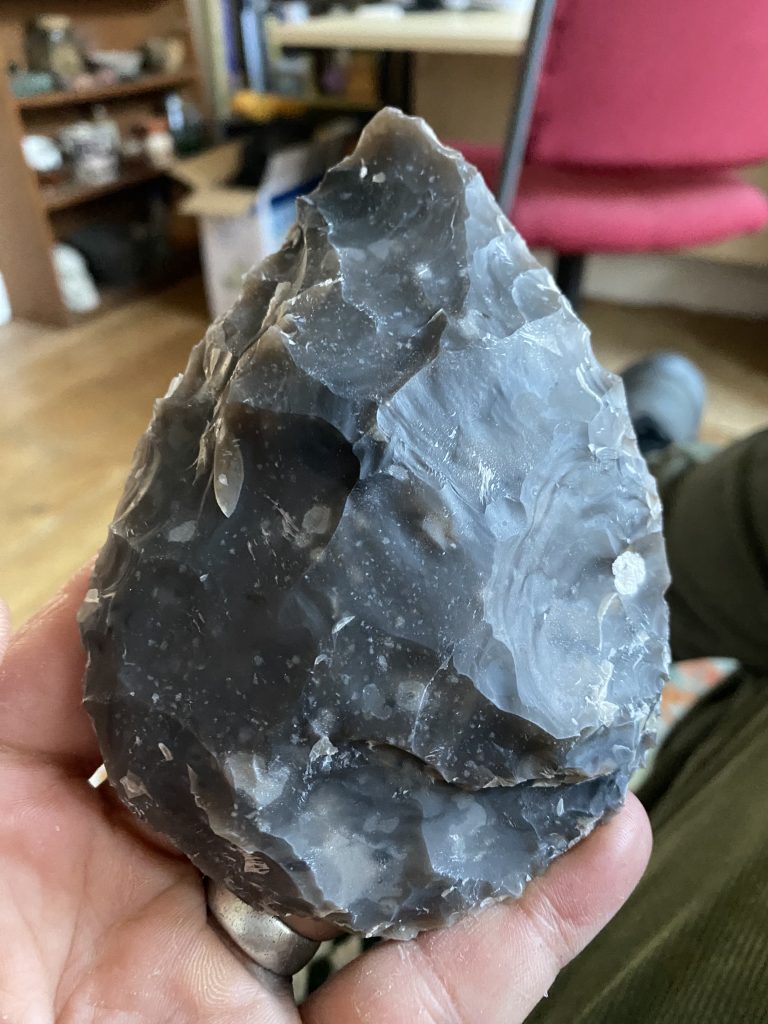
And on this side that has worked. The flint fractured approximately according to plan, the edge is sharp and I am happy with the shape.
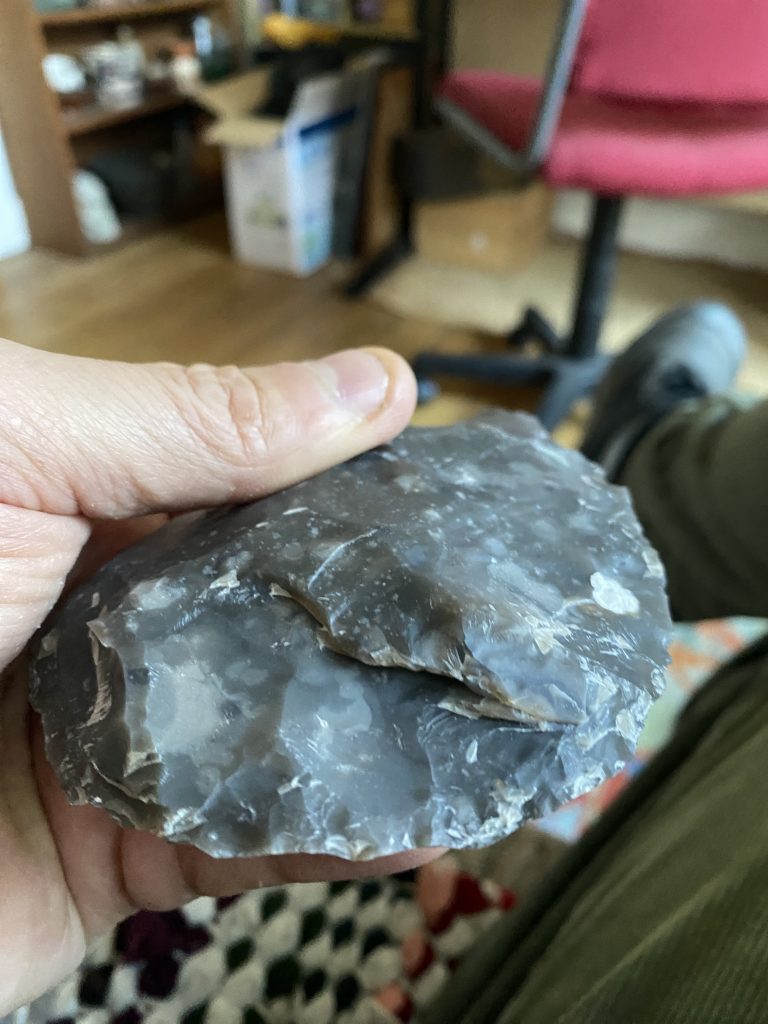
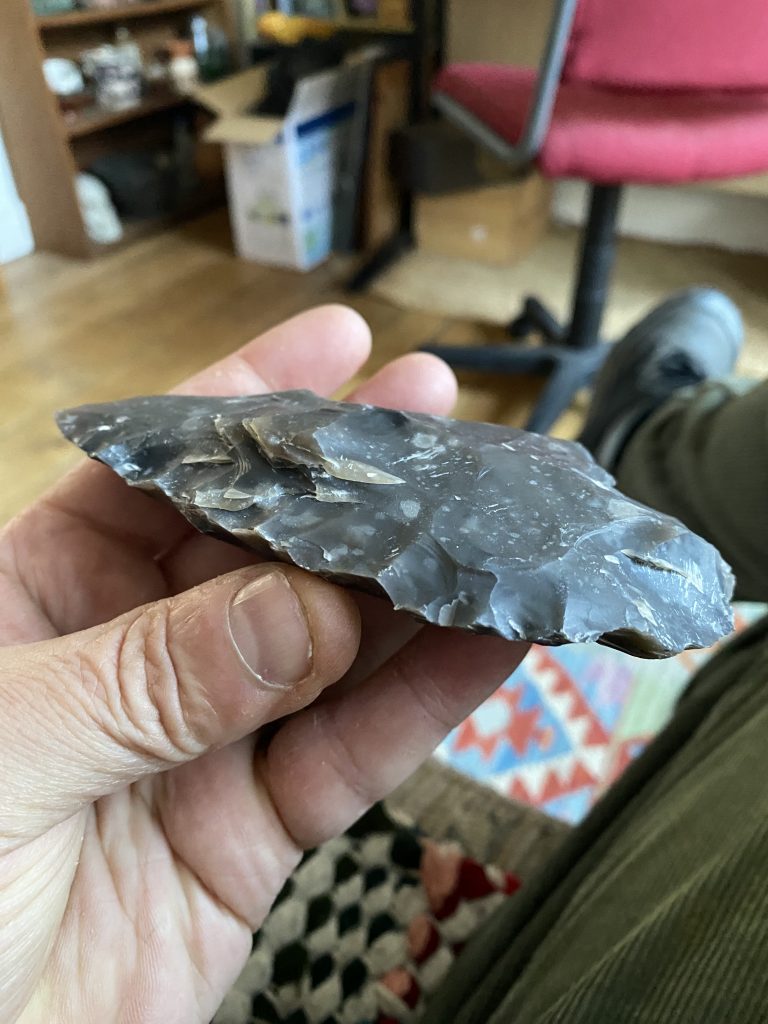
Flip it over and that’s when you spot the step fractures. That they are all on one side is, I think, something to do with how I work each surface differently, but I am not sure actually how I work it differently.
I think it may be to do with the initial turning of the edge, and by doing so I get a way in, but inevitably the angle is better on one side than the other.
Consequently I get to do all the nice stuff on the good angle side, and then have lots of step fracture action on the other when trying to bring the second face into line but without the suitable angles. That’s my current theory anyway, and fortunately I have quite a few blocks left to play with, and find out if I am right. Watch this space…