Experimental production of stone tools

Tag: Barmston Beach

Size and Symmetry: I’ve made something I like (again)

I have been off work for two weeks over Easter, and although I have had some work stuff to do, I also have lots of Barmston Beach flint tablets to play with!
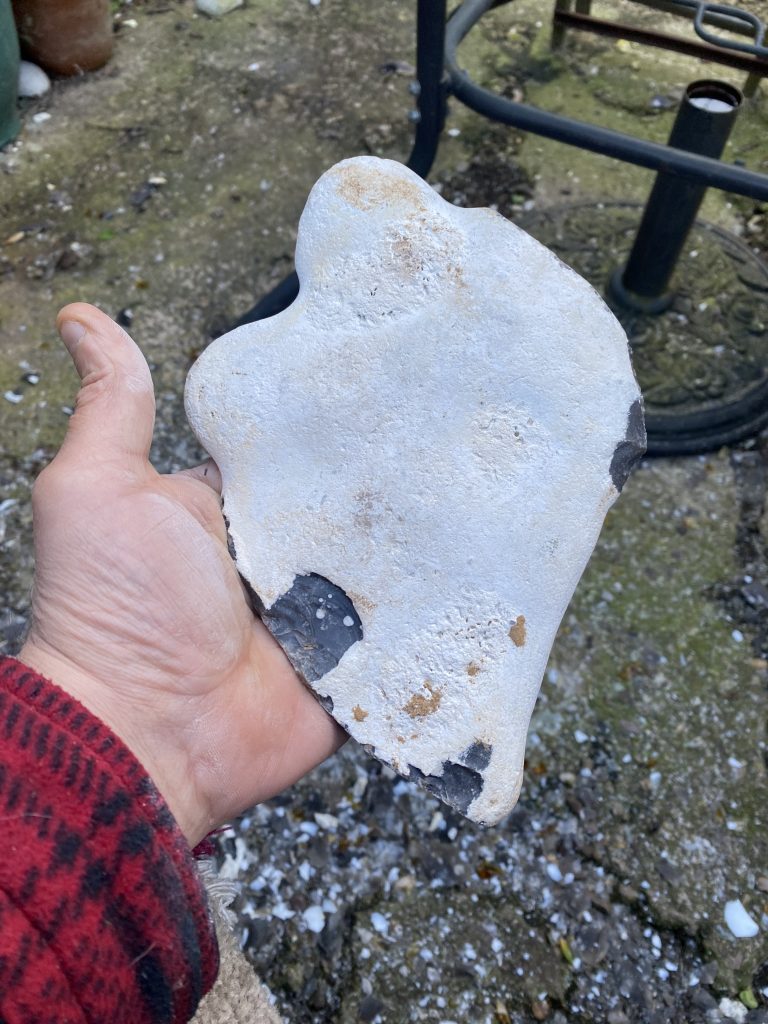
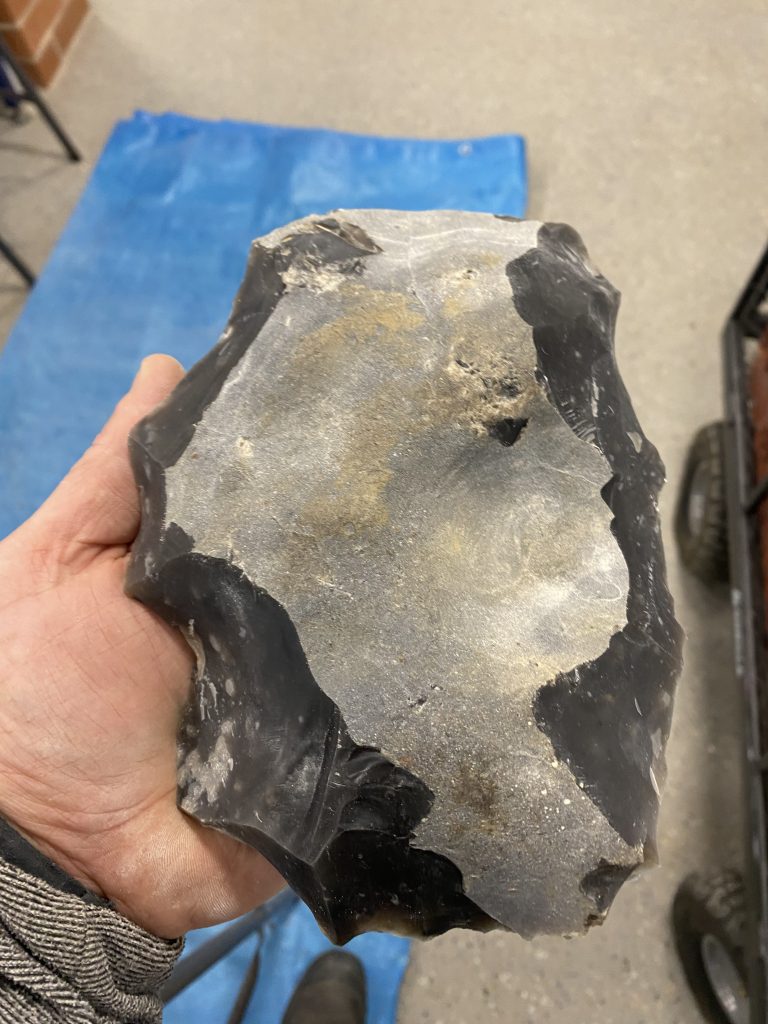
From Barmston there does seem to be two different types of flint collected. One type, like the above thin tablet with chalky outer surface seems to be pretty undamaged and works well. This leads me to think the materials on the beach are from two different glacial events or perhaps accumulated from different geographical locations.
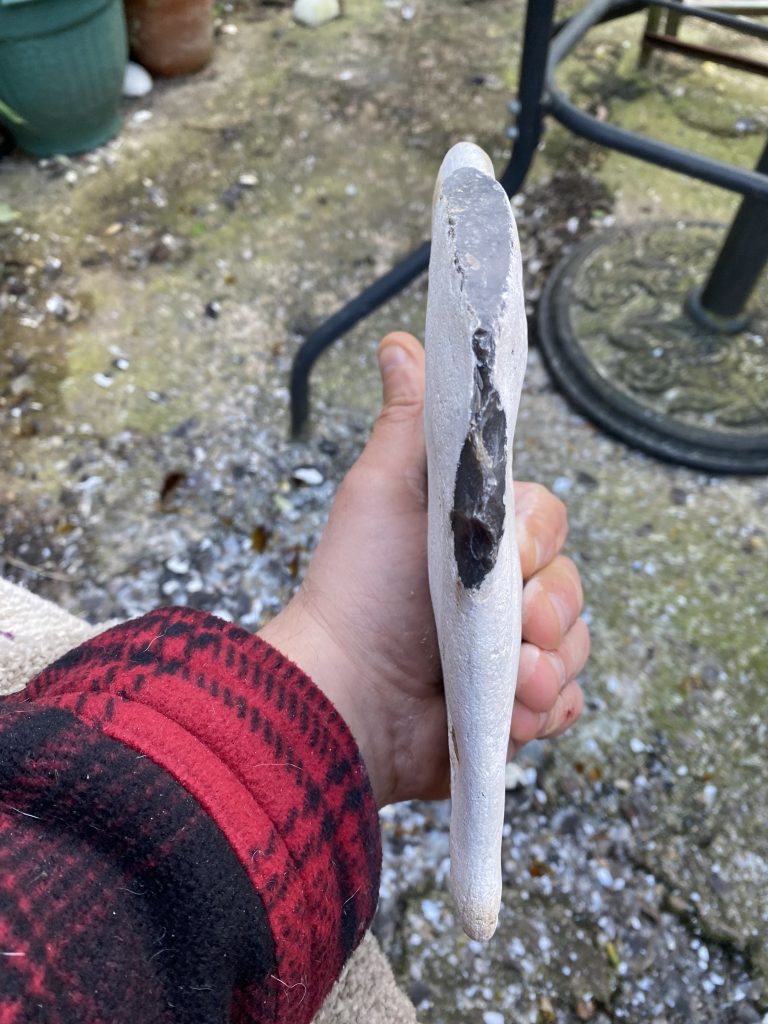
Anyway, this was a particularly thin tablet of flint and as such liable to break. As a strategy to avoid breakage I pressed the flint to my thigh. The idea being that this helps by adding my body mass to that of the flint.
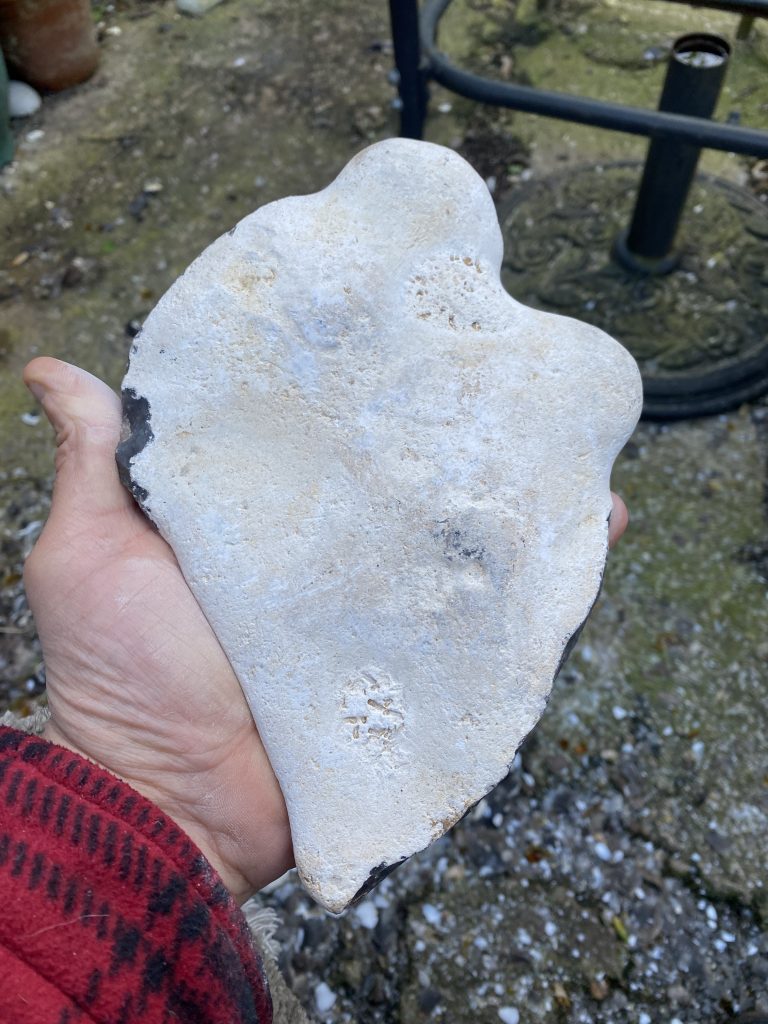
Using this strategy the next step was to use a hard hammerstone to ‘turn’ the edge. This involved taking a flake off one face, then turning the tablet over and using the fresh flake scar as a way in to take a flake off the the opposite face.
The sound is really interesting as you can hear when the tablet is resisting the hard hammer blows. Rather than persist and risk endshock and breakage, I would simply go back a stage and made bigger the platform. This approach allowed me to work my way around the nodule turning the edge without any major issues.
I then shifted over to a heavy antler hammer and used the worked edge as a ‘way in’ to take off longer flakes. Because I was pressing the tablet of flint into my thigh I was effectively hitting my leg with the antler hammer, but on the way catching the edge of the tablet and pulling off a flake.
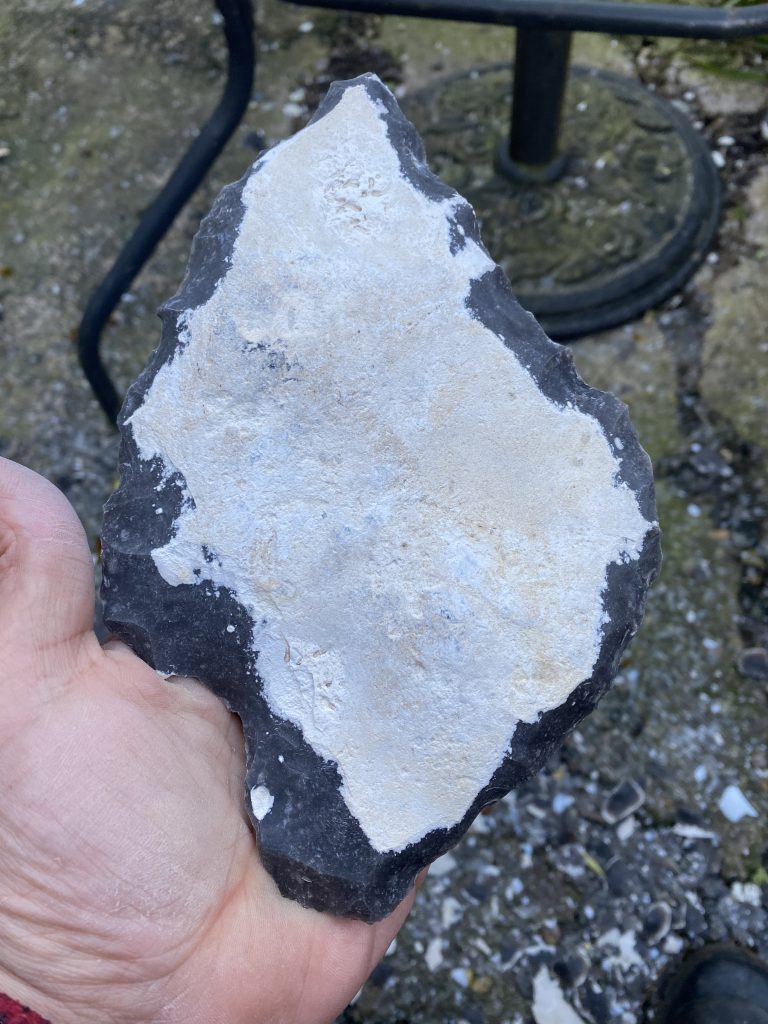
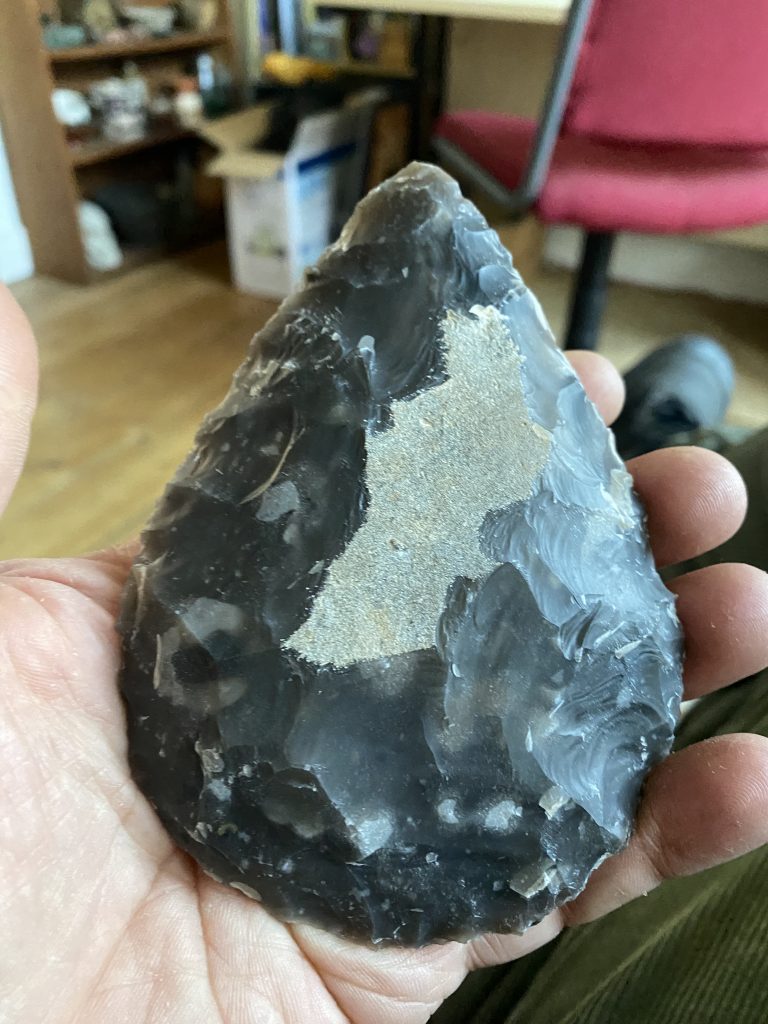
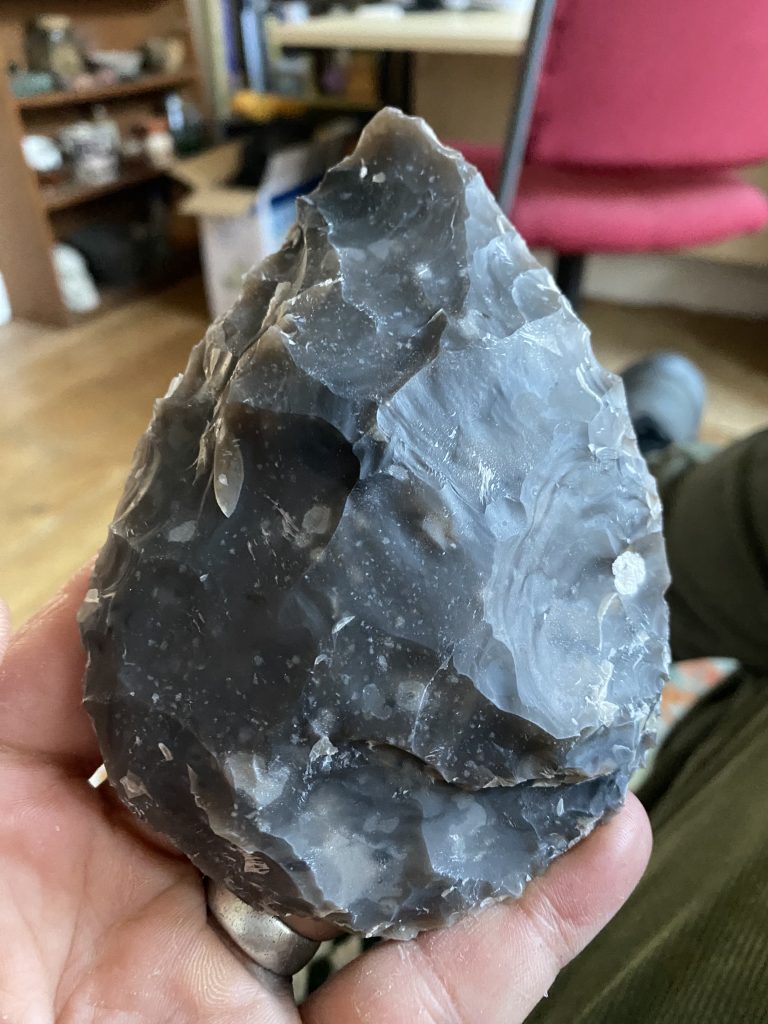
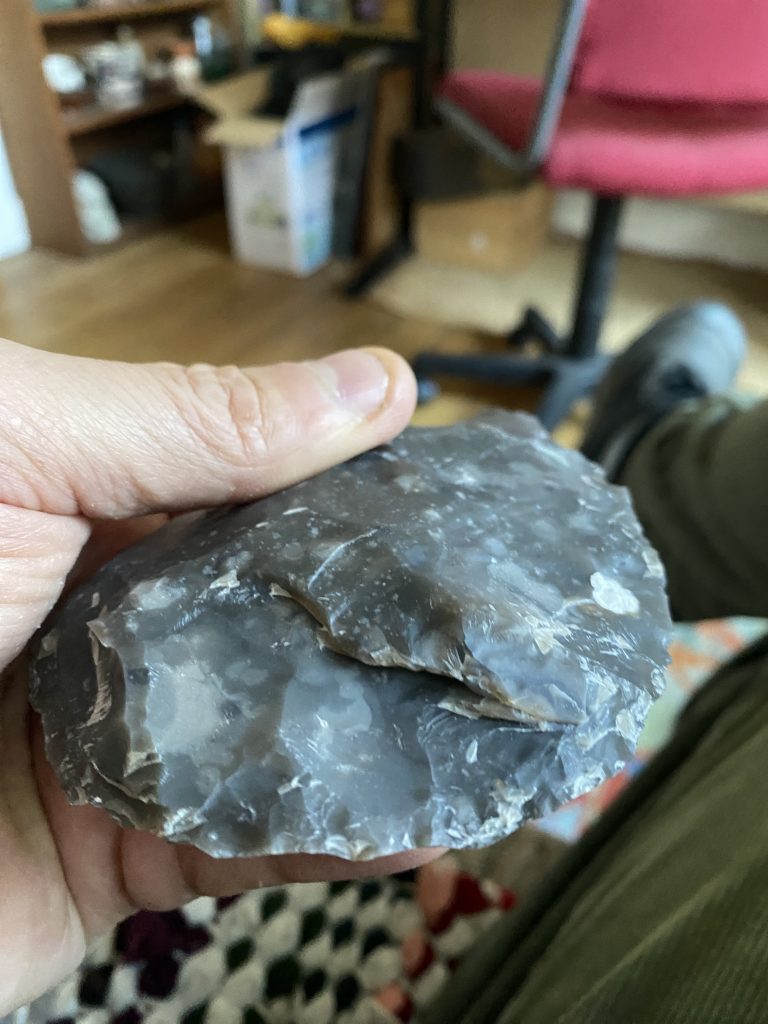
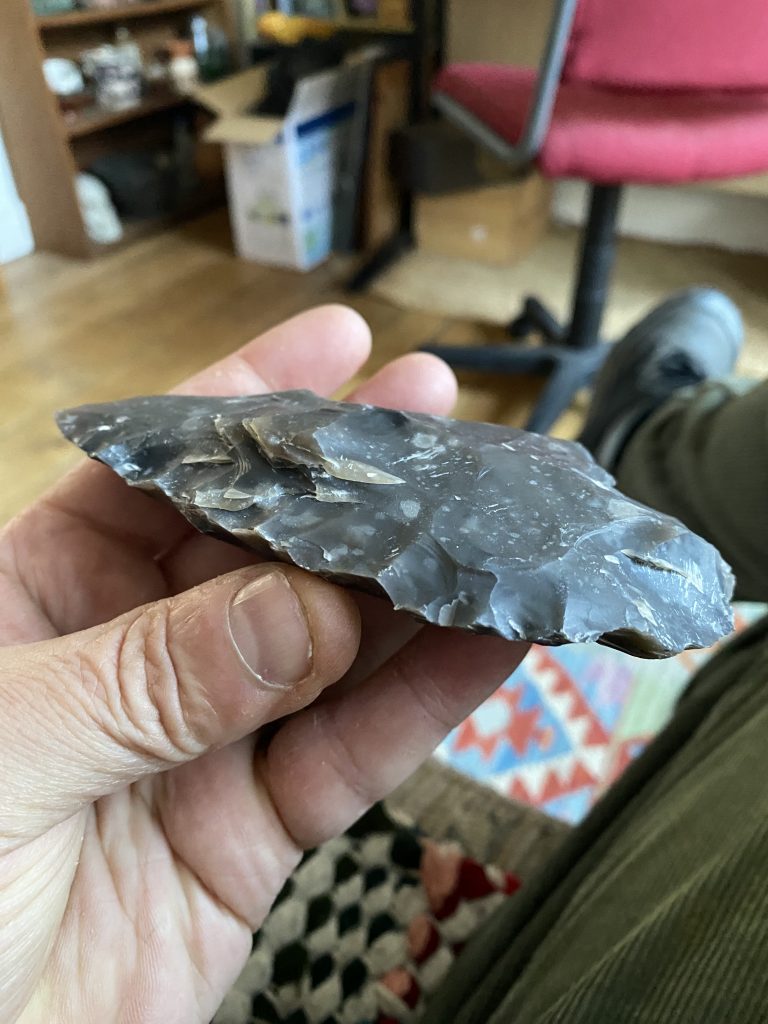
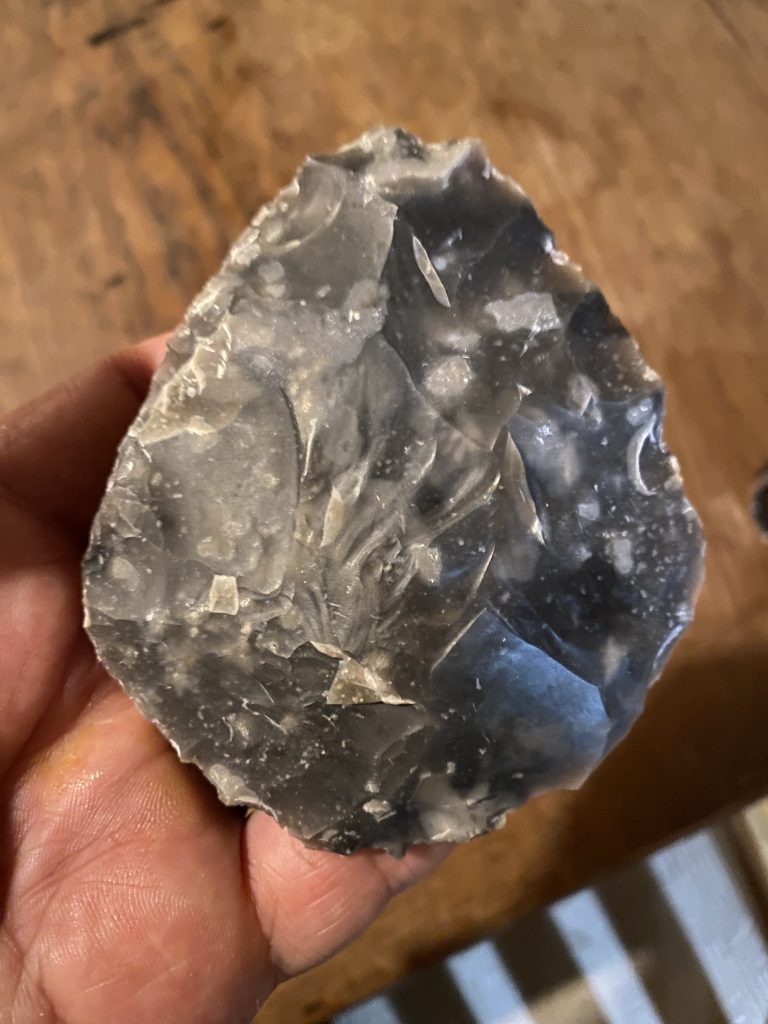
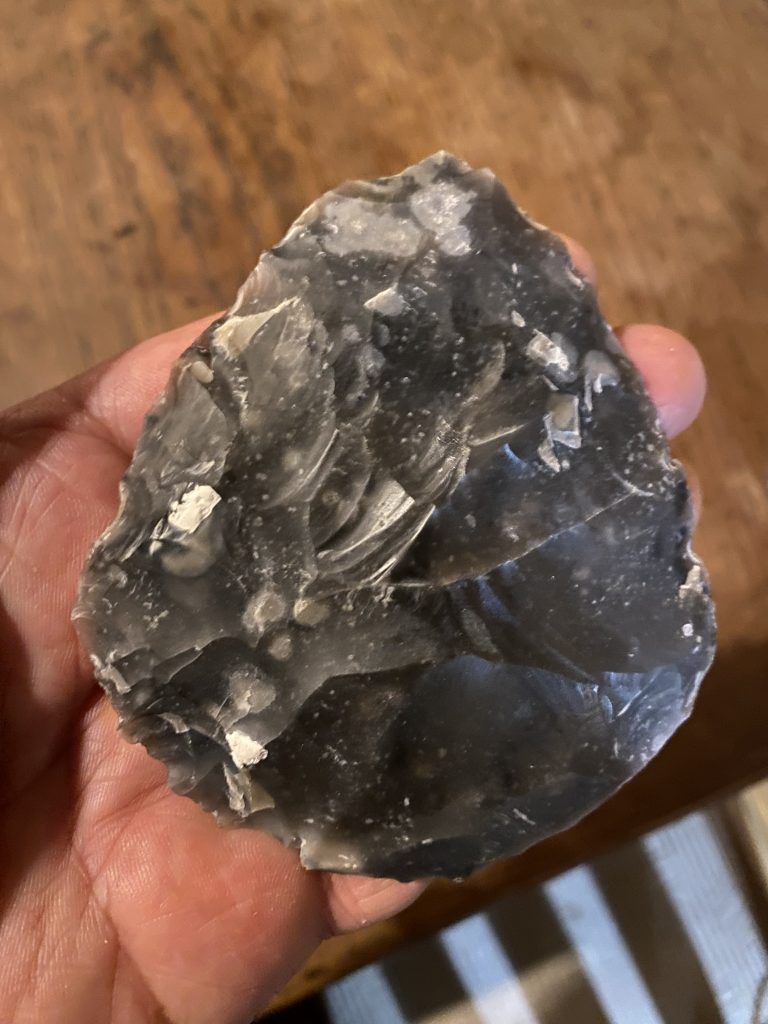
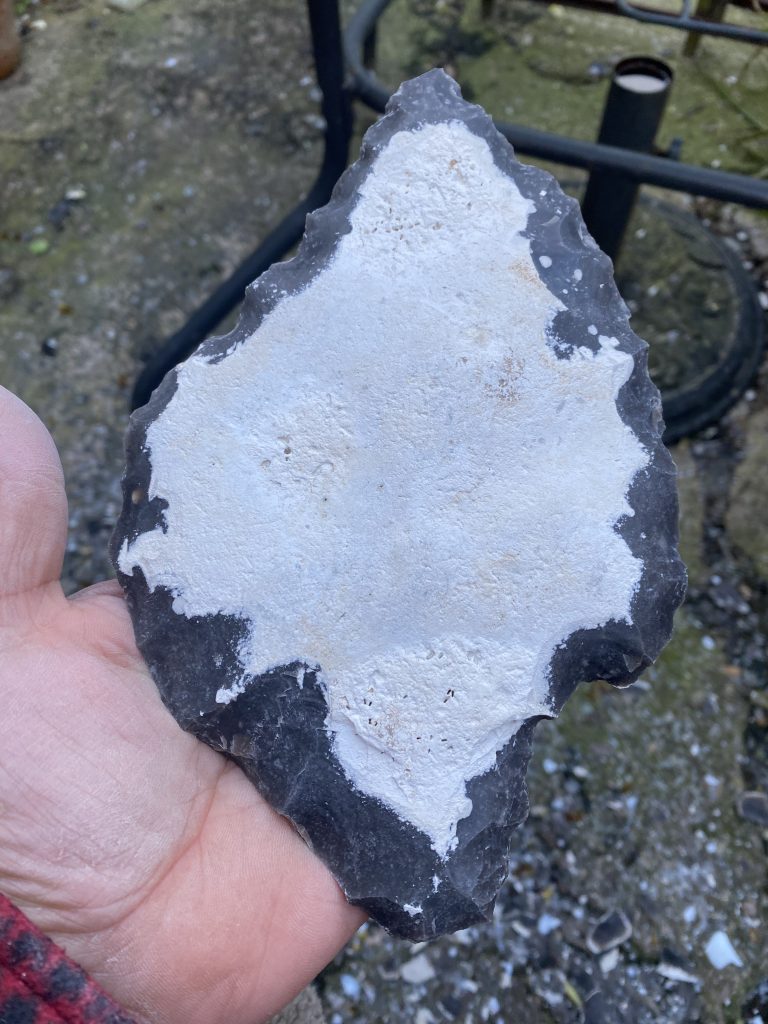
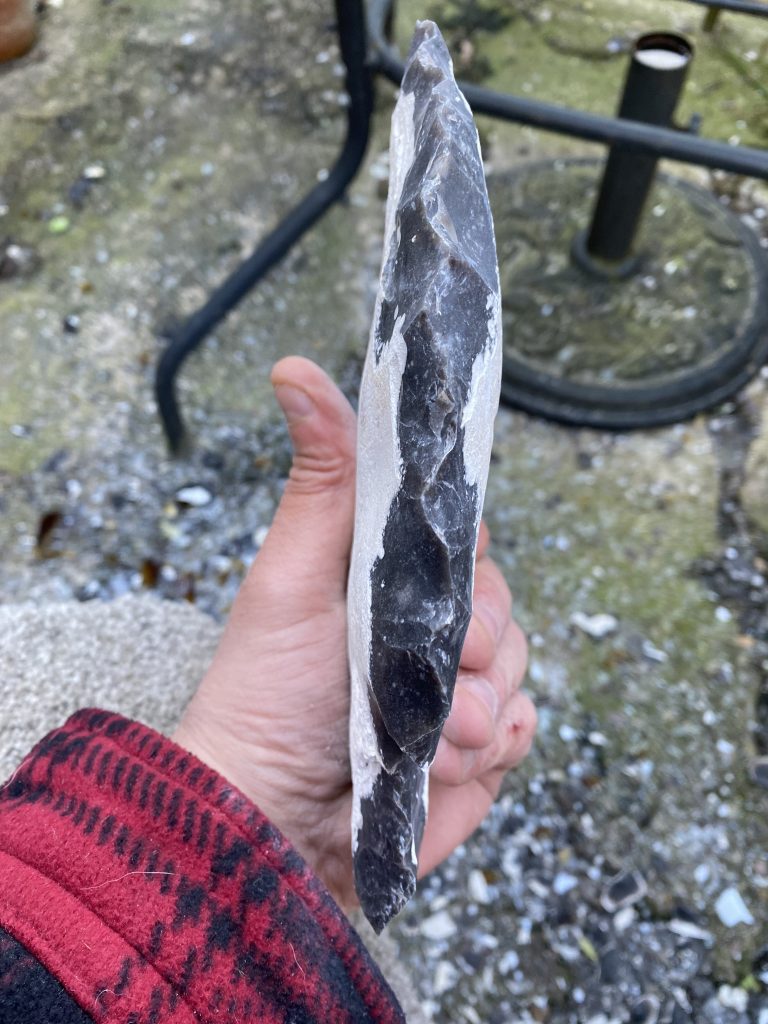
As you can see from each worked face, the longest flake removals are a pretty descent 5 cms or so, but because the tablet of flint was already relatively flat I was mainly creating a cutting edge.
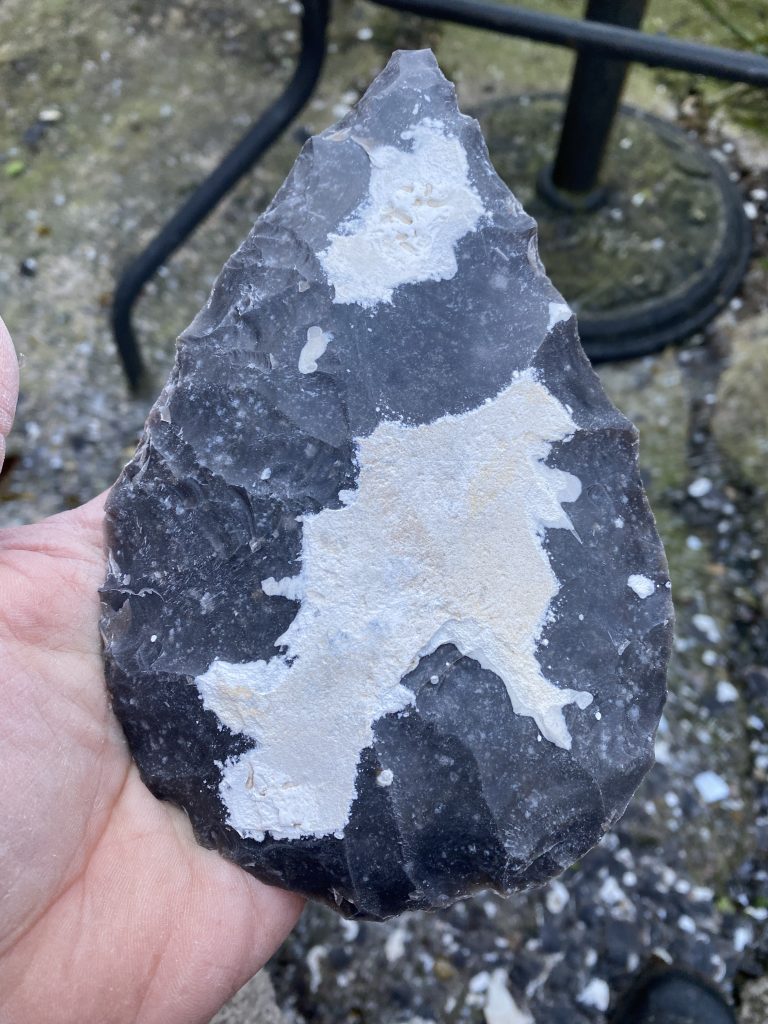
The two aspects I really like about this handaxe is the size (it is pretty big) and the symmetry. As I know how tricky it is to achieve these aspects I believe that this would have also held aesthetic value to a Palaeolithic handaxe maker.
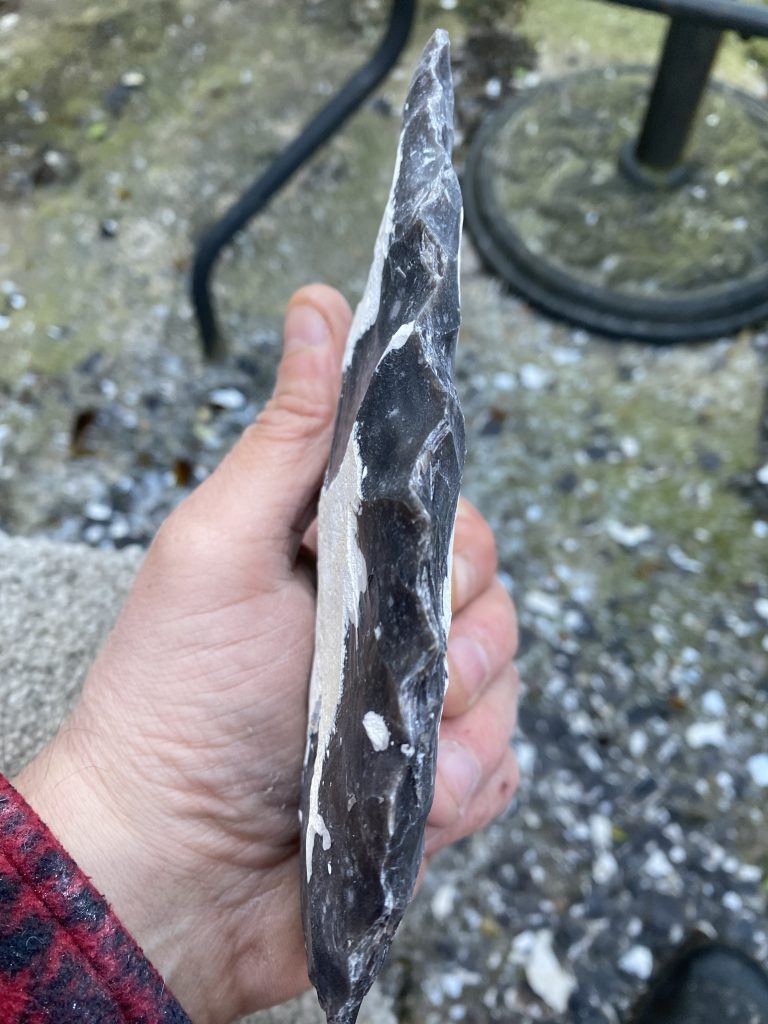
So, the end result is one big, sharp and also aesthetic handaxe. Yesterday I destroyed one flat nodule and made two glass arrowheads as well as making this rascal. In relation to my performance here I think the correct term is that ‘I was cooking on gas!’
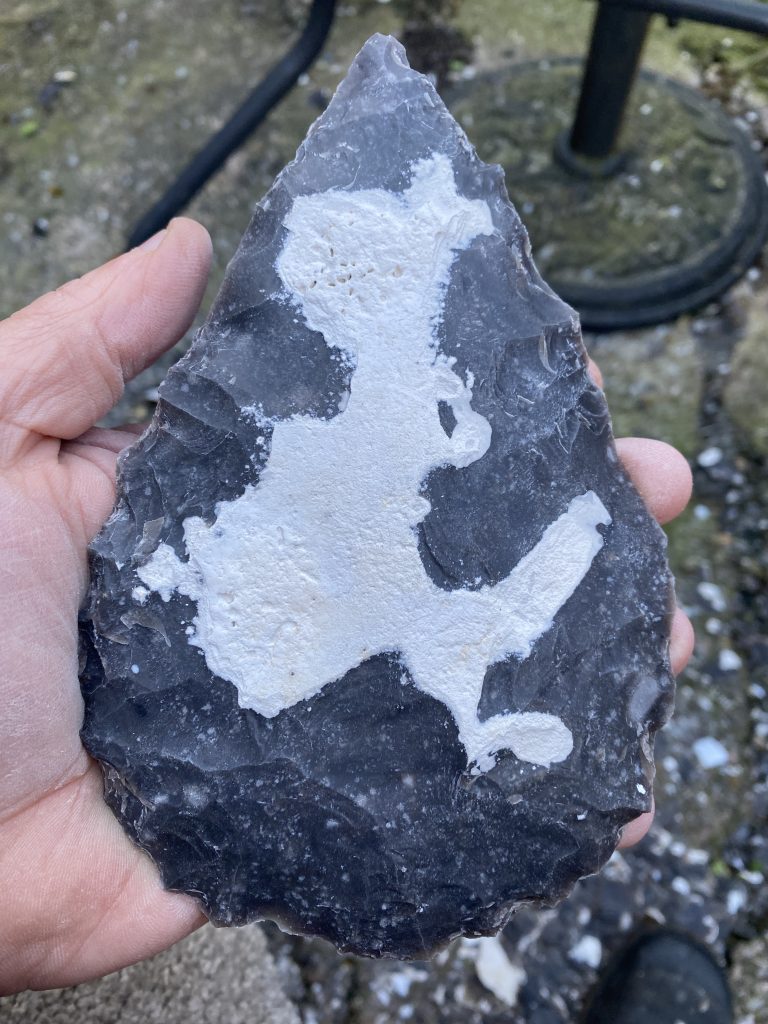
Happy days!
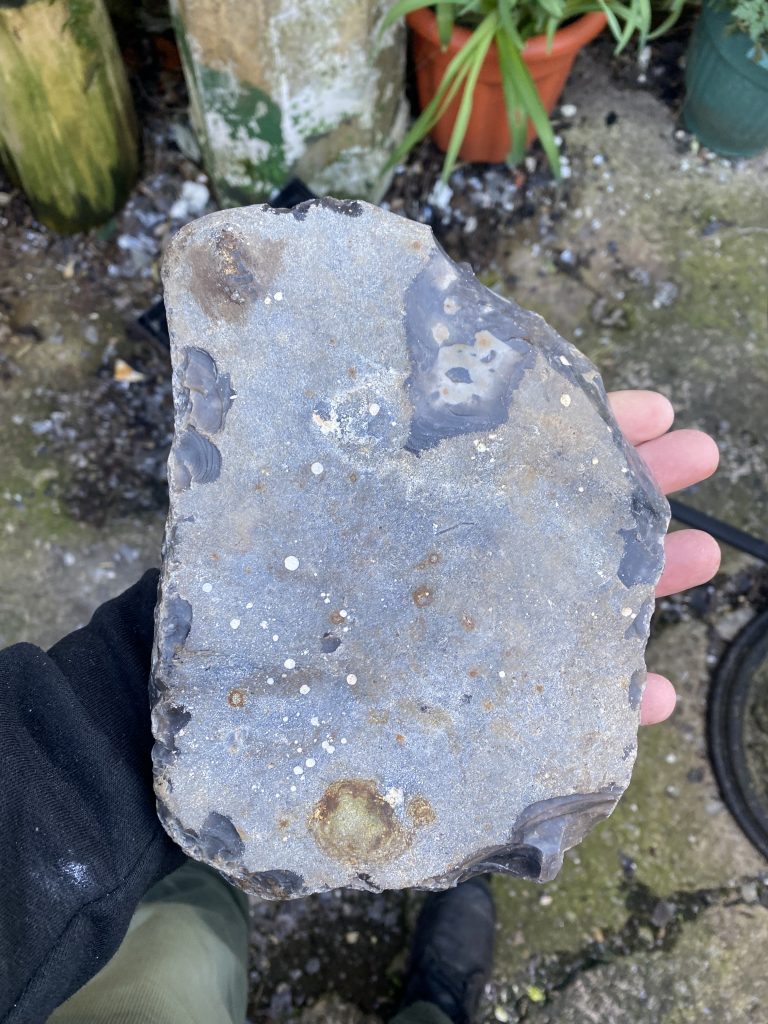
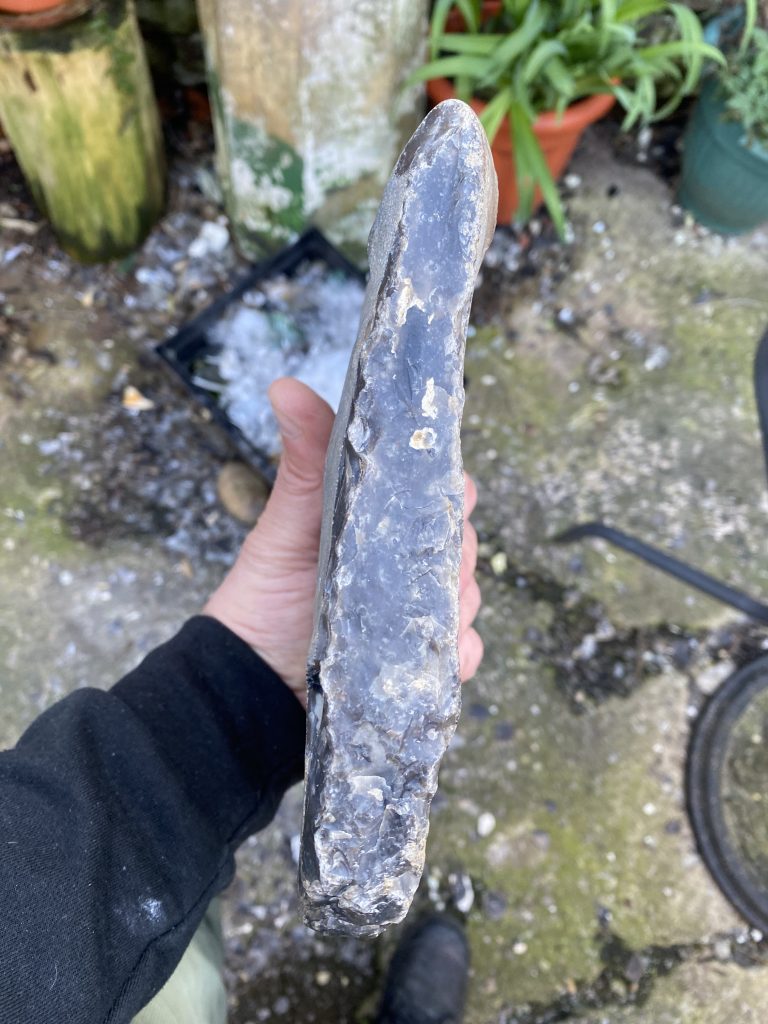
My step fracturey Barmson beach handaxe

This afternoon I treated myself to two of the larger slabs brought back from Barmston. The flint isn’t as good as I remembered, or the pieces worked so far aren’t. The first one worked well with the hard hammer, but it had a very hard seam in the centre that disrupted the soft hammer blows. That one ended up in the waste flint pile.

The above two photos are of the second flat tablet, and it worked a lot better than the first. I was able to get a good rough out without any major endshock, all good.

And on this side that has worked. The flint fractured approximately according to plan, the edge is sharp and I am happy with the shape.

Flip it over and that’s when you spot the step fractures. That they are all on one side is, I think, something to do with how I work each surface differently, but I am not sure actually how I work it differently.

I think it may be to do with the initial turning of the edge, and by doing so I get a way in, but inevitably the angle is better on one side than the other.

Consequently I get to do all the nice stuff on the good angle side, and then have lots of step fracture action on the other when trying to bring the second face into line but without the suitable angles. That’s my current theory anyway, and fortunately I have quite a few blocks left to play with, and find out if I am right. Watch this space…

My Barmston Beach wonky handaxe

This tabular piece of Scandinavian beach flint must have had a few adventures in its life, as it contained many more internal fractures than I expected.

Consequently, the handaxe is much smaller than I was aiming for at the start, and I realised after taking the photos that it is also wonky.

However, it does have something about it, in that it is sharp and hand size, and a product of persistence on my part. So happy days!

Our Runswick Bay, Whitby and Barmston Beach World Tour

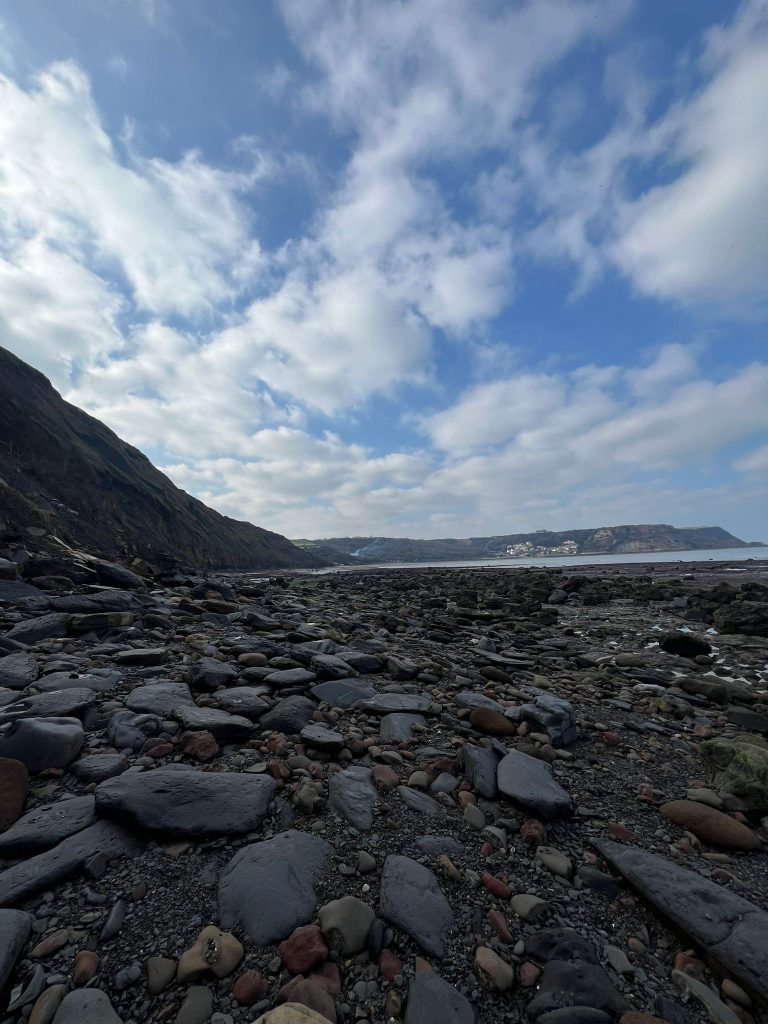
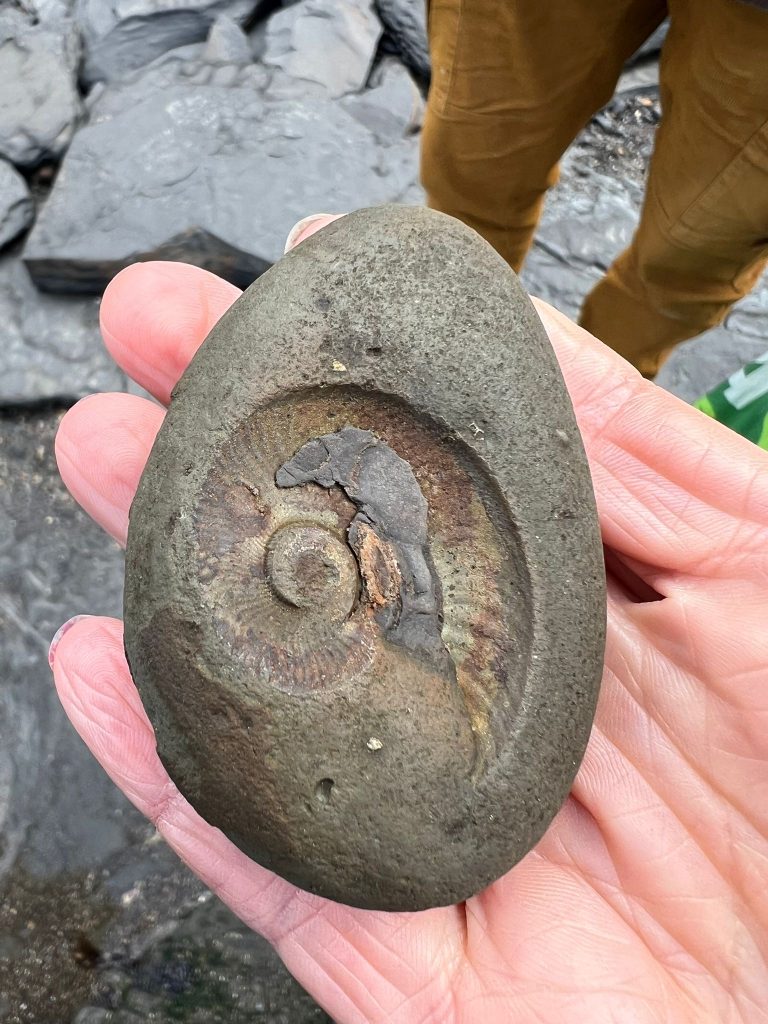
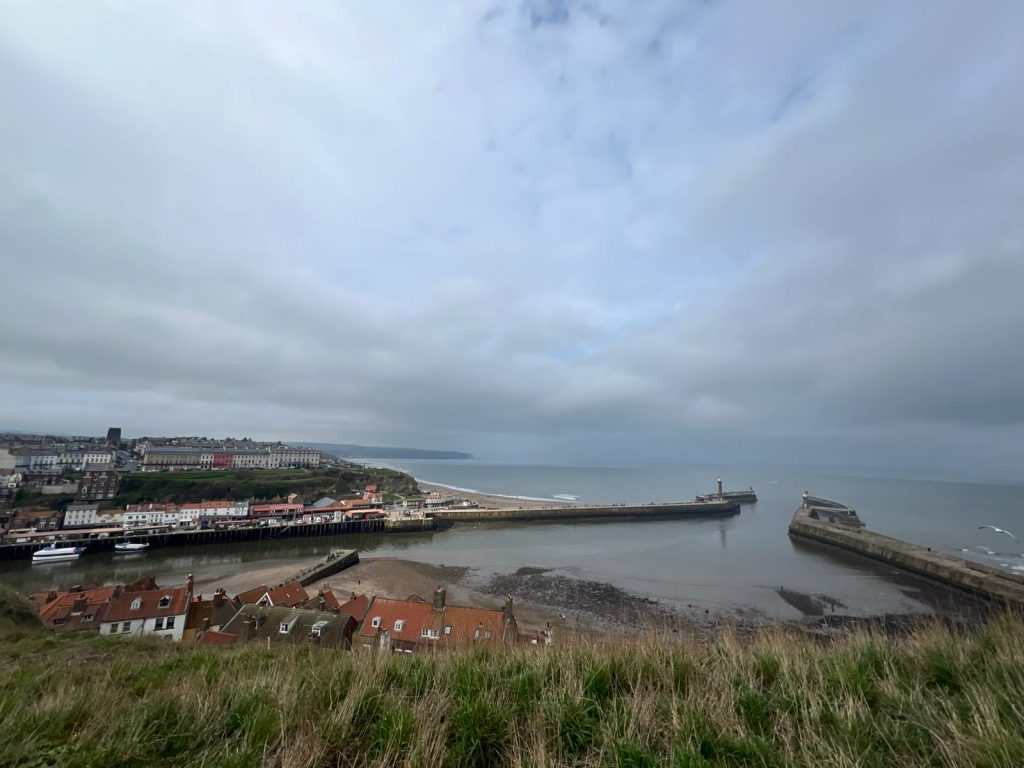
Last weekend we were rock hunting on the north east coast of England, starting out at Runswick Bay on the Saturday, looking for fossils, and small flat shale pebbles for our upcoming Star Carr type pendant workshops.

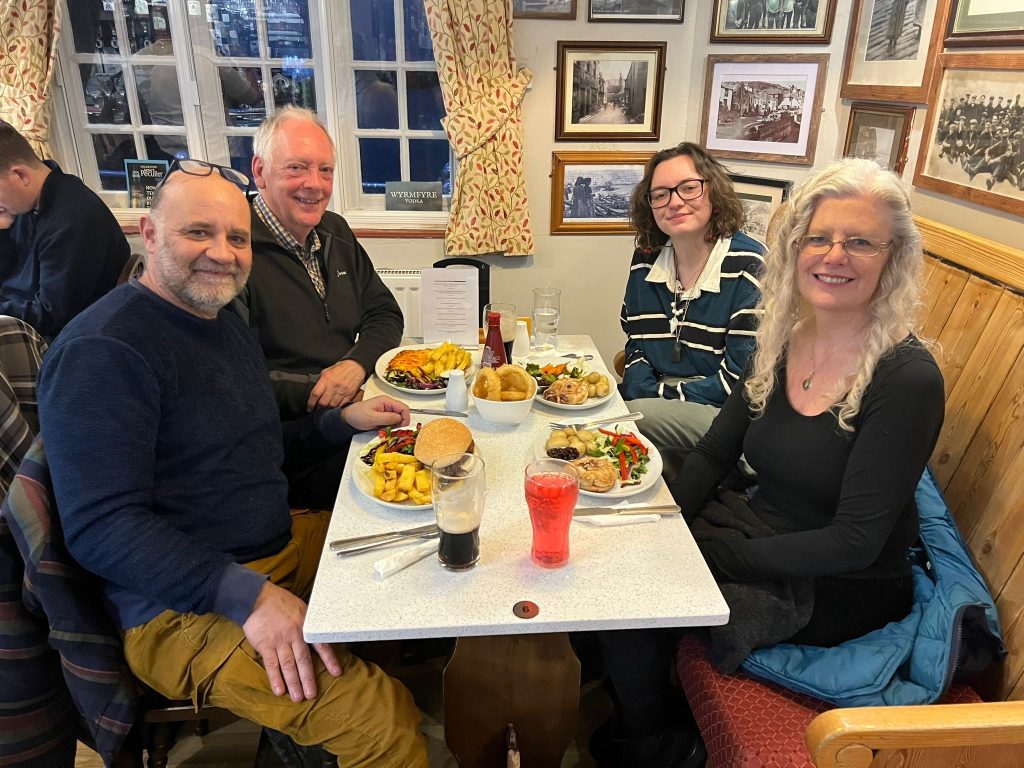
We stayed near to Runswick Bay and that evening we headed to the Cod and Lobster for out tea. The following morning we set off to have a quick look around Whitby.

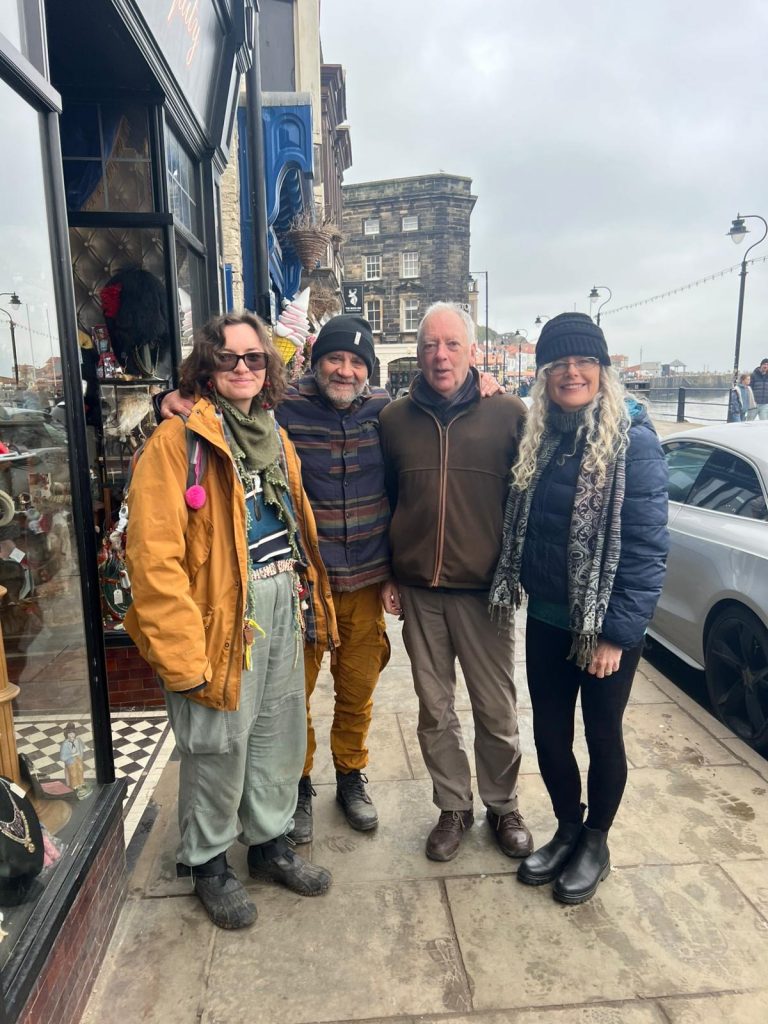
I suppose we are actually a ‘rock band’ as the thing that brought us together for this weekend was…rocks. From left to right, Laura, me, Stephen and Karen.

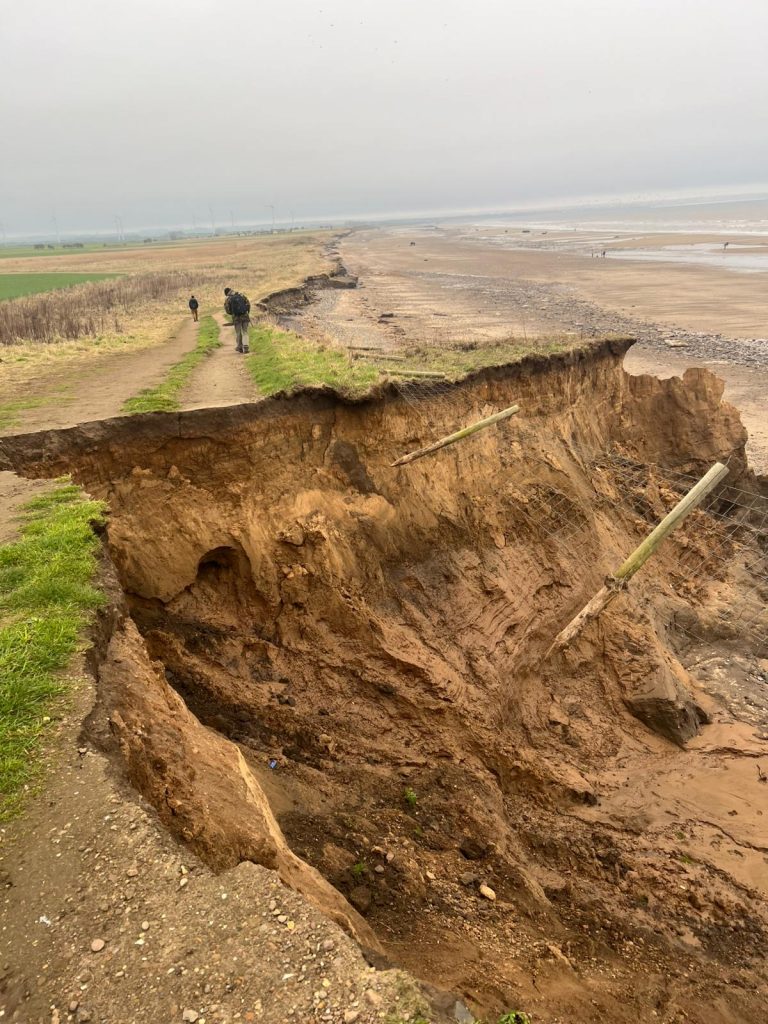
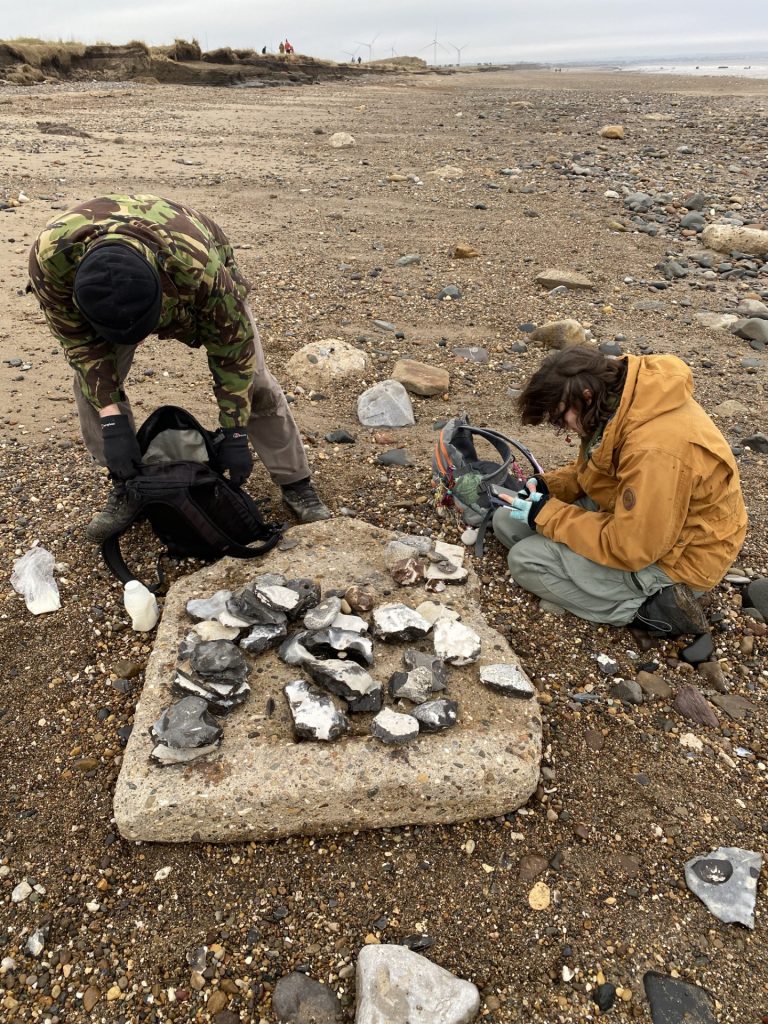
From Whitby it is approximately one hours drive to Barmston Beach, home of really nice tabular beach flint. According to my geology source (Stephen), this flint was carried over on glaciers from Scandinavia during the Pleistocene and deposited at Barmston when the glaciers melted. The flint was subsequently buried and is now being washed out by the encroaching sea.

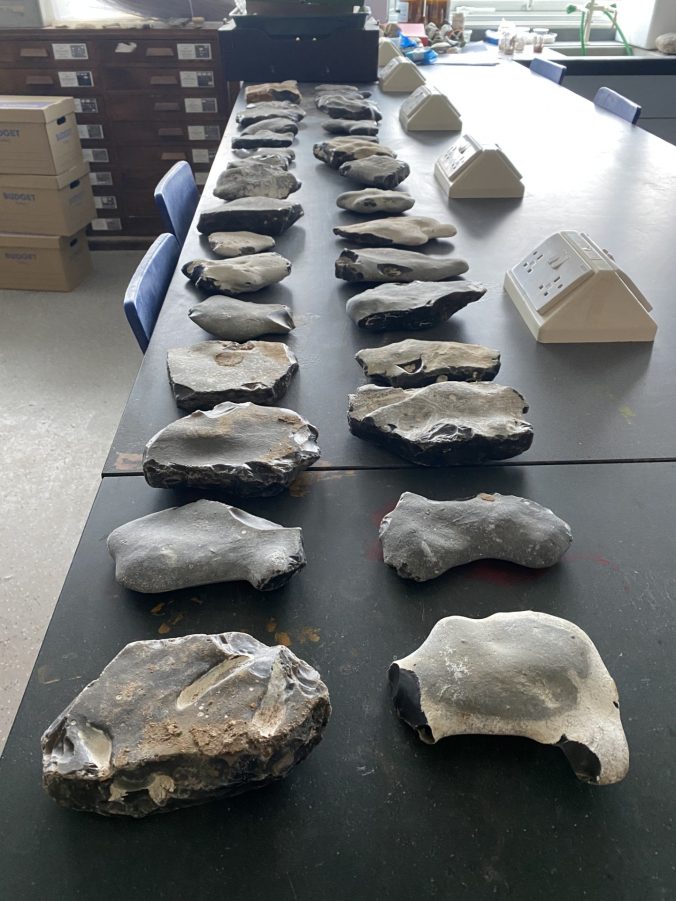
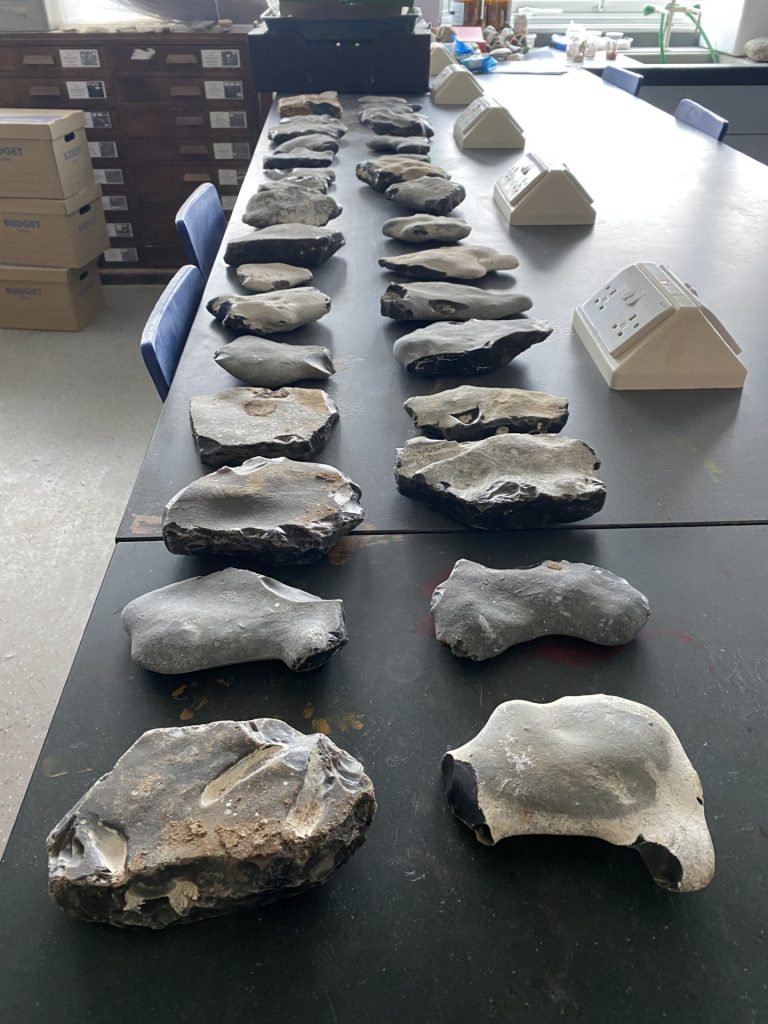
Today, I am in Chester and I have brought about a dozen nodules with me for my teaching session this afternoon. I find these tabular pieces usually of good quality, unless they have been rolled a lot on the beach. They are also an ideal size for handaxe making, which coincidentally is this afternoon’s goal.

Barmston Beach, near Bridlington

We had a weekend in Scarborough recently, and on my list was to collect some tabular flint from the beach at Barmston, near Bridlington. Timing wise we arrived late on the Sunday just before the tide started coming in, so I hurriedly filled three carrier bags with likely looking candidates and then we were off back to Manchester.

I really like the flint from this beach and in the past have found it ideal for making ovate handaxes. This time was no exception and up to now I have made one nice large ovate and a couple of smaller cordates, and it is one of these cordates I want to talk about.

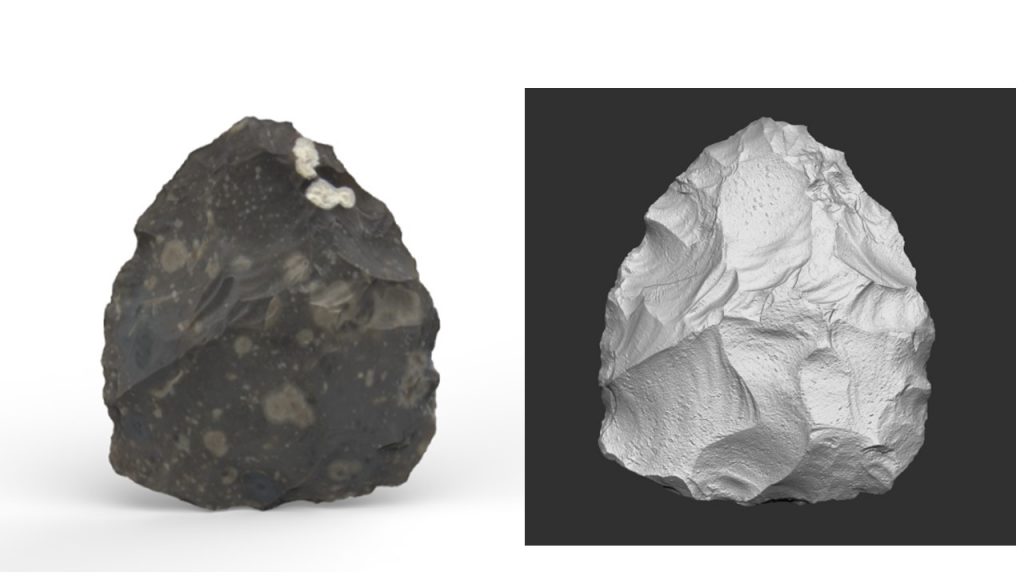
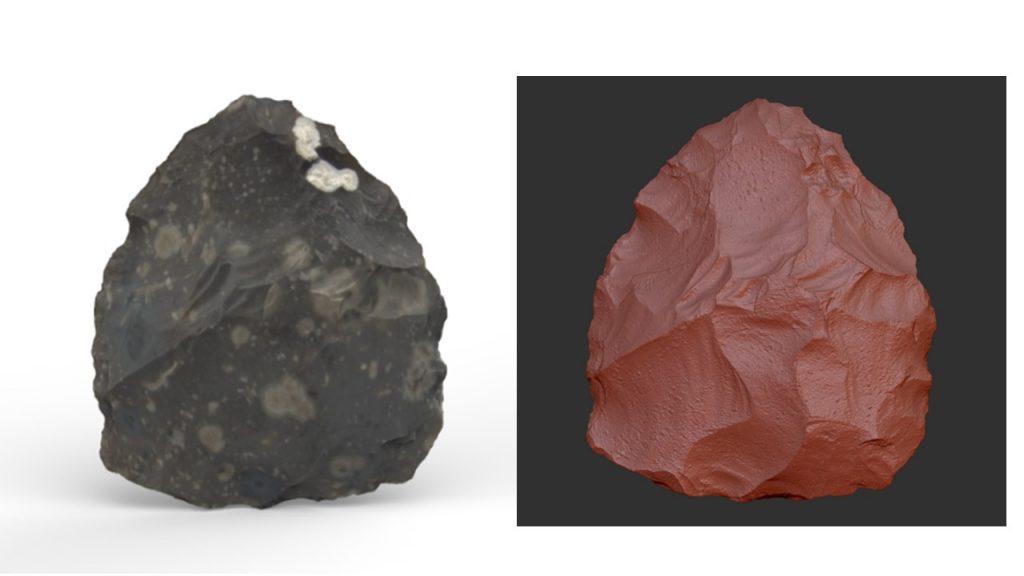
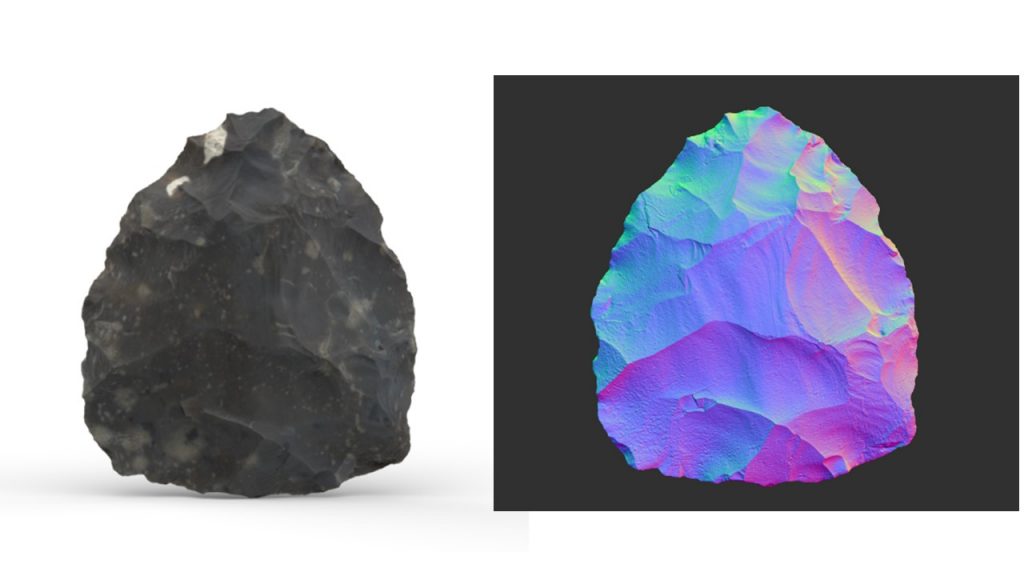
The making of the smaller cordate on the left coincided with a visit by Mark Beckett from Europac 3D to show us how to use the Artec Spider 3D scanner. The broad aim was to take scans of both faces, then use the software to stich the two scans together to make a 3D model. So far so good.

Mark set up the handaxe and completed three scans in less than ten minutes. We recognised the value of using 3D models for teaching purposes during lockdown and the Artec Spider seems like a really useful tool for the process. The fact that the software is intuitive to use means we can use it with our students to give them some digital skills and experience as well.

However, what has really got me excited about the scanner is the post processing opportunities. As you can see from all the images on the left, the flint is difficult to read, as the colour and inclusions disguise the scar pattern, and a fundamental part of lithic analysis is reading the scar pattern to understand the process of production. What you see with the images on the right is the ability to manipulate the colour and lighting in order to highlight the scar pattern. This kind of colour manipulation has real potential for helping to ‘translate’ the scar patterns on tricky to read materials. Are we going to get an Artec Spider? I certainly hope so. Many thanks to Mark for coming over to Manchester and running us through the processes. For more information about the Artec Spider checkout the Europac 3D website.

© 2026 Learning Through Making. All Rights Reserved.

Up ▴