Experimental production of stone tools

Category: Materials (Page 2 of 4)

Saturday night’s alright for knapping

I have said before I don’t like destroying things to make my stone tools. Well, I am not really sticking to my principles.

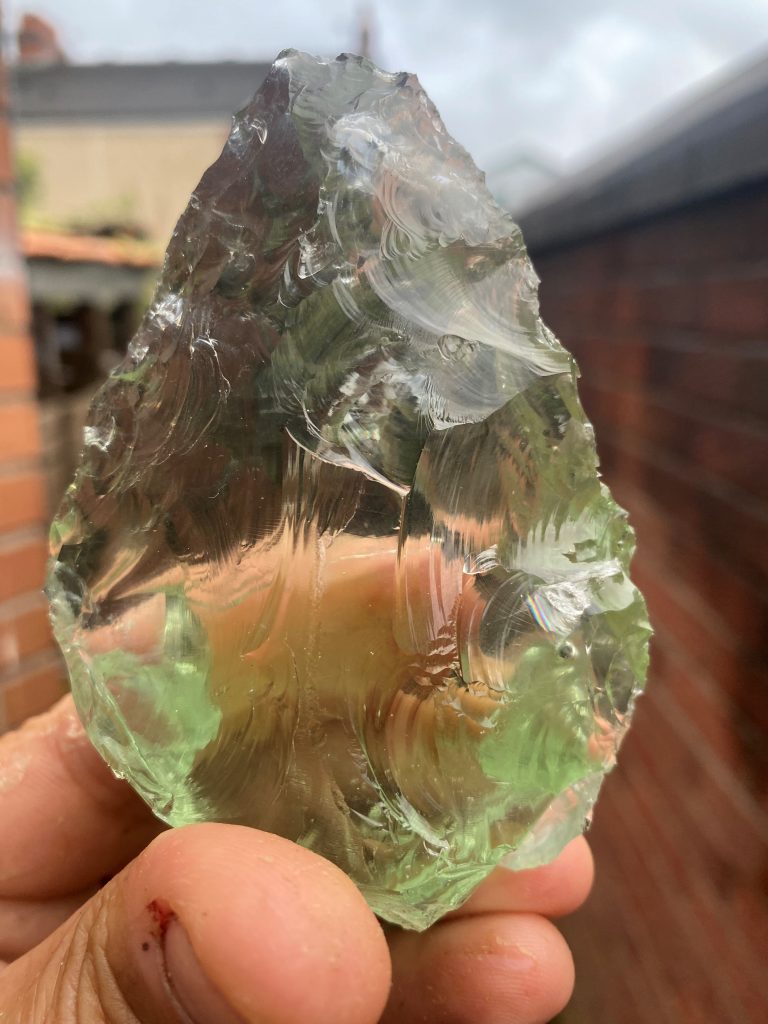
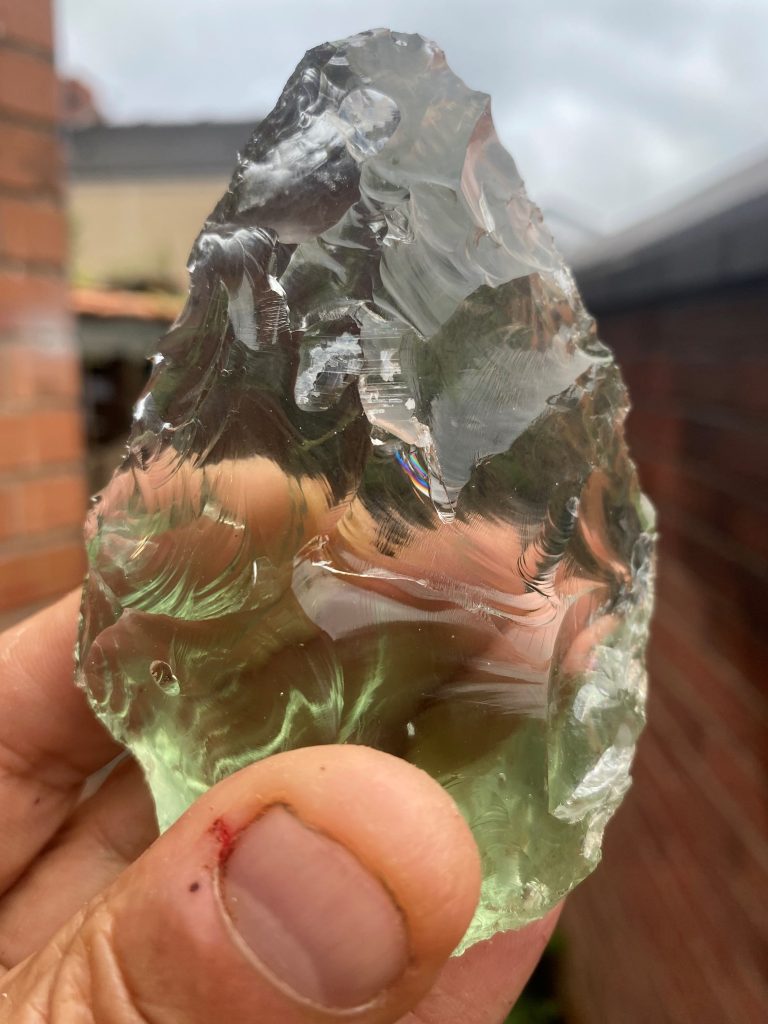
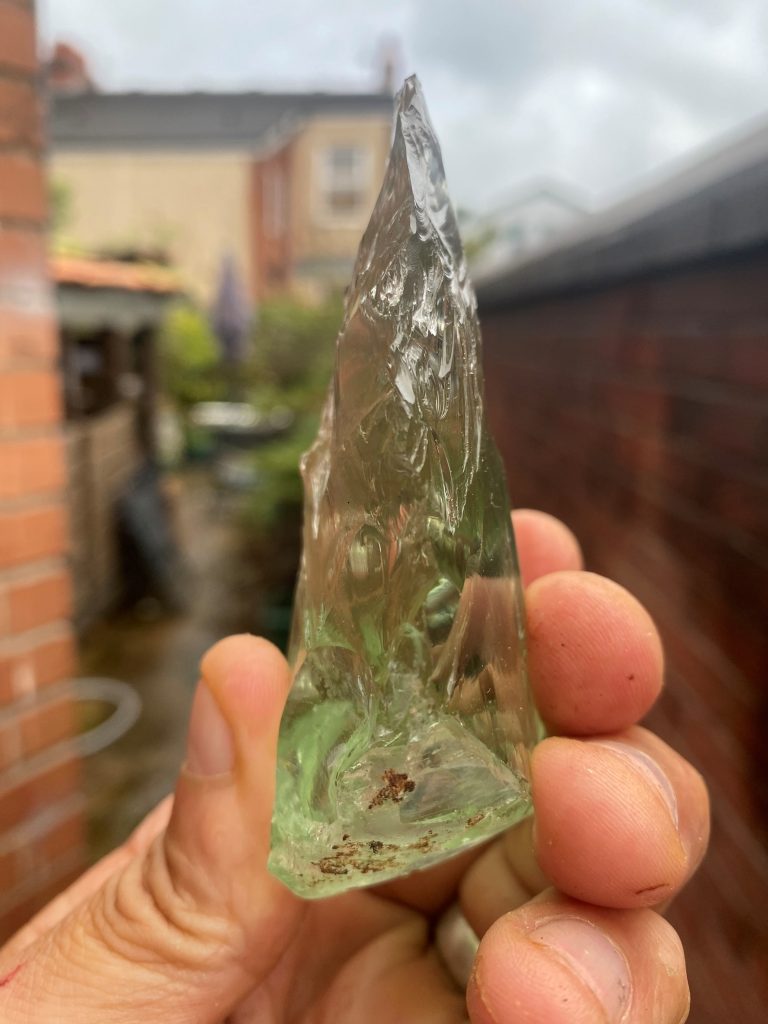
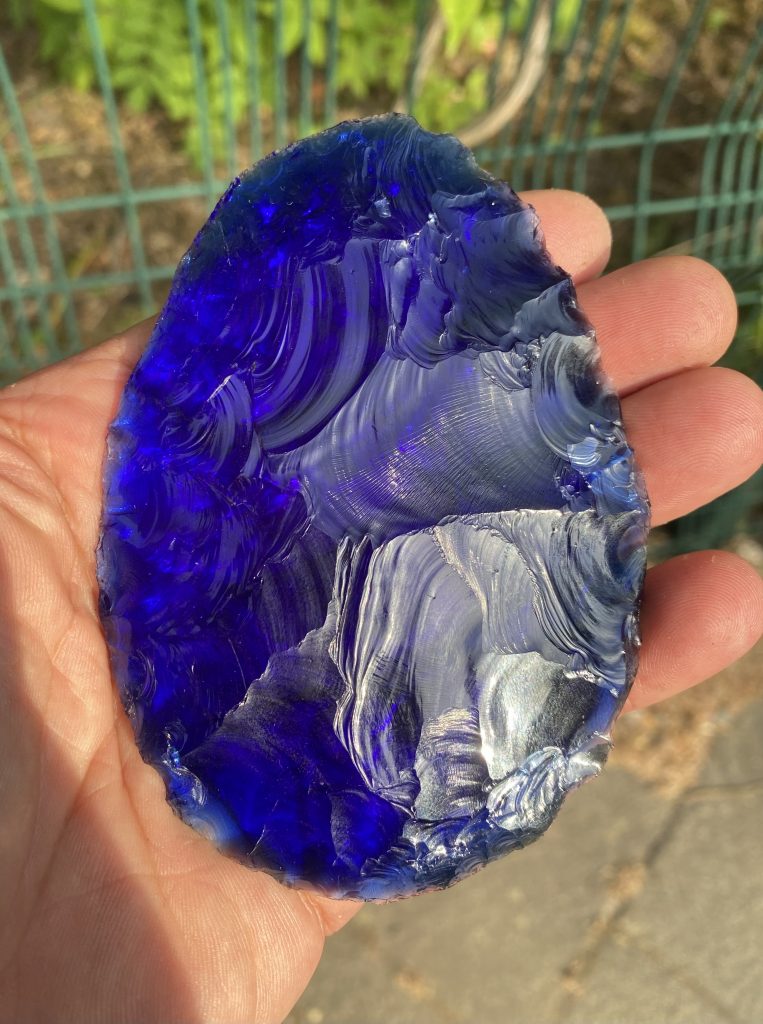
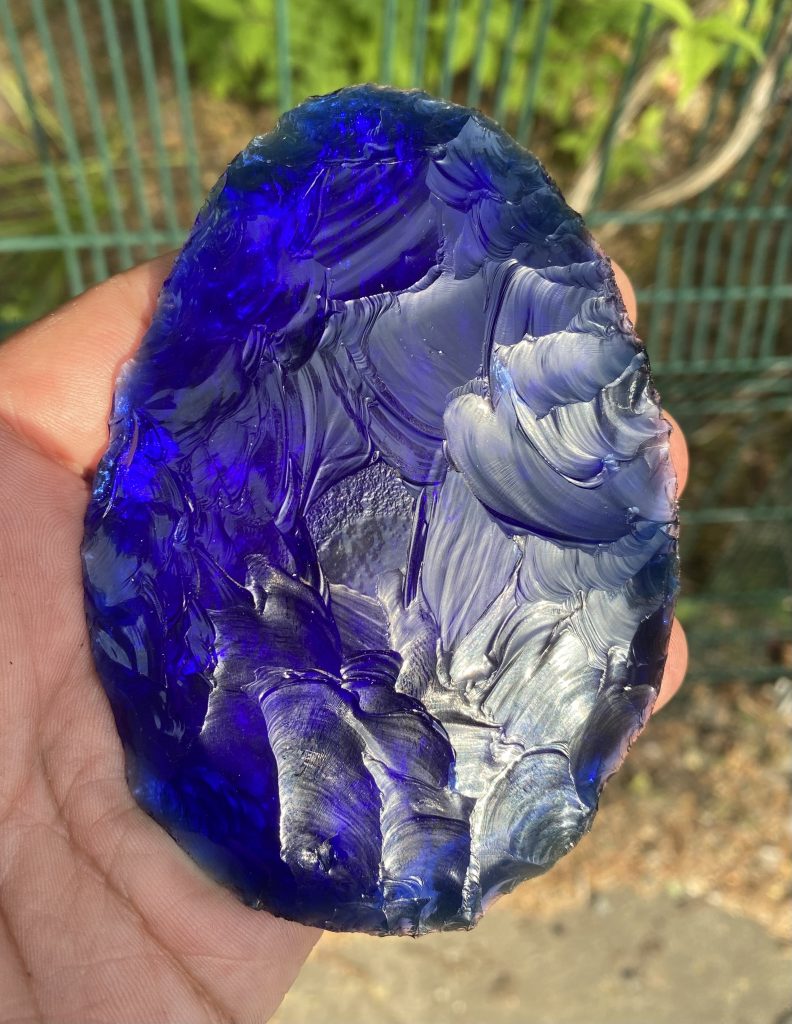
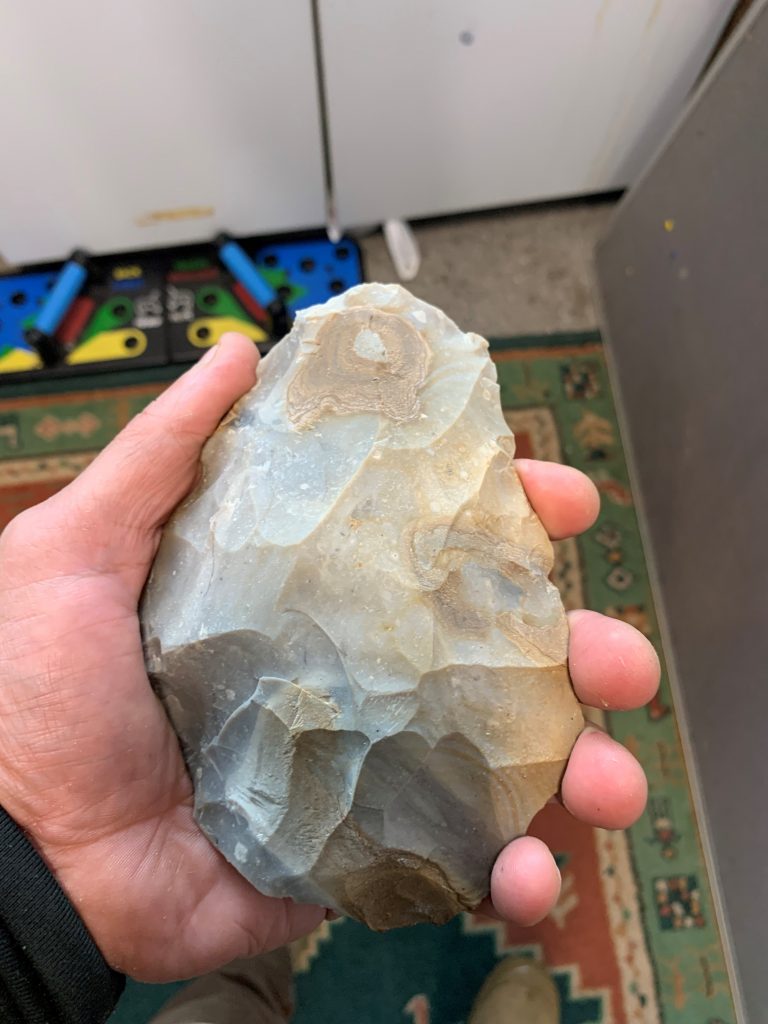
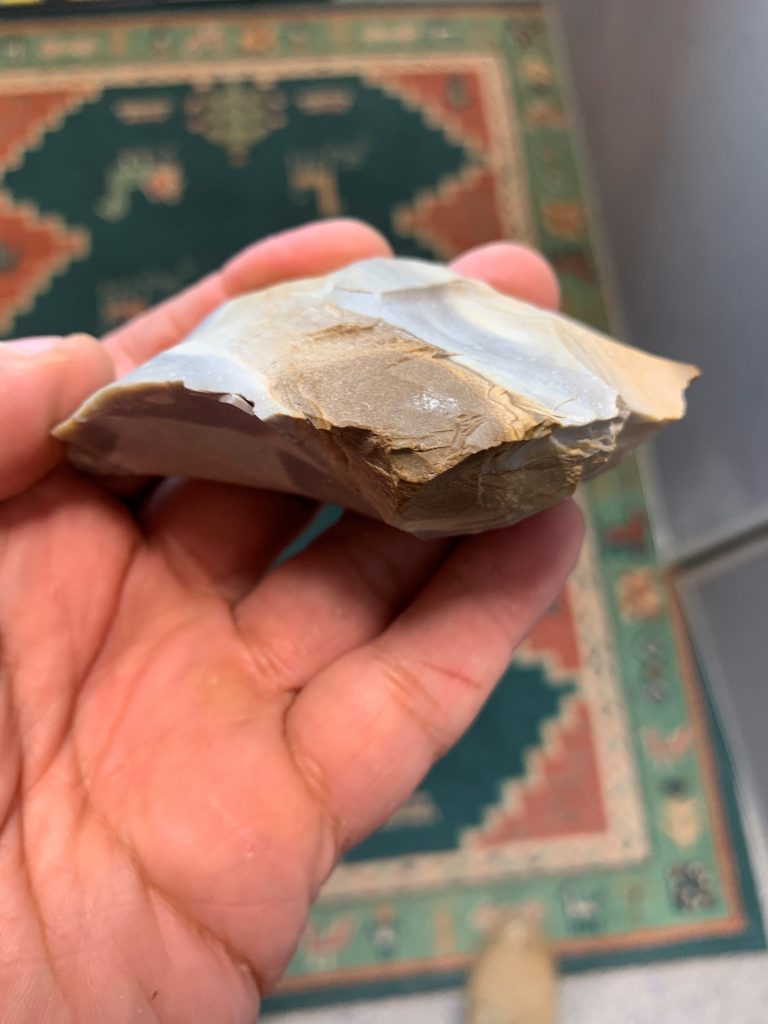
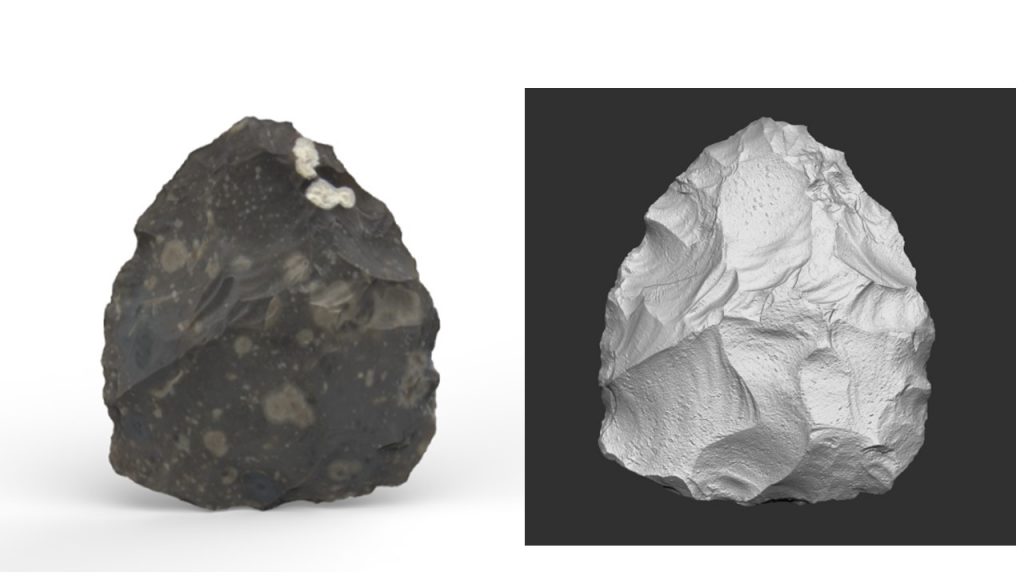
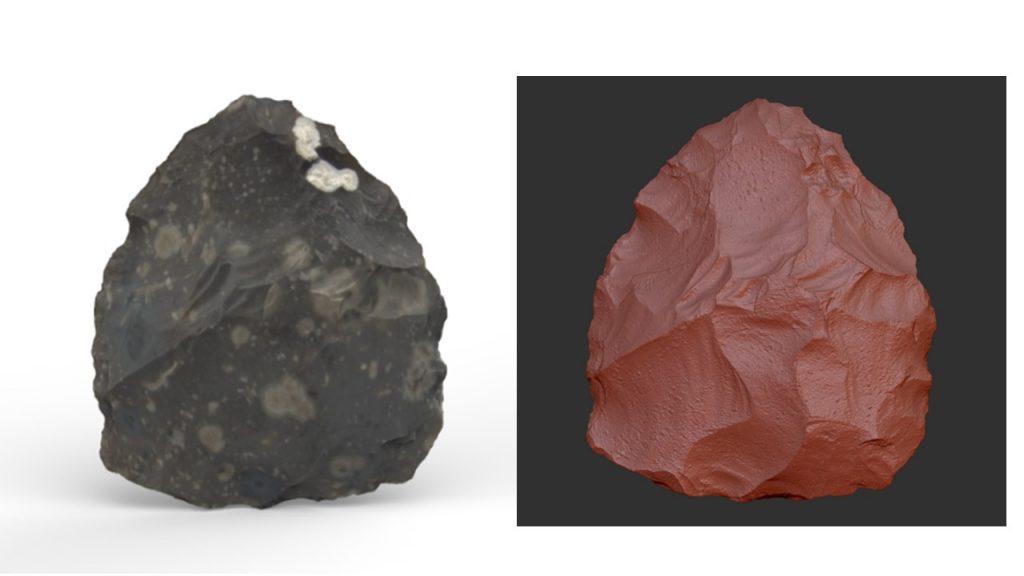
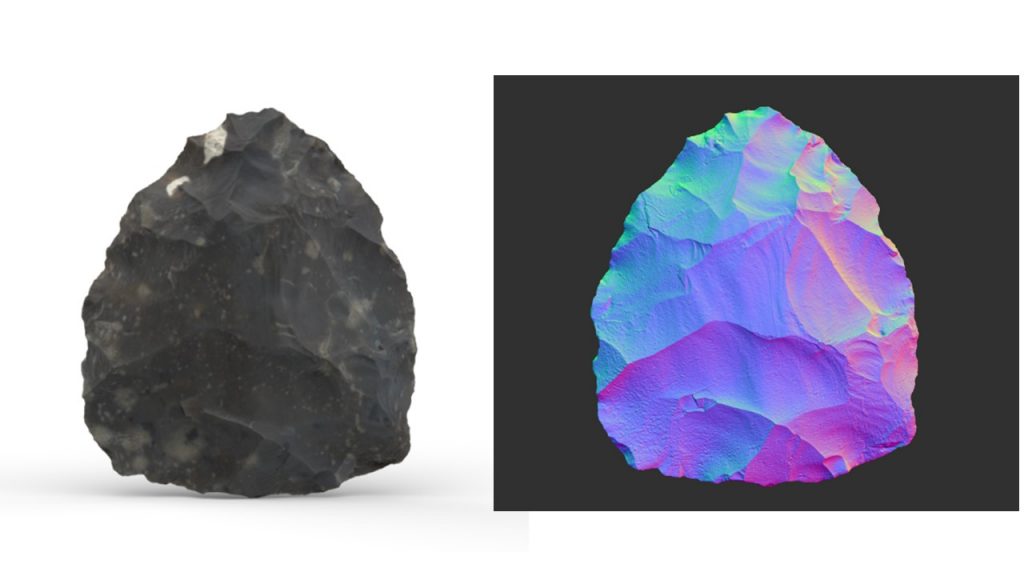
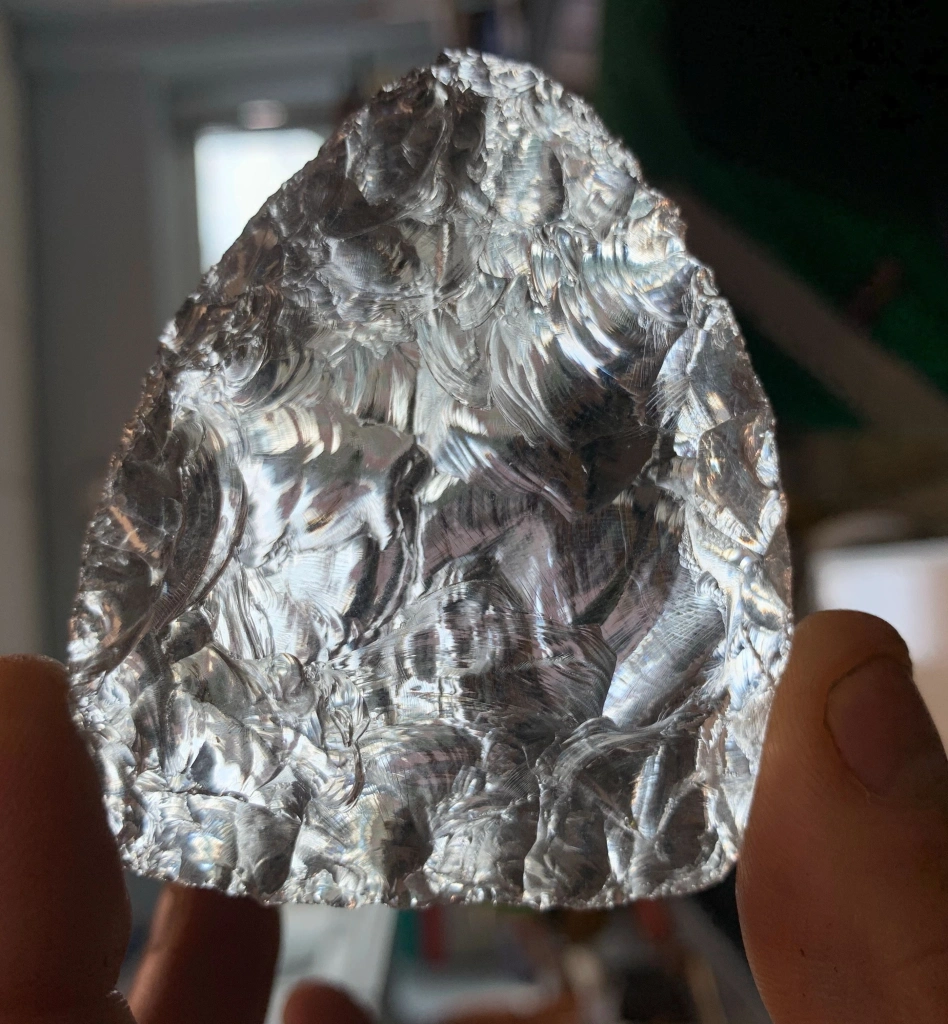
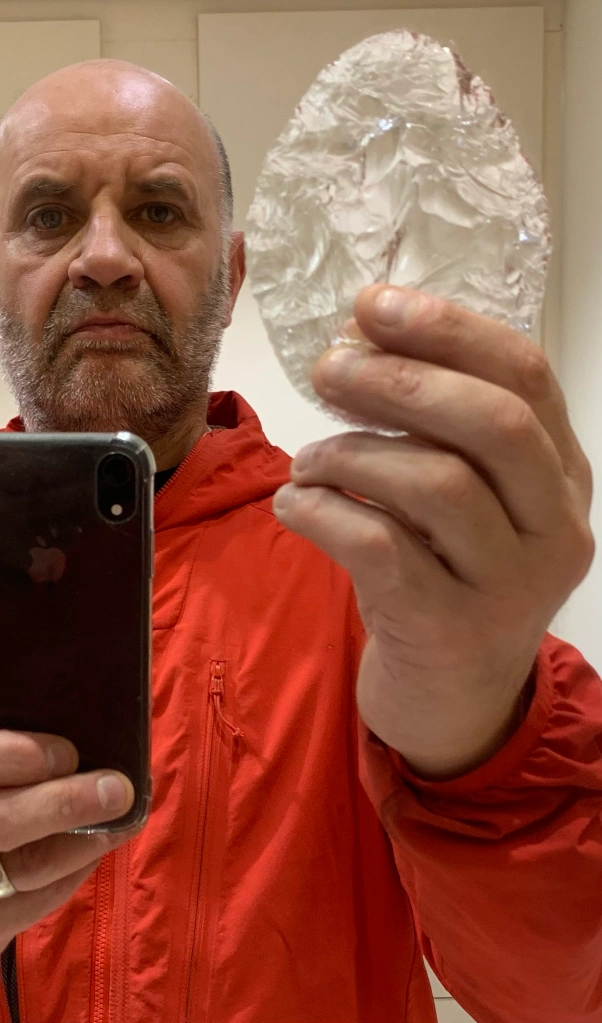
The ovate below is not my best as I had issues with step fracturing, and the shape is ‘quirky’. Plus still some original on one surface. However, I enjoyed the two hours in the lab, and stayed fully engaged throughout.

With glass blocks like this I need to improve the early stage turning of the edges, as that is what later leads to the step fractures. Still, not complaining as I am at a stage I am very happy with. I could improve this but lose size, so I think for now it is fine as it is.

Saturday night’s alright for knapping!

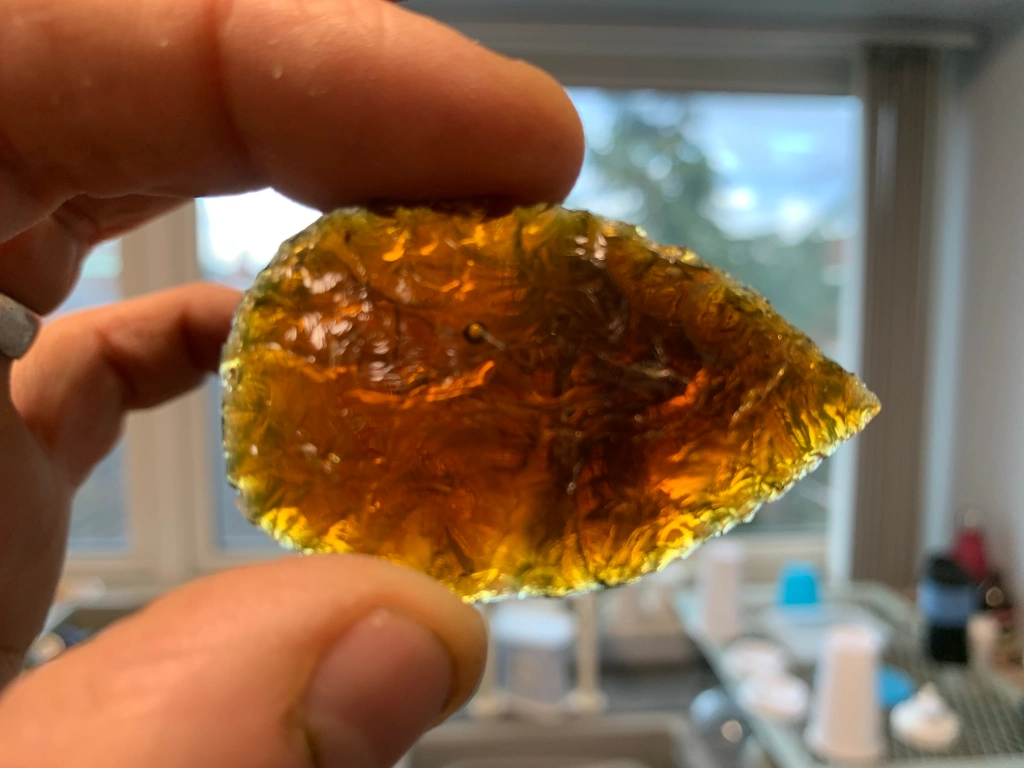
Large glass arrowhead

ArrowheadGlass

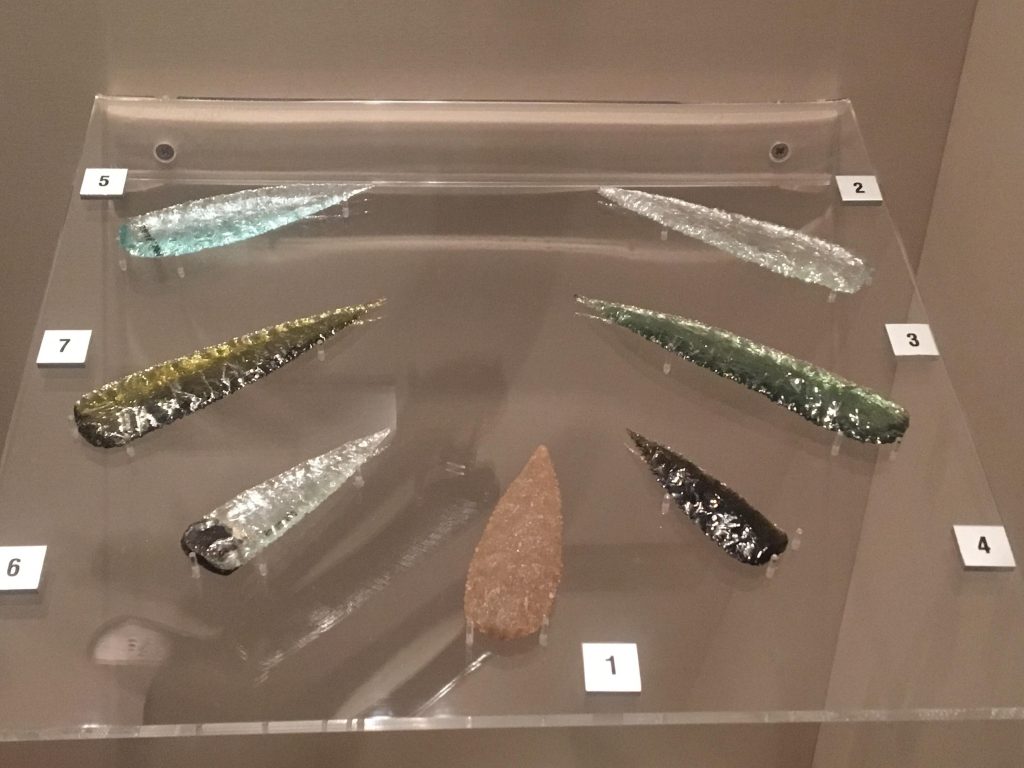
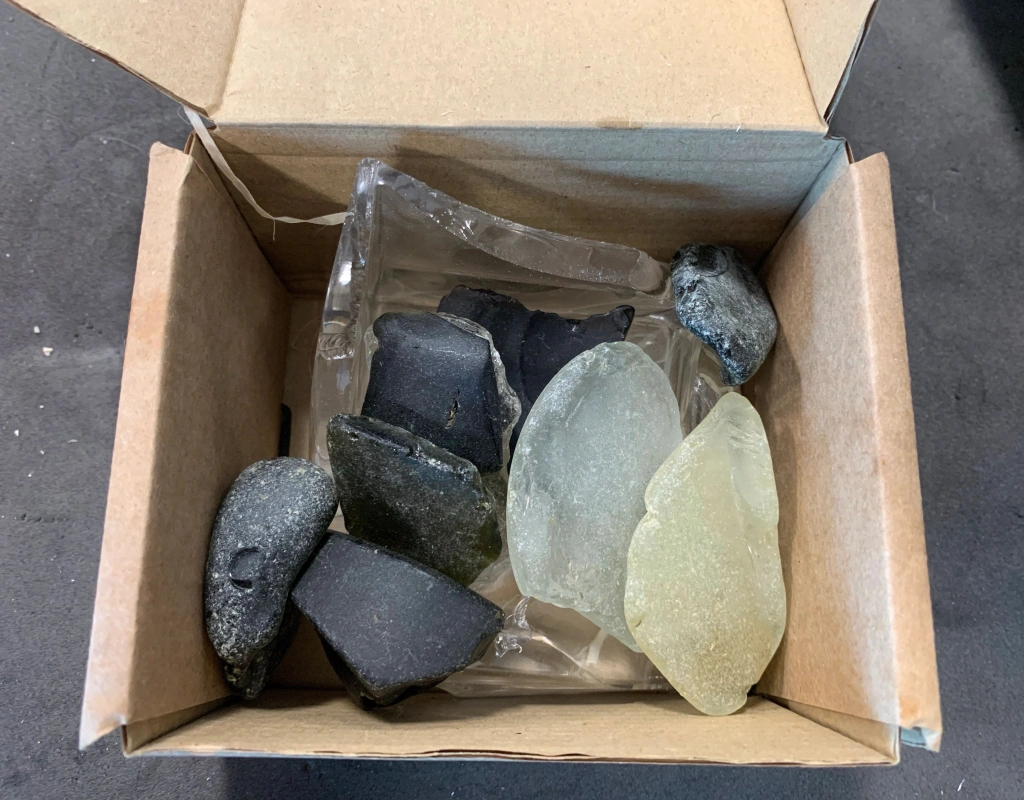
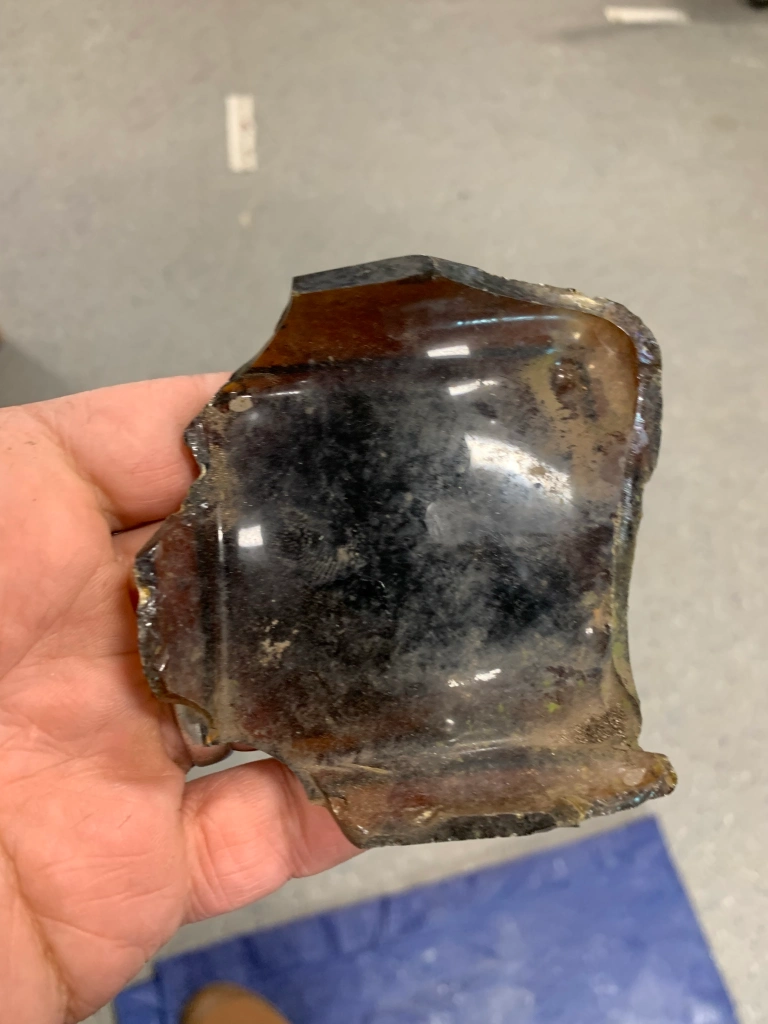
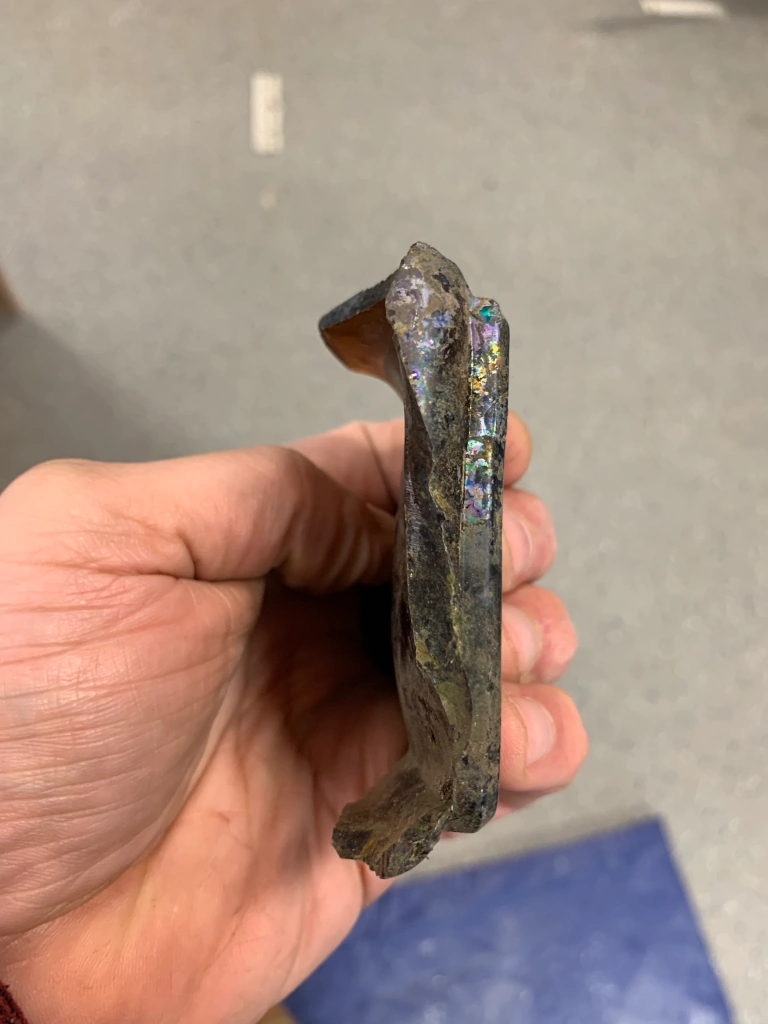
I have been collecting glass from the bottle tip for our melting experiment, and along the way found some nice thick pieces.

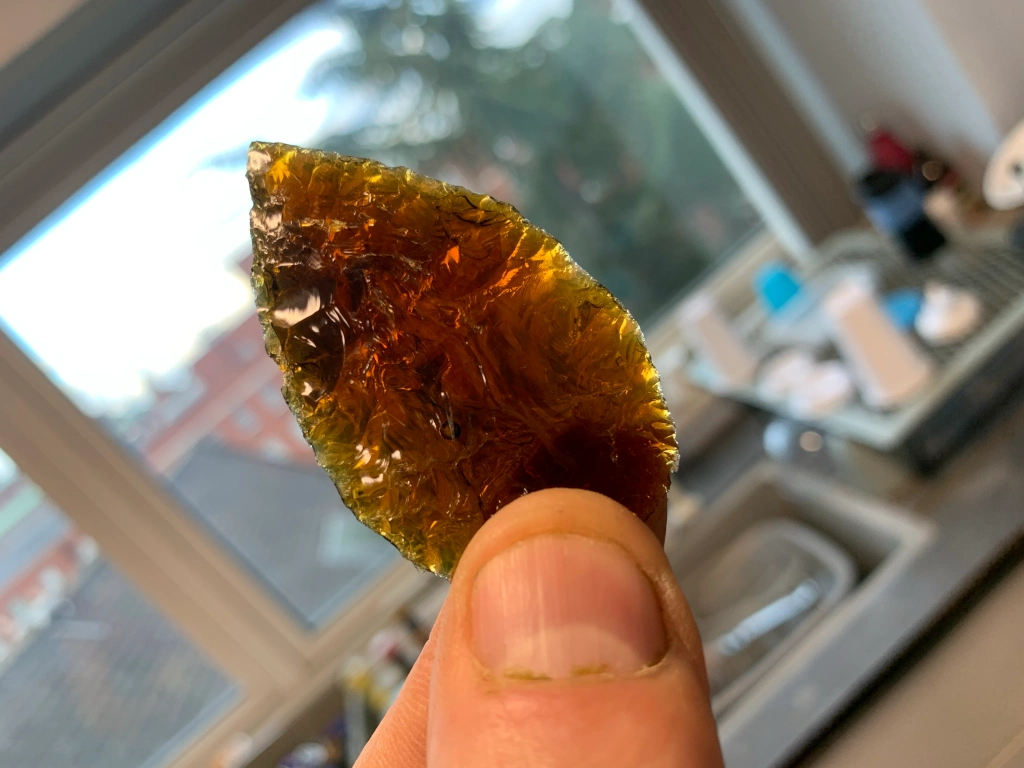
I was in the lab Saturday working on flint, and so today (Monday) I had an hour or so working on this brown glass base.

It took a while to get into it, and once in I had to sacrifice size in order to get rid of some horrible step fractures.

I used stone, antler and finally a copper pressure flaker to finish it off. It flaked really well and I am happy with it. I also have a nice green piece so let’s see if I can find the time tomorrow as well.

In the lab

FlintHandaxe

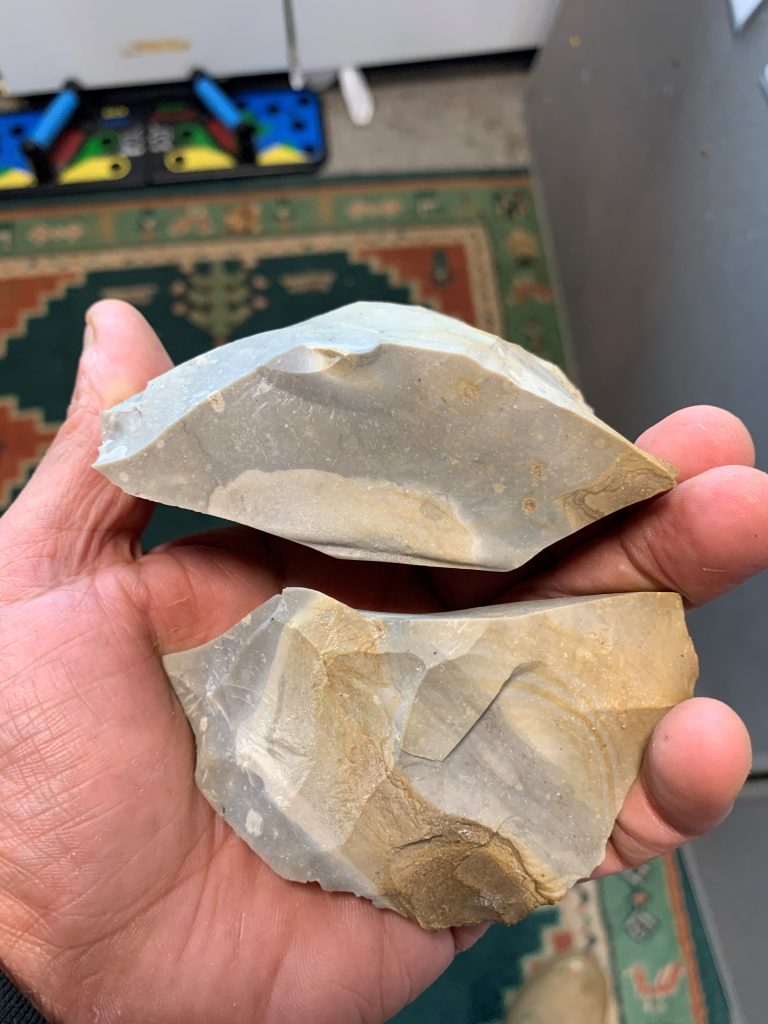
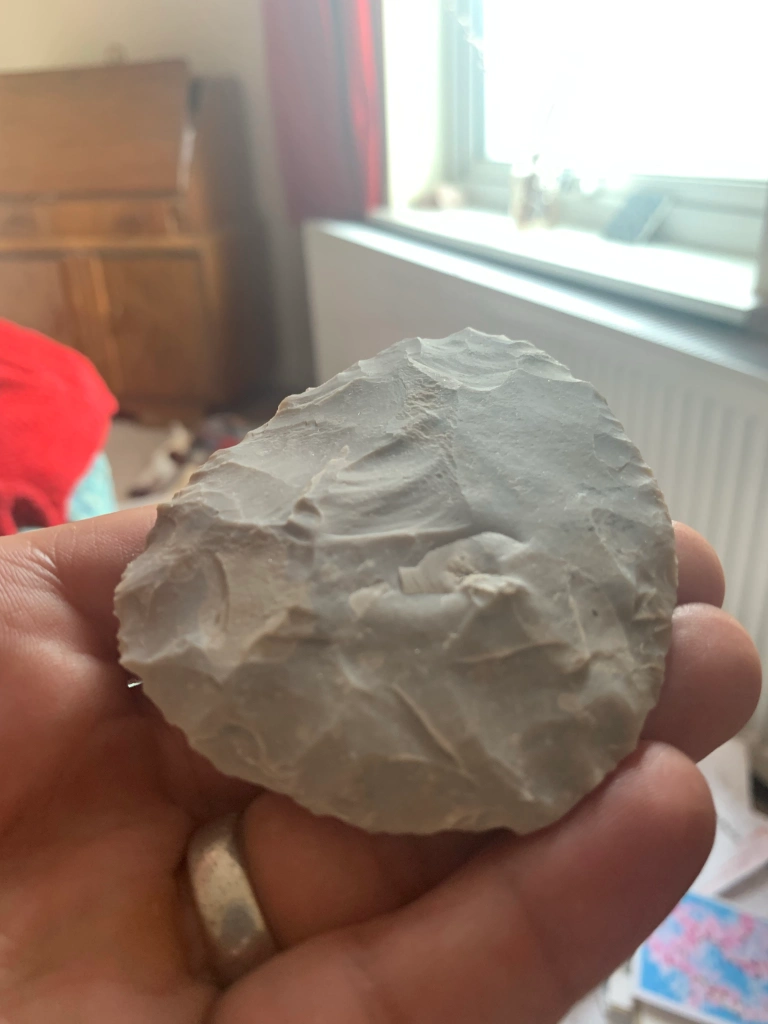
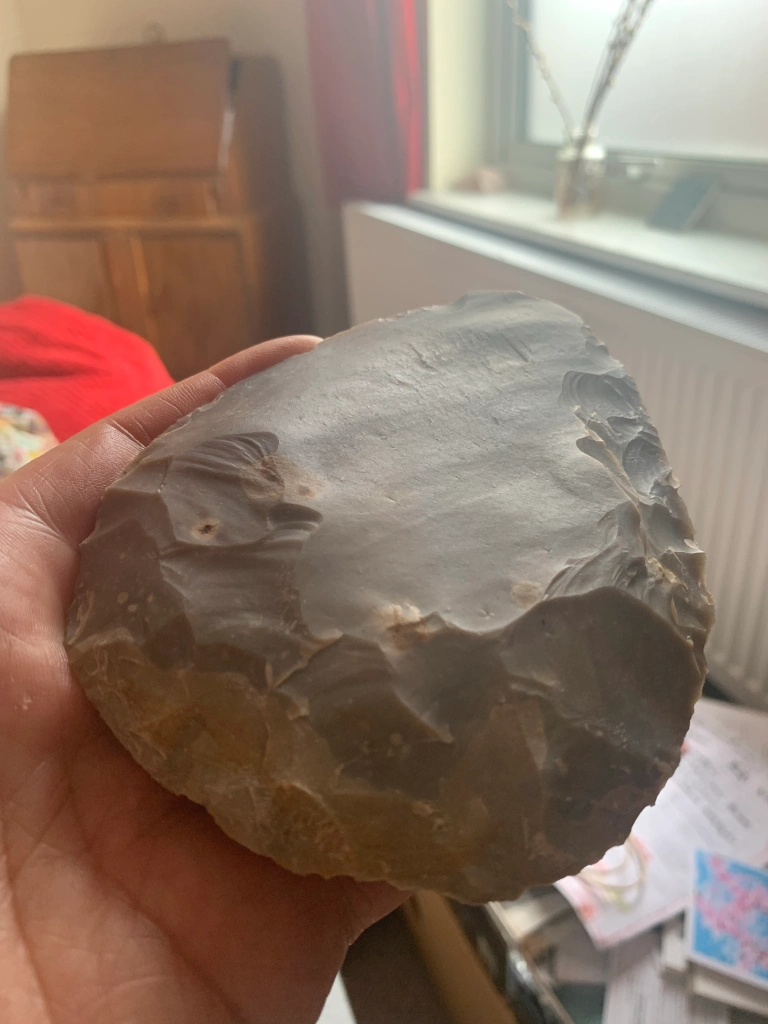
Second Saturday in the lab. I made some more large flakes from an older nodule of different flint. This was harder and chalkier than the new material. Consequently, it took me a while to get it right, hence the small size. However, I like it. I should also say at this point I had about five goes, destroying three flakes before coming away with two handaxes. The others would have worked as tools but they weren’t ‘right’, so I carried on with consequences.

This is the second handaxe, and last go I had. It is of the same flint as the large handaxe last week, and this is slightly larger. It is mainly flake, with thinning going on at the proximal or bulbar end. Karl Lee told me that handaxe edges were worked so that they didn’t break and leave bits of flint in the meat.

Approximately two thirds of the cutting edge is worked, and the final third simply the feathered edge of the original flake. I think this would have worked fine as each edge type would have had different qualities.

Anyway, the inadvertent soundtrack is ‘Senorita’ by James.

The Blue Handaxe – Materials

BlueGlassHandaxe

Yesterday we did some filming. Howard (film maker) and Jex (sound person) at the bottle tip. I had brought some props with me to explain the overall idea. Enter, my current favourite large handaxe (above) to illustrate where I want to go with things.

Next up was my best glass handaxe made from the base of a vase. This was to illustrate the limitation of size of materials, with this being exceptional, but still not very big.

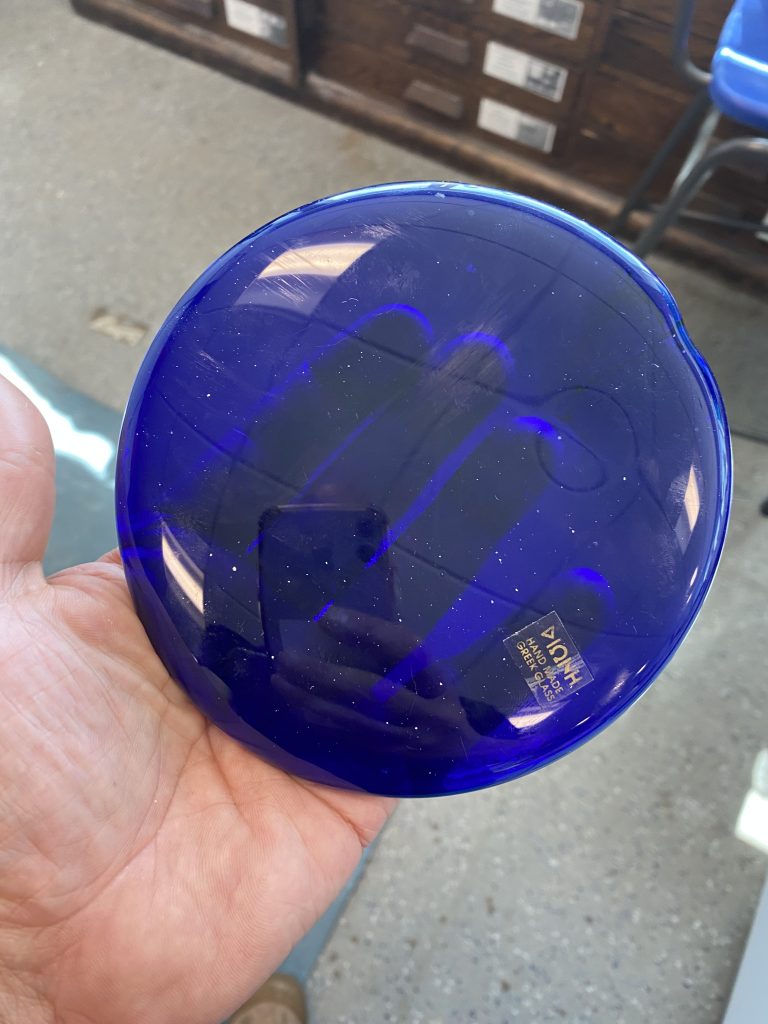
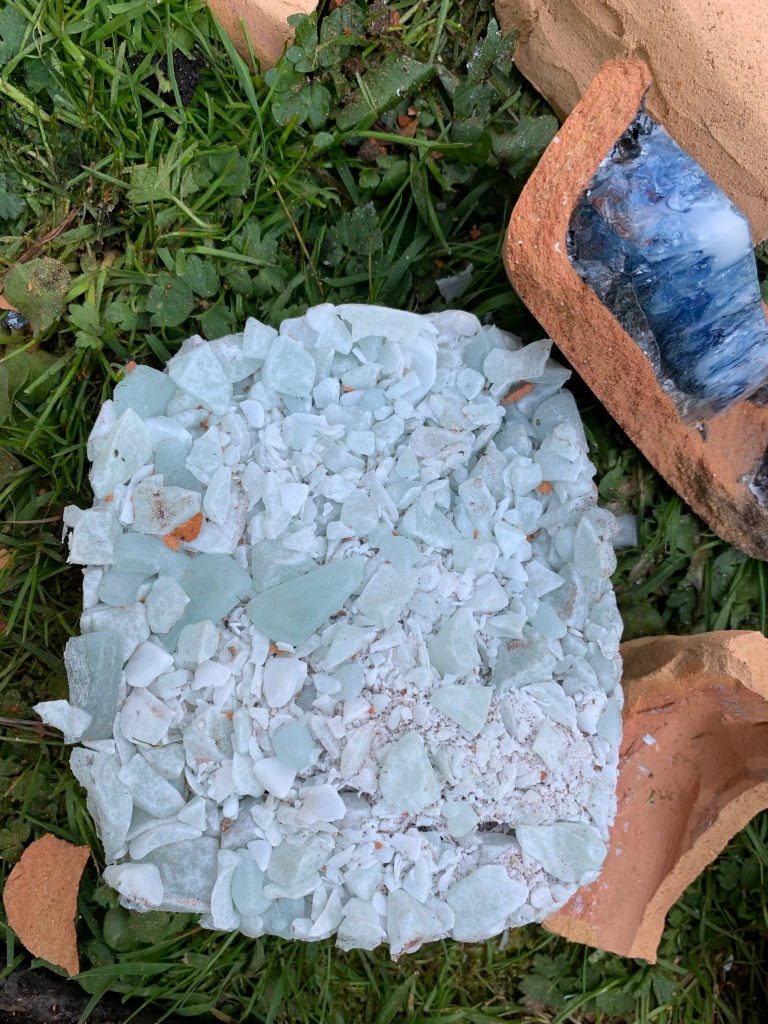
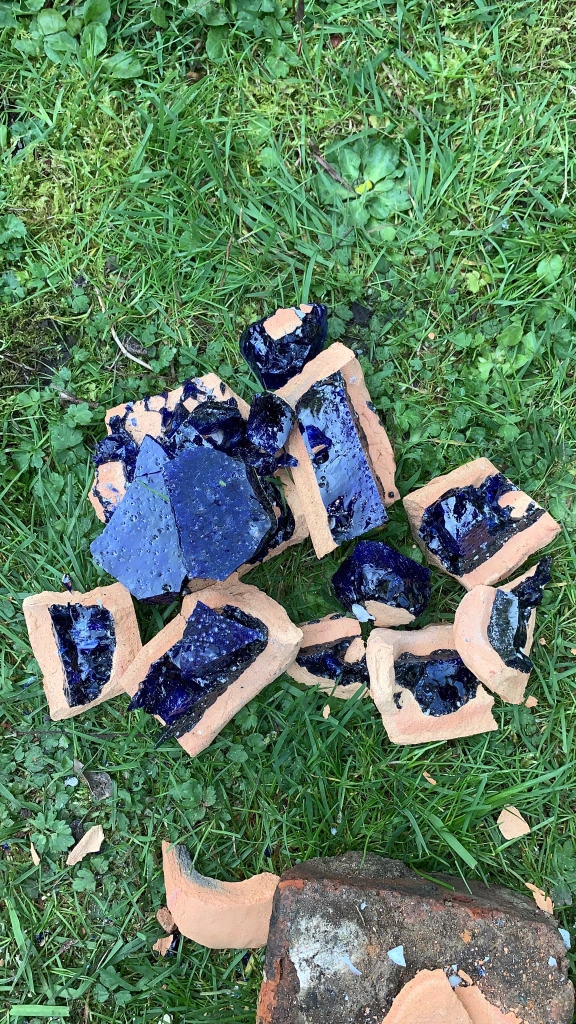
Third up was this (presumably) 1950s Vicks bottle of amazing blue glass. This was to illustrate the rare blue material I wanted to collect in order to then work with Nacho to produce a blue glass block.

Anyway, after the above introduction and some bottle tip footage Howard wanted some live action blue glass finding moments. This was going to be difficult as over many visits I had picked the area clean, or so I thought. I found quite a lot, mainly a pale or lighter blue, but nevertheless illustrating the material gathering process authentically, which is what we both wanted. Let’s see what Howard makes of phase one.

What to do with all this flint?

Flint, Handaxe

I have had a bit of a ‘John day’ today. First thing I took Bella for a walk to the bottle dump. I found some blue glass fragments and a couple of interesting bottles, but no nice thick pieces.

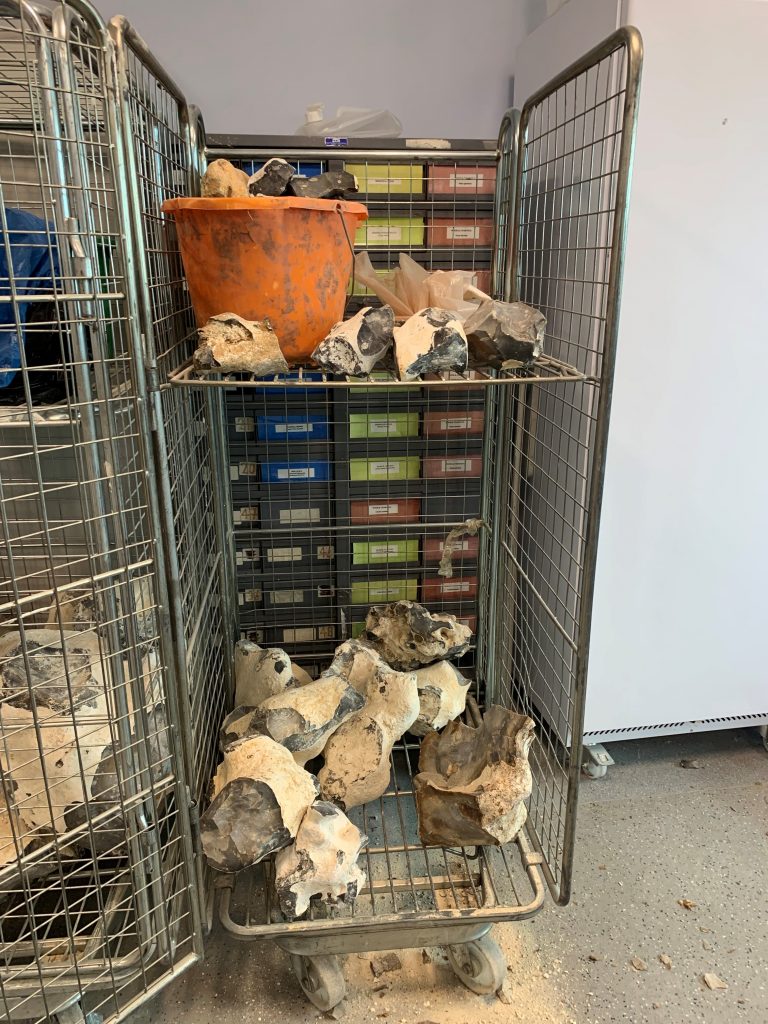
After a late breakfast of left over veggie Shepherds Pie I went into uni. As you can see, we have some very big nodules, inherited from Alice la Porta. When she was buying them I told her to specify big nodules, as our previous delivery had been largely small ones. I should have said medium size.

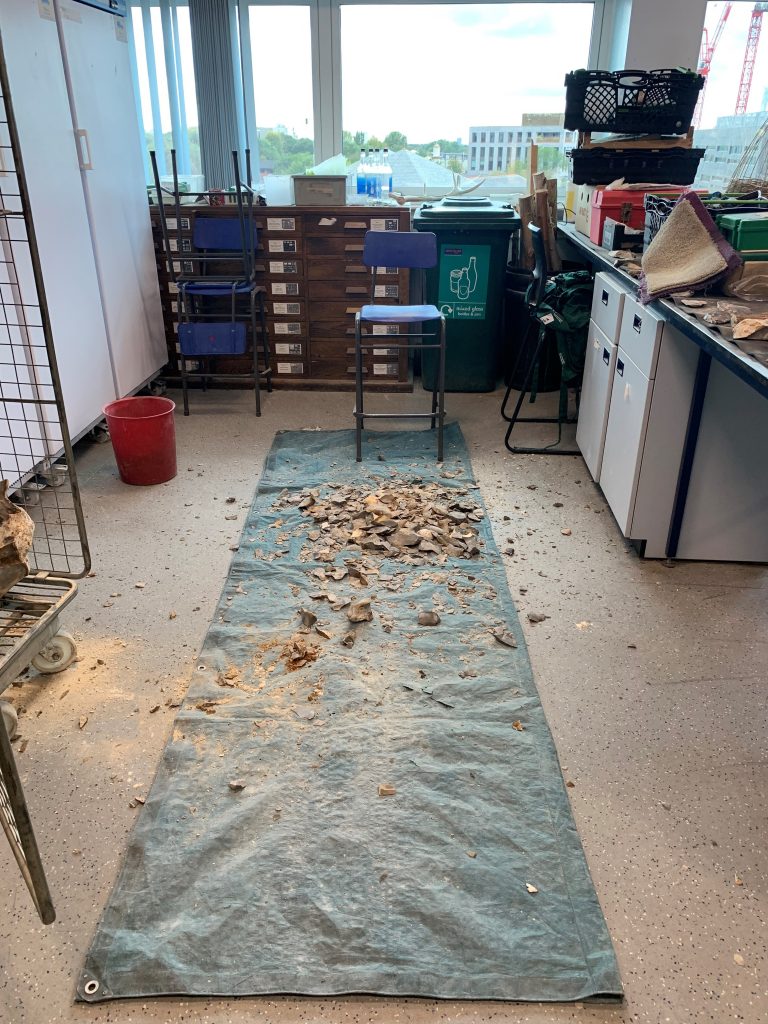
Anyway, today I wanted to try breaking one up to see how it would go. I chose what looked like the easiest nodule, with flat sections as ways in. I then proceeded to produce a series of large flakes, and a lot of small debris.

For the breaking up process I used these two hammer stones, and as you can see, I didn’t get off scott free. However, they did their job and I then wanted to make a handaxe from one of the flakes.

All together I had three goes and made two handaxes, and I really like the one made from this flake. I learned from the glass handaxe I made last week, and this time stayed focused on preparing platforms and getting long thin flakes off.

One of the transverse flakes came off nicely but stepped in the centre of the handaxe (see left hand side with brown stripes).

So I did one of my special techniques that I learned from a Bronze Age knapper, and fitted the flake back in. I then whacked it again and successfully removed the step.

If you look at the flake scar on the right hand side you can see the negative bulb of percussion in the centre of the handaxe illustrating the process.

I am very pleased with this one, it is large with nice long flat removals. I don’t know if a Homo heidelbergensis knapper would have been concerned about the step fracture, however that process was immensely satisfying for me and gives the handaxe some personality. Happy days.

Large glass ovate handaxe

Glass, Handaxe

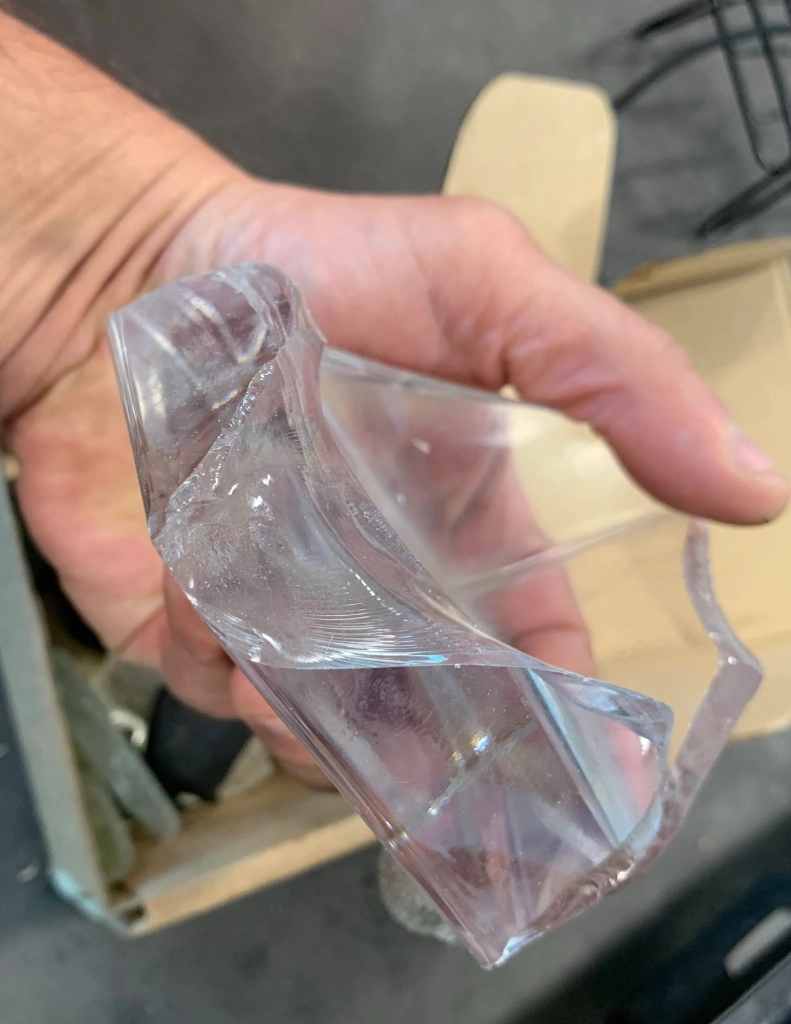
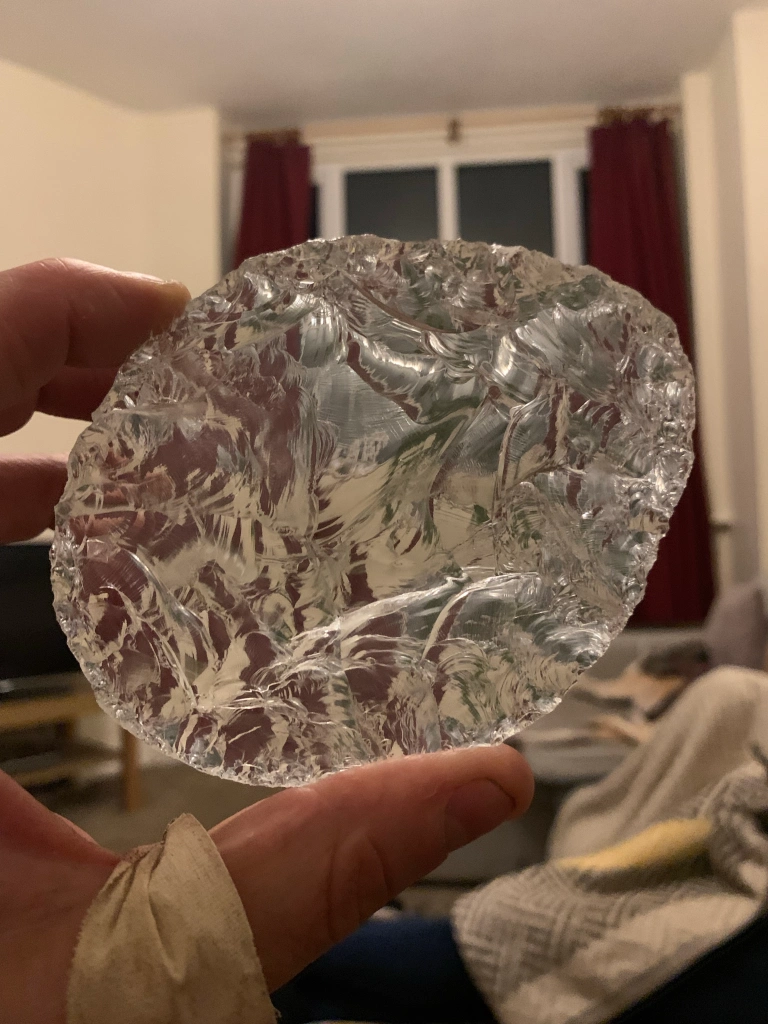
I don’t normally destroy perfectly functional things in order to make my stone tools, however…I found this nice thick glass ashtray in Oxfam and it reminded me of the glass slabs I want to produce with Nacho.

So £3.99 and 24 hours later I was sat in the lab with a small hard hammer. The glass was really good to work even if it took me a while to get rid of the ‘walls’ of the ashtray.

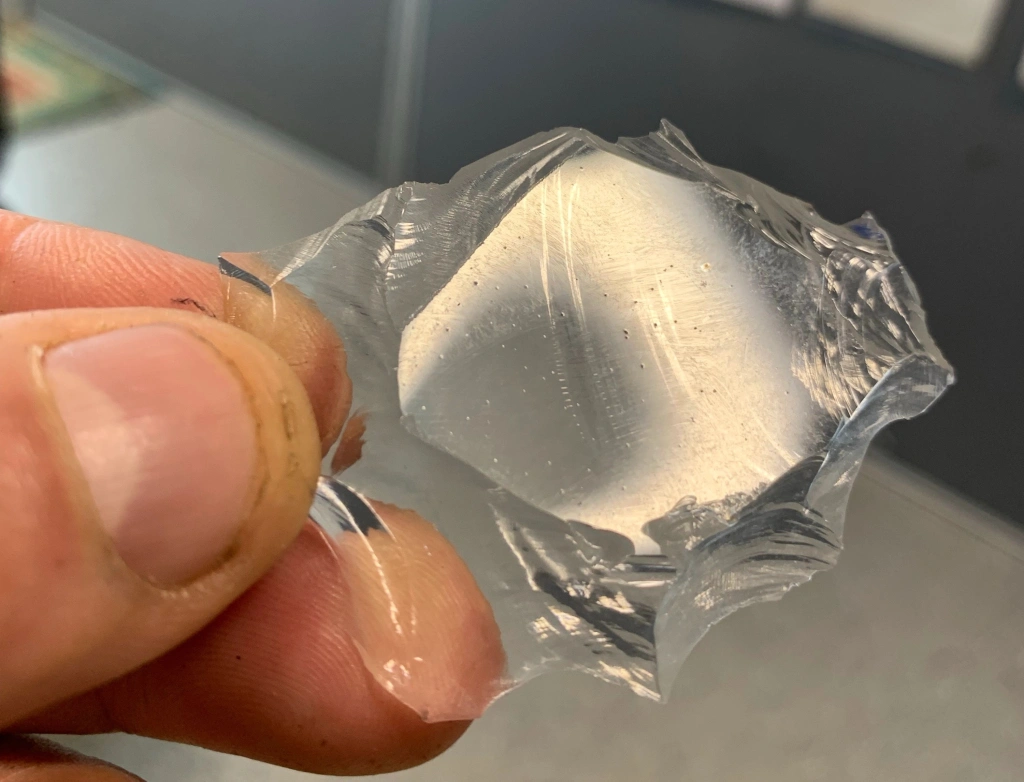
Like the older glass I am used to, this ashtray glass had bubbles in it. I knew what I wanted, a large ovate handaxe, and my earlier removals, when I had more material were better. I have some nice flakes that will be good for arrowheads at some point.

It looks half decent, is fully bifacially worked (no original surface left) and I have retained a good size. However, it is not my best. Harder to see from the pics is a step fracture ‘island’ on one face. I relaxed a little and went ‘intuitive’, which felt right, but failed to produce descent removals.

I was concentrating more on outcome than process, and in doing so stopped giving each removal the due consideration it deserved. By the time I realised I didn’t any longer have a good way in to remove the steps. If I really wanted to make it into something I like I would lose size, and it would end up like many of my smaller ones that are either made from smaller pieces, or like this, takes me lots of removals to get it ‘right’. Anyway, the hour in the lab was the thing. It’s been a while and it was great.

On holiday

Currently we are on a mini two week tour of southern Spain. A first highlight was the Archaeology Museum in Jerez.

And yesterday, an exhibition at the Centre for Contemporary Creation in Cordoba

However, most interesting was a small ceramics workshop in the centre of Cordoba. In there I bought for seven euros a small melted glass bottle.

I also had a good chat with the woman who made it, and she did her best to explain to me the necessary kiln timings for a successful glass melt.

Going to southern Spain was a last minute thing for me. I have tagged along with Karen and Roxanna, to make sure we get to spend some nice time together this summer. However, I have really been struck by how stimulating getting away, but also engaging with new places can be.

I am really excited about making some large bevelled glass slabs, that I can then use to knap some bigger handaxes of colour. I am super busy when I get back, but a visit to the bottle tip, and a session with Nacho and his kiln are now high on my agenda!

Thanks to Brosky and Maria for making us super welcome and spending their time showing us around Cordoba. We are so lucky to have good friends in great places.

On hitting things

My understanding of how to hit things has developed not through flintknapping but martial arts. Consequently, this also influences how I teach other people as I find the principles to be transferable. The first issue is cultural, that generally we are taught that hitting is a bad thing, and so we don’t get that much practice. A first step then is to just get people used to hitting flint with a hammerstone and I have previously done a whole two hour session at Chester on just that.

I then move on to a discussion of impact, or kinetic energy. My understanding is quite processual, in that kinetic energy is a result of the relationship between the mass of an object (hammerstone) and the speed it is travelling upon impact. Whilst the mass of your selected hammerstone will be constant, one variable we can play with is speed at impact. If we remove angles and accuracy from this discussion, a high impact speed increases the kinetic energy, and this in turn increases the chances of getting a clean flake removal. To increase the speed of the hammerstone it is necessary to have a relaxed arm, and relaxation comes from a familiarity with the hitting process (see paragraph one). So far, so good.

Anyway, I was at home and most of my knapping gear is at work and I was feeling a little bit stressed and saw a nice tabular piece of material in the back yard. I am 99.9% sure I picked it up at the Mynydd Rhiw site earlier this year, but my problem was that I only had a very large and very small hammerstone to hand, and a small antler hammer that I usually use on glass. None of the tools were ideal but I wanted to have a go, and if my above theoretical understanding was correct, I should be able to adapt my speed of hitting to compensate for the overly large or overly small size of the tools being used.

So that is what I did. The large hammerstone was good for the first stage of cortical removals. As you can see, each of these pieces has between 80% and 100% of cortex on the dorsal face.

The next stage was a little more tricky, as I could have done with a slightly smaller hammerstone and larger antler hammer for the shaping and thinning process. As you can see, these pieces are characterised by around 50% cortical surface and they are generally smaller.

With the final stage I really had to hit the material hard with the small antler hammer. A bigger one would have worked better, but my approach succeeded and I did manage to get some nice soft hammer flakes off. As you can see, these are characterised by minimal cortical surface present.

Anyway, if the material was indeed from Mynydd Rhiw I should have made a Neolithic polished stone axe, but being me it became a small flat based cordate handaxe. This is technically incorrect because the material was originally quarried even though I picked it up from the surface. At one point it had a large step on one surface, which I removed by replacing a removal and using that as a punch to get rid, and it worked really well.

The speed thing does work, but it is hard work, and the intuitive way I normally select the appropriate tool does save me energy. There is more to hitting than this, I deliberately avoided a lengthy discussion of angles and accuracy, however this post does go some way towards exploring and explaining (my understanding of) the underlying complexity of what is generally perceived to be a simple process.

Dorstone fieldwork pop up slag glass knapping session

On our Herefordshire fieldwork project we camp on the local Dorstone village playing fields behind which runs an old straight track. On a dog walk last year I noticed a section that had some inclusions with conchoidal fractures.

I stored this in my memory bank, and this year ended up going on a super impromptu walk with a group of students interested in lithics. The aim was to introduce them to the art of finding knappable materials in the landscape (something I am getting good at).

Anyway, as well as an opportunity to all get to know each other a little better, it turned out to be a surprisingly enjoyable material locating and testing exercise.

I told Tim Hoverd, Herefordshire County archaeologist, about our adventure and he pointed out that this particular old straight track used to be a railway line, hence the glass slag that we were finding. I wanted to end this post with some kind of witty Alfred Watkins reference. However, I have now ended up reading about the Golden Valley Railway on Wikipedia. C’est la guerre.

< Older posts Newer posts >

© 2026 Learning Through Making. All Rights Reserved.

Up ▴