Last Friday morning I spent a lovely two hours with a class of fifteen primary school children, introducing them to the joy of stone tools. My friend Holly is a primary school teacher and British Prehistory is a part of the Key Stage Two curriculum, hence the invite.
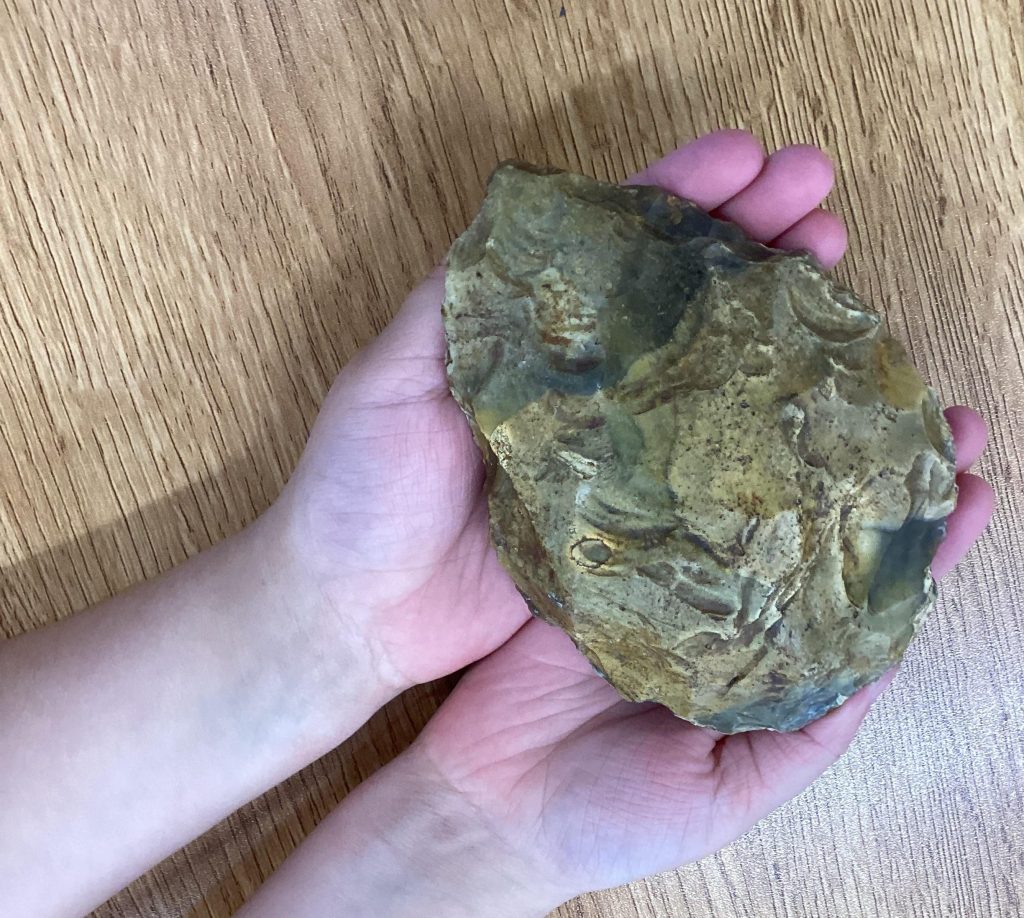
I’ve done public engagement activities before, with adults, sixth formers and primary school children, and many of the ingredients within the process are the same for any group. For example, almost everyone is amazed to be able to handle an actual 400,000 year old stone tool, made by a different type of human to ourselves, and these primary school children were no different.
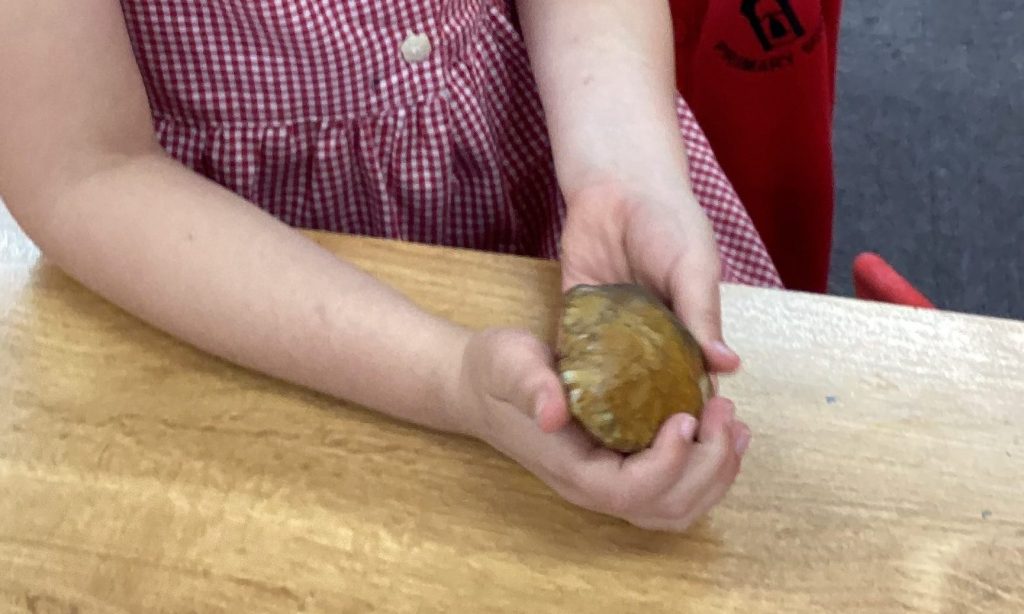
I had around two hours with the children, and the first forty minutes or so was a handling session using the handaxes from our teaching collection. Unsurprisingly, they too were interested in my favourite twisted cordate handaxe with the modern chip revealing the original flint colour!
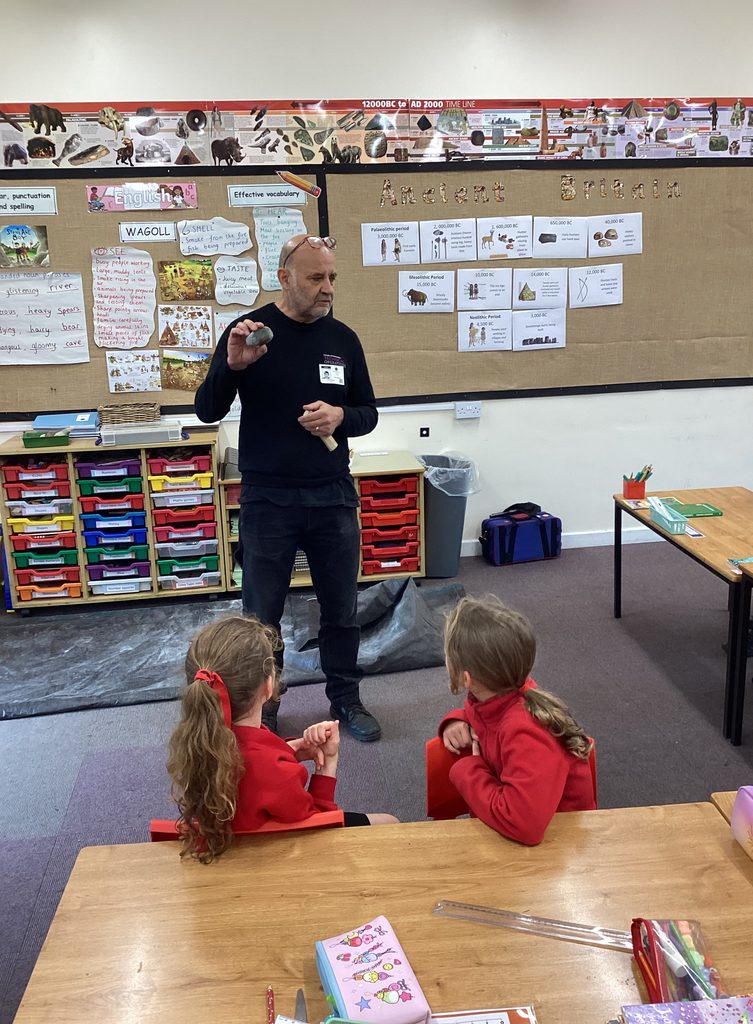
I then moved on to the tools used to make the tools, namely hard stone hammer and soft antler hammer. These were again passed around and it was great seeing the real interest the children had when I told them about the antler hammers found archaeologically with flint chips embedded within them, and this is how archaeologists know they were used in the prehistoric past for knapping.
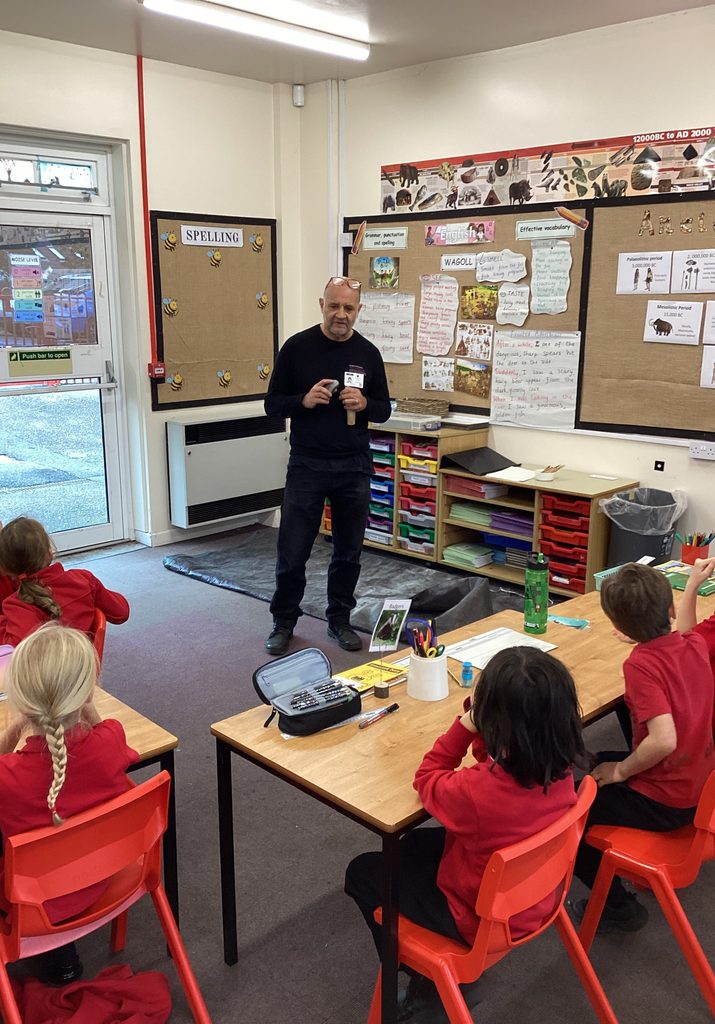
And then the beach pebble hard hammers, and how archaeologists think about where they are found (i.e. not on a beach) and why they have use wear evidence on them, which is how we come to the conclusion that they have been used to hit things.
The next thirty minutes or so was the highlight of the session (so I was told!), and that was the making a scraper demonstration. After explaining what a scraper is I then took a large flint flake and on the ventral surface drew the shape of the scraper I was going to make. This, I believe was a strategy used by Bruce Bradley when teaching. I passed the flake around with the scraper shape marked on it so that everyone could see where we were going. I then I followed the method taught to me by Karl Lee and went through the process of making the scraper. Once made it was passed around again so the children could see the ‘before’ and ‘after’ results.
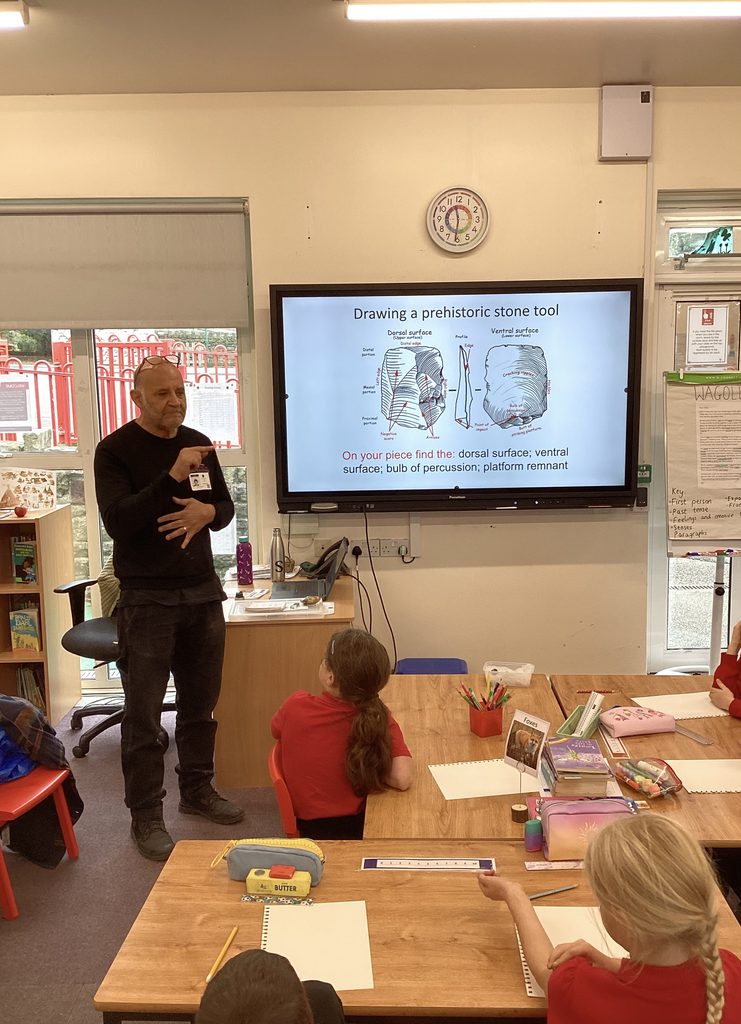
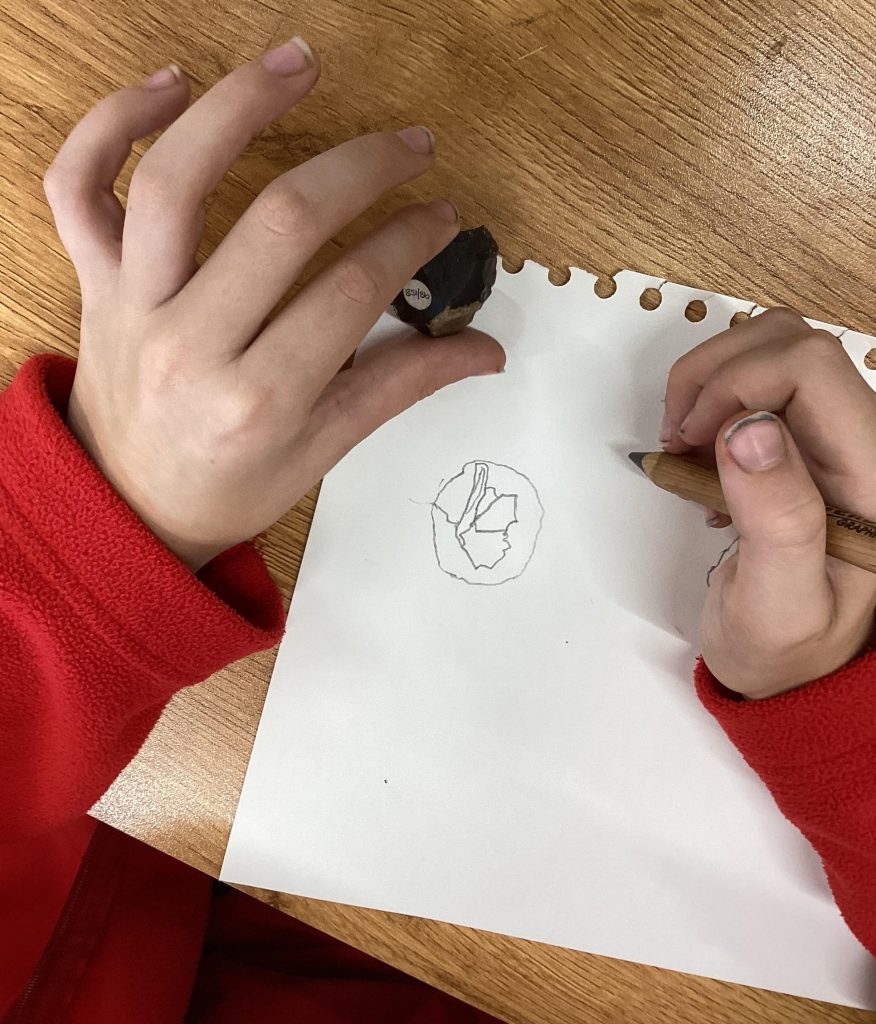
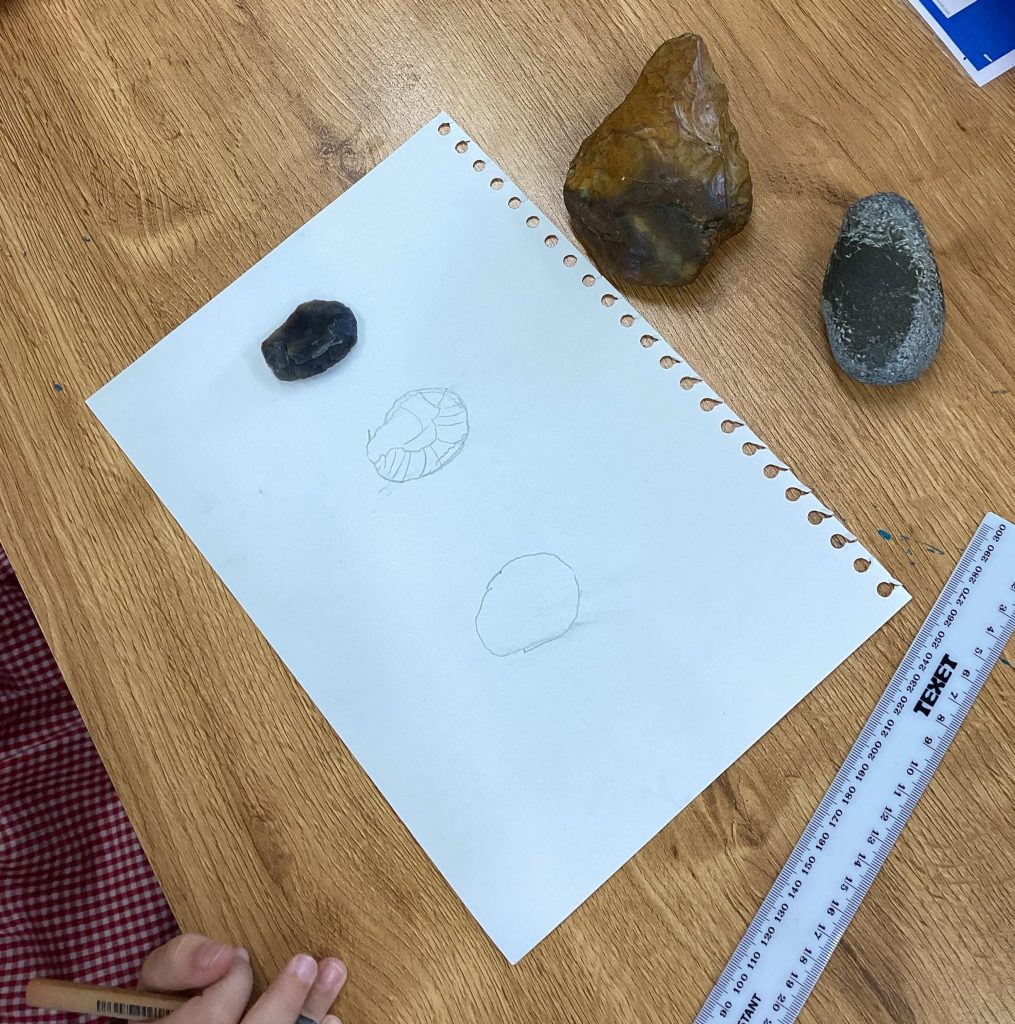
The final forty minutes involved drawing an archaeological scraper. This is the same exercise I do with our undergraduate students and it is complicated. The main difference for the primary school children was making the terminology more understandable. And so the ventral surface became the smooth surface, and the bulb of percussion became the ‘bump’. As you can see from the photographs, it worked and we got some really great technical drawings.
But what about Adventure Before Dementia? This was on a sticker Karen and I saw on the back of a camper van many moons ago. However, it has become a talking point for us more recently. Partly due to life stage, and partly because of health issues, we are both reflecting upon how we spend our time, and how we would like to spend our time.
So perhaps this was one of my adventures before dementia! As I said at the beginning, it was a lovely two hours spent with the children, sharing my enthusiasm for stone tools and prehistory. When I reflect upon that working week I had quite a lot of spreadsheet based stuff, and those two primary school hours were a highlight, or adventure if you will. With that in mind, thanks to Holly for the invitation, the photos and the video, and the children for being such enthusiastic proto-archaeologists!
Leave a Reply